If you are considering acupuncture for frozen shoulder, it helps to understand what is actually happening inside the joint, why the pain can feel disproportionate, and what an effective plan looks like across each phase of recovery. Many people are told their imaging is “normal” or shows only mild findings, yet pain escalates (often worse at night) and shoulder motion steadily disappears.
At Thrive Health Acupuncture, we commonly see classic acupuncture for adhesive capsulitis presentations across Long Island communities including East Setauket, Sayville, Smithtown, and Westhampton, especially in women in midlife and people living with diabetes. The goal is practical, measurable improvement in pain, function, and range of motion, using an integrated approach that blends orthopedic reasoning with Traditional Chinese Medicine (TCM).
Key Takeaways: Acupuncture for Frozen Shoulder
- Frozen shoulder (adhesive capsulitis) is a capsular problem. The joint capsule becomes irritated, thickened, and stiff, limiting motion in multiple directions.
- Acupuncture can be effective for pain and stiffness management and may help you tolerate the mobility work needed to restore range of motion.
- Expect phase-based goals. In the freezing phase, care emphasizes pain control and calming irritability. In the frozen phase, it often focuses on maintaining what motion you have and reducing guarding. In thawing, it supports progressive mobility and strengthening.
- Combination care often works best. Frozen shoulder treatment acupuncture frequently improves faster when paired with appropriate physical therapy or manual therapy that matches the stage of the condition.
- Progress should be measured. Tracking range of motion (especially external rotation and reaching behind the back), pain levels, sleep, and daily function keeps treatment on course.
What Is Frozen Shoulder (Adhesive Capsulitis)?
Adhesive capsulitis is a condition in which the connective tissue capsule surrounding the shoulder joint becomes painful and irritated, then progressively thickens and tightens. As the capsule stiffens, the shoulder loses motion in a characteristic pattern, usually affecting:
- External rotation (turning the arm outward)
- Abduction (lifting the arm to the side)
- Flexion (lifting the arm forward)
- Internal rotation (reaching behind the back)
Frozen shoulder can occur after an injury or period of immobilization, or seemingly “out of nowhere.” It is also more common in people with diabetes and thyroid conditions. Because it is often slow to change, it can be frustrating, but a structured plan can make the process more manageable and improve function sooner.
Frozen Shoulder Symptoms and Early Warning Signs
Common symptoms that lead people to ask, does acupuncture help frozen shoulder, include:
- Night pain that disrupts sleep, especially when lying on the affected side
- Progressively decreasing range of motion, not just pain with certain movements
- Difficulty with daily tasks, such as putting on a coat, fastening a bra, reaching a back pocket, washing hair, or reaching overhead
- Deep ache in the shoulder that can refer into the upper arm
- Protective muscle tension in the neck and upper back from compensation
Early warning sign: a shoulder that becomes painful first, then noticeably stiff over weeks to months, particularly with external rotation (for example, reaching for a seatbelt or turning the arm outward).
The 3 Stages (Freezing, Frozen, Thawing) and What Each Means for Treatment
Frozen shoulder typically progresses through three overlapping phases. The most effective care plan depends on matching treatment to the phase, because the shoulder’s irritability and tissue tolerance change over time.
| Stage | What it feels like | Main goals | What acupuncture emphasizes | What to do (home + rehab) | What to avoid |
|---|---|---|---|---|---|
| Freezing | Increasing pain, especially night pain, with motion starting to tighten | Calm pain, reduce guarding, protect sleep, maintain gentle motion | Pain modulation, downshifting muscle guarding, supporting local circulation, reducing sensitivity so movement is tolerable | Gentle pendulums, supported range, breathing-based relaxation, short frequent mobility | Aggressive stretching into sharp pain, heavy strengthening, forcing end range |
| Frozen | Pain may be less constant, stiffness peaks, hard end-feel with motion | Maintain function, reduce compensations, gradually expand motion | Address myofascial contributors, treat adjacent tissues, improve tolerance for graded stretching and manual therapy | Capsule-friendly mobility, longer gentle holds, scapular control work | High-intensity “no pain no gain” stretching, overhead loading that flares symptoms |
| Thawing | Slowly improving motion, less night pain, stiffness gradually releases | Restore range of motion, rebuild strength, normalize movement patterns | Support recovery, reduce residual pain, improve tissue extensibility, support progressive strengthening | Progressive mobility + strengthening, functional reaching patterns | Sudden spikes in volume or intensity that create a setback |
Many patients start care in stage two because the stiffness becomes unmistakable. Regardless of stage, the most consistent wins come from a plan that reduces flare-ups and steadily increases usable motion.
How Acupuncture Helps Frozen Shoulder (Pain, Stiffness, Range of Motion)
So, does acupuncture help frozen shoulder? For many people, it can be a helpful and sometimes very effective part of a thorough plan. The key is understanding what acupuncture is actually doing and what it cannot do overnight.
Pain modulation and nervous system “volume control”
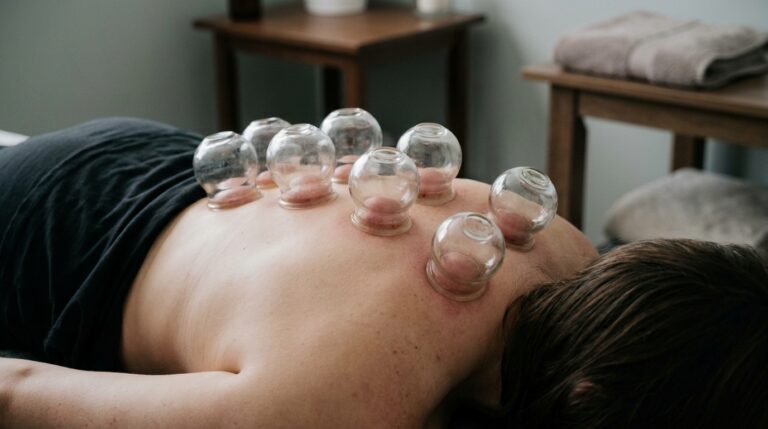
Acupuncture uses very thin needles to stimulate sensory nerves in the skin and muscle. This input can help the nervous system reduce pain sensitivity, which matters because frozen shoulder often becomes a cycle of pain leading to guarding, then guarding leading to more stiffness and pain. By decreasing pain reactivity, you can often move more comfortably and sleep better, which improves recovery conditions.
Improving local circulation and tissue hydration
Needling and related techniques can increase local blood flow and microcirculation in treated regions. Better circulation can support tissue health and may help with the “stuck” feeling that comes with chronic tightness around the shoulder and chest. This is not a quick “capsule release,” but it can support the environment needed for gradual change.
Reducing muscle guarding that blocks motion
Frozen shoulder is not only a capsule issue. Many people develop protective tension in surrounding muscles that further limits motion. Acupuncture for shoulder pain and stiffness often targets these guarding patterns, which can immediately change how the shoulder moves, even before the capsule itself has fully loosened.
Supporting tolerance for rehab and range of motion work
In practice, one of the biggest benefits of frozen shoulder treatment acupuncture is that it can make rehabilitation easier to perform. When pain is lower and muscles are less guarded, patients can more consistently perform range of motion exercises for frozen shoulder without provoking prolonged flare-ups. That consistency is often what drives the long-term effect.
Realistic expectation: Acupuncture rarely “fixes” adhesive capsulitis in one visit. Instead, it commonly helps by reducing pain, improving movement quality, and making the shoulder more receptive to staged mobility and manual therapy.
Realistic expectation: Acupuncture rarely “fixes” adhesive capsulitis in one visit. Instead, it commonly helps by reducing pain, improving movement quality, and making the shoulder more receptive to staged mobility and manual therapy.
See a Thrive clinician
Acupuncture, dry needling and physical therapy across four Long Island offices. Same-week appointments are usually available, and you do not need a referral to start.
Acupuncture Points / Areas Commonly Used for Frozen Shoulder
People frequently search for frozen shoulder acupuncture points. While point selection should be individualized based on pain location, range limits, irritability, and contributing tissues, there are common strategies that many clinicians use.
Rather than focusing on a rigid chart, it is more helpful to understand the areas typically treated and why:
- Local shoulder region (front, side, and back of the shoulder): often used to reduce pain and influence local tissue tone. This may include points and needling around the deltoid region, posterior shoulder, and areas near the rotator cuff tendons.
- Anterior shoulder and chest (pec minor and anterior chain): tightness here can pull the shoulder forward and limit overhead motion and external rotation.
- Biceps and upper arm (especially the front of the arm): the biceps and surrounding tissues can become sensitized and contribute to pain with reaching and lifting.
- Upper trapezius, levator scapulae, and neck: many patients develop secondary tension and trigger points from compensating, which can amplify pain and reduce shoulder mechanics.
- Scapular stabilizers (upper back): improving shoulder blade motion and control often reduces strain on the glenohumeral joint.
- Distal points (forearm, hand, lower leg): commonly used in TCM-style treatments to influence pain modulation and movement patterns while avoiding overly aggressive local stimulation in highly irritable shoulders.
In some visits, treatment may focus more on local points if the shoulder tolerates it. In very painful freezing-stage shoulders, a more gentle, systemic approach plus carefully chosen local areas may be more appropriate.
Trigger points and myofascial contributors we commonly address
Even though adhesive capsulitis is fundamentally capsular, several muscles and soft tissues commonly contribute to pain and stiffness. Acupuncture and related needling techniques may target:
- Rotator cuff muscles (often protective and overworked)
- Pec minor and pec major (anterior tightness limiting overhead reach)
- Upper trapezius and levator scapulae (neck and shoulder tension from compensation)
- Biceps and anterior shoulder tissues (front-of-shoulder pain with reaching)
- Posterior shoulder tissues (often linked with difficulty reaching behind the back)
Acupuncture + Physical Therapy: Why Combination Care Often Works Best
Many people do best when acupuncture is paired with well-staged rehab. Acupuncture can help calm pain and improve tolerance, while physical therapy and manual therapy provide the progressive loading and mobility needed to create lasting changes in movement.
At Thrive Health, combination care is often used to:
- Reduce pain enough to move without triggering a multi-day flare
- Improve sleep, which supports tissue recovery and lowers pain sensitivity
- Address compensations in the neck, scapula, and thoracic spine
- Apply the right exercise at the right stage so you build capacity without fighting the condition
In many cases, a plan that includes acupuncture plus rehab tends to be more efficient than either approach alone. The specific mix depends on stage, irritability, and how quickly the shoulder flares after activity.
Frozen shoulder is one of several shoulder problems that respond to a staged plan rather than a single fix. Our shoulder pain page explains how the joint is assessed and how we decide where to begin.
How Many Sessions Are Typically Needed (Frequency, Timeline, Reassessment)
A common high-intent question is how many acupuncture sessions for frozen shoulder are needed. The honest answer is that it varies by stage, severity, diabetes status, duration of symptoms, and how consistently mobility work is performed. That said, most treatment plans follow a structured timeline with reassessments.
Typical frequency by phase
- Freezing phase: often 1 to 2 sessions per week for several weeks to reduce pain, improve sleep, and calm irritability.
- Frozen phase: commonly weekly or every other week, depending on symptom stability and rehab tolerance.
- Thawing phase: often every 1 to 2 weeks as mobility and strengthening progress, then tapering as function returns.
When we reassess progress
A practical approach is to reassess after 4 to 6 treatments. At that point, you should have a clearer trend in at least one of the following:
- Pain: intensity, night pain, and post-activity soreness
- Range of motion: external rotation, hand-behind-back reach, overhead reach
- Function: dressing, driving, sleep, reaching tasks
What happens in a typical visit
- Brief check-in on pain, sleep, flares, and functional changes
- Targeted movement screen (quick range checks, irritability cues)
- Needling plan based on the phase and the day’s presentation (local, distal, and myofascial areas as appropriate)
- Integration guidance on what mobility work to do that day and what to avoid if the shoulder is reactive
Because adhesive capsulitis can last many months, a realistic plan often includes an initial “intensive” phase to get symptoms under control, followed by a “mobility-building” phase where acupuncture supports ongoing improvements, then a taper as function returns.
At-Home Mobility by Phase (What to Do and What to Avoid)
Home care matters. The best range of motion exercises for frozen shoulder are not necessarily the most intense, they are the ones you can do consistently without triggering prolonged pain.
Freezing phase (high irritability)
- Do: gentle pendulum swings, supported table slides, short frequent pain-free motion, breathing and relaxation to reduce guarding.
- Aim for: “calm reps,” not big gains.
- Avoid: forcing stretching into sharp pain, aggressive overhead work, heavy lifting that spikes night pain.
Frozen phase (stiffness dominant)
- Do: longer gentle stretches (within tolerance), doorway or corner chest opening (light), external rotation with support, scapular retraction work.
- Consider: adding manual therapy or guided mobility with a clinician to ensure you are not compensating.
- Avoid: high-intensity stretching that creates a “setback week,” and strengthening that substitutes with neck and upper trap.
Thawing phase (mobility returning)
- Do: progressive overhead reaching patterns, controlled strengthening for rotator cuff and scapular stabilizers, gradual return to functional lifting.
- Aim for: steady weekly improvements in usable motion, not perfect symmetry immediately.
- Avoid: sudden spikes in activity volume (weekend projects, heavy gym sessions) that overload the recovering capsule.
If you are unsure which phase you are in, it is worth getting assessed. Stage-matching your plan often determines whether you progress smoothly or repeatedly flare.
When to Seek Further Evaluation (Red Flags and Look-Alike Conditions)
Frozen shoulder can mimic other shoulder problems, and some conditions require additional evaluation. Consider medical assessment or imaging when symptoms do not fit the typical adhesive capsulitis picture.
Common look-alikes
- Rotator cuff tear: often more weakness-driven, sometimes with a clear injury event, and may not show the classic capsular pattern of restriction.
- Impingement or bursitis: may be more painful in certain arcs of motion but not as globally stiff in all directions.
- Arthritis: can cause stiffness and pain, often with different motion patterns and sometimes visible changes on imaging.
- Cervical (neck) referral: neck issues can refer pain into the shoulder and arm and may include numbness or tingling.
Red flags to take seriously
- Sudden inability to lift the arm after an injury
- Significant swelling, redness, fever, or signs of infection
- Progressive numbness, tingling, or hand weakness
- Unexplained weight loss or severe unrelenting pain not influenced by position or movement
Acupuncture can be part of care even when additional evaluation is needed, but ruling out other causes keeps treatment appropriate and safe.
FAQs About Acupuncture for Adhesive Capsulitis
Does acupuncture help frozen shoulder pain at night?
It can. Many patients seek acupuncture for frozen shoulder because night pain is a major issue. By reducing pain sensitivity and muscle guarding, acupuncture may improve comfort and sleep, especially in the freezing phase.
What are the most common frozen shoulder acupuncture points?
There is no single best set for everyone. Clinicians commonly treat local shoulder regions plus surrounding tissues like the chest (pec minor), upper back, neck, and sometimes distal points on the arm or leg to influence pain and movement. The most effective selection depends on your stage and which movements are most limited.
How many acupuncture sessions for frozen shoulder should I try before deciding if it is working?
A reasonable checkpoint is often 4 to 6 sessions, with tracking of pain, sleep, function, and measurable changes in range of motion. If there is no meaningful trend, the plan should be adjusted or additional evaluation considered.
Can acupuncture improve range of motion in adhesive capsulitis?
It may help improve motion indirectly by reducing pain and guarding, improving tolerance for stretching and manual therapy, and addressing myofascial restrictions. Range of motion changes are usually gradual and depend heavily on consistent, stage-appropriate mobility work.
Should I do physical therapy at the same time as acupuncture?
Often, yes. Frozen shoulder treatment acupuncture plus physical therapy can be complementary. Acupuncture may reduce pain and improve movement quality, while physical therapy provides progressive mobility and strengthening to create lasting functional gains.
What should I avoid if I have frozen shoulder?
Avoid forcing painful end-range stretching, especially in the freezing phase, and avoid heavy or repetitive overhead loading that triggers prolonged flare-ups. A plan that respects irritability tends to be more effective than aggressive approaches.
Is acupuncture safe for shoulder pain and stiffness?
When performed by a qualified clinician, acupuncture is generally considered safe. Your practitioner should screen for red flags, review medications and health history, and adjust the approach to your sensitivity and stage of adhesive capsulitis.
Shoulder been stiff for months?
An exam can tell you which stage you are in and how much motion is reasonable to work toward right now. That makes the next few weeks much easier to plan.