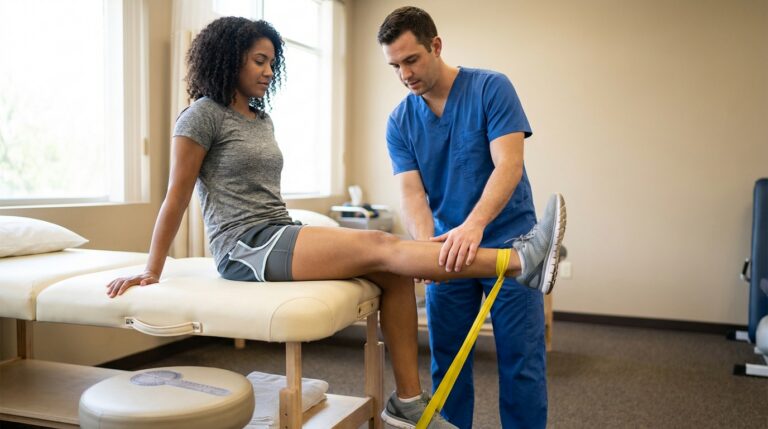
If your shoulder feels painfully stiff, hard to move, and increasingly “stuck” during everyday tasks, like reaching into a cabinet, fastening a seatbelt, or putting on a jacket, you may be dealing with frozen shoulder (also called adhesive capsulitis). Many people searching for answers want to know two things: why it’s happening and what they can do to get their motion back without making symptoms worse.
This guide explains Frozen Shoulder: How Physical Therapy Restores Motion, what’s going on inside the joint, how recovery typically progresses, and how a structured plan of frozen shoulder physical therapy and targeted frozen shoulder exercises can help you regain comfort, mobility, and function over time.
What Is Frozen Shoulder (Adhesive Capsulitis)?
Frozen shoulder is a condition where the shoulder joint capsule (the connective tissue surrounding the ball-and-socket joint) becomes irritated and tight. Over time, this can lead to pain and a progressive loss of both active motion (how far you can move your shoulder yourself) and passive motion (how far it moves when someone else helps).
Unlike a simple muscle strain, frozen shoulder often affects multiple directions of movement, especially:
- External rotation (turning the arm outward)
- Abduction (lifting the arm out to the side)
- Reaching behind the back (internal rotation)
Common Signs and Symptoms
- Deep, aching shoulder pain (often worse at night)
- Stiffness that gradually increases
- Difficulty with grooming, dressing, reaching overhead, or reaching behind your back
- Loss of motion that feels “blocked,” not just weak
Why Frozen Shoulder Happens
Frozen shoulder can develop without a clear cause, but it’s also commonly associated with:
- Prolonged shoulder immobilization (after injury or surgery)
- Diabetes or metabolic conditions
- Thyroid disorders
- Previous shoulder pain that led to reduced movement
Regardless of the trigger, the end result is similar: the capsule tightens and becomes less flexible, limiting motion and often increasing pain.
Stages of Frozen Shoulder: What to Expect
Frozen shoulder is often described in stages. Knowing the stage can help guide the intensity and focus of frozen shoulder physical therapy.
Stage 1: Freezing (Painful Stage)
Pain gradually increases and motion begins to decrease. Night pain is common. During this phase, pushing too aggressively can flare symptoms, so therapy often emphasizes pain management, gentle mobility, and maintaining function.
Stage 2: Frozen (Stiffness Stage)
Pain may stabilize or even lessen, but stiffness becomes more prominent. This is often when people notice major limitations in daily tasks. Therapy typically shifts toward progressive stretching, joint mobilization, and restoring movement patterns.
Stage 3: Thawing (Recovery Stage)
Motion gradually returns over time. The focus is on building lasting mobility, improving strength, and re-training shoulder mechanics so you can return to normal activities and reduce the risk of recurrence.
Important: Frozen shoulder often improves with time, but many people recover more effectively, and with less disruption to daily life, when guided by a structured physical therapy plan matched to their stage and irritability level.
Important: Frozen shoulder often improves with time, but many people recover more effectively, and with less disruption to daily life, when guided by a structured physical therapy plan matched to their stage and irritability level.
Frozen Shoulder: How Physical Therapy Restores Motion
Physical therapy addresses frozen shoulder from multiple angles. The goal is not just to “stretch harder,” but to apply the right intervention at the right time, balancing tissue mobility, pain sensitivity, and functional movement.
1) Reducing Pain and Calming Irritation
Early on, pain can limit your ability to move and sleep. A physical therapist may use a combination of:
- Activity modification strategies (how to move without provoking symptoms)
- Gentle mobility to reduce guarding
- Manual therapy techniques aimed at comfort and improved movement tolerance
- Guidance on pacing, posture, and positioning (including sleep positioning)
This phase is about creating a foundation so that stretching and strengthening are better tolerated.
2) Restoring Capsule and Joint Mobility
As symptoms allow, frozen shoulder physical therapy often includes hands-on techniques and guided stretching to address capsular tightness. A therapist may work on:
- Joint mobilization (graded techniques to improve glide and rotation)
- Soft tissue work for surrounding muscles that become protective and tight
- Progressive range-of-motion training in the most limited directions
Because frozen shoulder commonly restricts external rotation and overhead motion, therapy frequently targets these patterns carefully and progressively.
3) Re-Training Shoulder Mechanics (Scapula + Rotator Cuff)
When the shoulder is stiff, nearby areas often compensate, especially the shoulder blade (scapula), neck, and upper back. Therapy helps restore coordinated movement so you’re not “cheating” motion through shrugging or twisting.
This may include:
- Scapular control exercises (retraction, upward rotation, posterior tilt)
- Rotator cuff strengthening within a comfortable range
- Thoracic (upper back) mobility to support overhead reach
4) Building Functional Strength Without Flaring Symptoms
As motion improves, strengthening becomes more important, especially for returning to lifting, sports, or work demands. Your therapist will typically progress load gradually while monitoring next-day soreness and nighttime pain, which are common indicators you may be doing too much too soon.
What Makes Frozen Shoulder Physical Therapy Effective?
Successful outcomes usually come from the combination of skilled guidance and consistent home practice. Frozen shoulder can be stubborn; the most effective plans are individualized and adjusted as your symptoms change.
Key Principles That Matter
- The right intensity: stretching should feel productive, not punishing. Sharp pain often backfires.
- Consistency over intensity: short, frequent sessions often outperform occasional aggressive efforts.
- Stage-based programming: the “best” exercise depends on whether pain or stiffness is the main limiter.
- Whole-shoulder approach: the shoulder blade, upper back, and rotator cuff all influence function.
See a Thrive clinician
Acupuncture, dry needling and physical therapy across four Long Island offices. Same-week appointments are usually available, and you do not need a referral to start.
Frozen Shoulder Exercises: A Practical Starting Point
The following frozen shoulder exercises are commonly used in physical therapy programs. They should be performed gently and within tolerable limits. If you have severe pain, recent surgery, significant weakness, numbness/tingling, or concerns about safety, consult a licensed clinician before starting.
Guidelines for Pain and Progress
- A mild to moderate stretch sensation is usually acceptable.
- Avoid sharp pain, increasing night pain, or worsening symptoms that last into the next day.
- Progress by small amounts: a few degrees of motion, a few seconds longer, or one extra set.
1) Pendulum (Gentle Motion)
How: Lean forward with your non-affected hand supported on a table. Let the affected arm hang. Gently sway your body to allow the arm to move in small circles.
- Do 30–60 seconds, 1–3 rounds
- Keep circles small and comfortable
2) Table Slide (Forward Flexion)
How: Sit or stand facing a table. Place your hand on a towel and slide it forward as you hinge slightly at the hips. Pause at the first point of strong stretch, then return.
- 2–3 sets of 8–12 repetitions
- Move slowly; avoid shoulder shrugging
3) Assisted External Rotation (Using a Stick or Towel)
How: Keep your elbow tucked at your side (you can place a small towel roll between elbow and torso). Use the opposite hand to gently guide the forearm outward.
- 2–3 sets of 20–30 seconds or 8–10 repetitions with brief holds
- Stop before sharp pain
4) Cross-Body Stretch (Posterior Shoulder)
How: Bring the affected arm across your chest and use the other hand to support it closer to your body.
- 2–3 holds of 20–30 seconds
- Keep the shoulder down and relaxed
5) Hand-Behind-Back Assisted Reach (Internal Rotation)
How: Using a towel behind your back, gently guide the affected hand upward with the opposite hand above.
- 2–3 holds of 15–30 seconds
- Use a gentle pull; avoid forcing the range
6) Scapular Retraction (Shoulder Blade Control)
How: With arms relaxed at your sides, gently pull your shoulder blades back and slightly down (as if putting them into your back pockets). Hold briefly, then relax.
- 2–3 sets of 10–15 repetitions
- Keep the neck relaxed; avoid shrugging
Common Mistakes That Slow Recovery
Frozen shoulder can be frustrating, and it’s easy to overcorrect. These are frequent pitfalls that can prolong symptoms:
- Pushing through sharp pain: aggressive stretching can increase guarding and inflammation.
- Inconsistent home program: sporadic exercise often leads to slow, uneven gains.
- Only stretching and never strengthening: mobility without control can leave the shoulder vulnerable.
- Ignoring posture and upper back mobility: a stiff thoracic spine can limit overhead mechanics.
- Giving up too early: frozen shoulder often improves gradually; steady progress is the goal.
How Long Does Frozen Shoulder Take to Heal With Physical Therapy?
Recovery timelines vary widely. Many people improve over months rather than days or weeks. The stage you’re in, how long symptoms have been present, medical factors, and how consistently you follow a plan all influence how quickly motion returns.
What physical therapy can do is:
- Help you regain range of motion as efficiently as your shoulder will allow
- Reduce pain and improve sleep tolerance
- Restore function for daily tasks sooner
- Guide safe progression so you don’t stall from flare-ups
When to See a Physical Therapist
Consider scheduling an evaluation if you notice:
- Progressive stiffness over several weeks
- Night pain that disrupts sleep
- Difficulty reaching overhead or behind your back
- Loss of motion that doesn’t match your strength level
- Shoulder pain after a period of immobilization
A clinician can confirm whether frozen shoulder is likely, screen for other causes of shoulder pain, and build a plan that matches your stage and symptom irritability.
What to Expect in Frozen Shoulder Physical Therapy
While every plan is individualized, many programs include:
- Assessment: range of motion, pain triggers, shoulder blade mechanics, strength, and daily limitations
- Education: pacing, symptom monitoring, and what “productive discomfort” feels like
- Manual therapy: joint mobilization and soft tissue techniques as appropriate
- Therapeutic exercise: a staged progression of mobility and strengthening
- Home program: simple, repeatable frozen shoulder exercises to reinforce gains
Why Individualization Matters
Two people can both have frozen shoulder and need different approaches. Some shoulders are highly irritable and need gentler dosing. Others are primarily stiff and respond well to progressive stretching and strengthening. A physical therapist helps you find the “just right” level of challenge.
Supporting Your Recovery at Home
In addition to your exercise plan, these habits often help:
- Heat before movement: may improve comfort for stretching (if tolerated)
- Short movement breaks: gentle range-of-motion throughout the day can reduce stiffness
- Sleep positioning: supporting the arm with pillows can reduce night discomfort
- Ergonomics: keeping frequently used items at chest height can reduce strain
If you’re receiving care at Thrive Health in East Setauket, Sayville, Smithtown, and Westhampton, your therapist can adjust these strategies to your daily routine and work demands.
FAQ: Frozen Shoulder and Physical Therapy
1) Does frozen shoulder physical therapy hurt?
It can be uncomfortable at times, but it should not feel sharply painful or cause significant symptom flare-ups that linger into the next day. A good plan uses tolerable stretching and gradual progression, especially in the painful “freezing” stage.
2) What are the best frozen shoulder exercises to start with?
Many people begin with gentle pendulums, table slides, and assisted external rotation. The “best” starting point depends on your stage and irritability, so it’s ideal to have a therapist match the exercises to your current limitations.
3) Can I make frozen shoulder worse by stretching too hard?
Yes. Overly aggressive stretching can increase irritation and muscle guarding, which may temporarily reduce motion and increase pain. Consistent, moderate stretching is often more effective than forcing range.
4) How often should I do frozen shoulder exercises?
Many programs use short, frequent sessions (for example, 1–3 times per day) rather than one long session. Your physical therapist can set the right frequency and volume based on how your shoulder responds.
5) Will strengthening help if my main problem is stiffness?
Yes, once you can move within a comfortable range, strengthening the rotator cuff and scapular muscles can improve control, reduce compensations, and support functional use of the arm as mobility returns.
6) How do I know if I’m in the freezing, frozen, or thawing stage?
A general clue is whether pain or stiffness is the main limiter. In the freezing stage, pain is prominent and motion is starting to drop. In the frozen stage, stiffness dominates and pain may be less intense. In the thawing stage, motion gradually improves. A physical therapist can help identify your likely stage and plan accordingly.
7) When should I contact a clinician urgently?
Seek prompt medical evaluation if you have severe pain after a fall, sudden inability to lift the arm, visible deformity, fever, unexplained swelling/redness, or numbness/tingling that persists or worsens. These signs may indicate a condition other than frozen shoulder.
Bottom line: Frozen shoulder can be slow-moving, but it’s also highly treatable. A structured plan of Frozen Shoulder: How Physical Therapy Restores Motion, combining education, manual therapy when appropriate, and progressive frozen shoulder exercises, can help you steadily regain mobility, reduce pain, and return to the activities that matter most.