
Experiencing migraines is far more than enduring “just a headache.” These neurological episodes can disrupt your life for days, forcing you to seek refuge in dark rooms, battling nausea, and enduring relentless pain. Traditional treatments often involve medications like triptans, NSAIDs, or Botox injections, which may not provide complete relief and can have side effects. Many sufferers wonder if there’s an alternative that targets the root cause without relying on more medication. Increasingly, dry needling is becoming a recognized solution. But how does applying a needle to your neck alleviate pain in your head? Let’s delve into the fascinating neuroscience linking your cervical spine to migraines.

Understanding Migraines: The Importance of Your Neck
To grasp why dry needling is effective for migraines, it’s essential to know the true origin of the pain signals. While many assume migraines start solely in the brain, extensive research highlights a crucial anatomical connection involving the neck: the Trigeminocervical Complex (TCC).
The Trigeminocervical Complex: A Central Hub for Pain Signals
The TCC, located in your brainstem, is where sensory fibers from two major nerve systems converge: – The Trigeminal Nerve (Cranial Nerve V) – oversees sensations in the face, head, and brain’s protective layers. – The Upper Cervical Spinal Nerves (C1-C3) – carry sensory data from neck muscles, joints, and ligaments. Since 1961, studies have shown that the upper cervical spinal cord’s neurons respond to both trigeminal and cervical nerve stimulation. This shared pathway can lead to confusion in the brain about pain signal origins.
Referred Pain: When Neck Issues Manifest as Head Pain
Chronic tension in your upper neck muscles can send persistent pain signals to the TCC. The convergence of trigeminal and cervical nerves can mislead the brain into interpreting neck pain as a headache, a phenomenon known as referred pain. This explains why: – Neck dysfunction might trigger migraines through TCC activation. – Many migraine sufferers experience neck pain as a preliminary symptom. – Targeting the neck can alleviate migraine symptoms for many.
Central Sensitization: When Pain Triggers Multiply
Chronically tight neck muscles bombard the TCC with pain signals, leading to central sensitization, where the nervous system becomes overly reactive. As a result, stimuli like weather changes, wine, bright lights, or regular neck movements can trigger migraines. Research suggests this sensitization causes pain from typically non-painful stimuli and exaggerated pain responses, both common in chronic migraines. Dry needling seeks to disrupt this cycle by addressing muscular input, reducing pain signals from the neck to the TCC.
Exploring Dry Needling
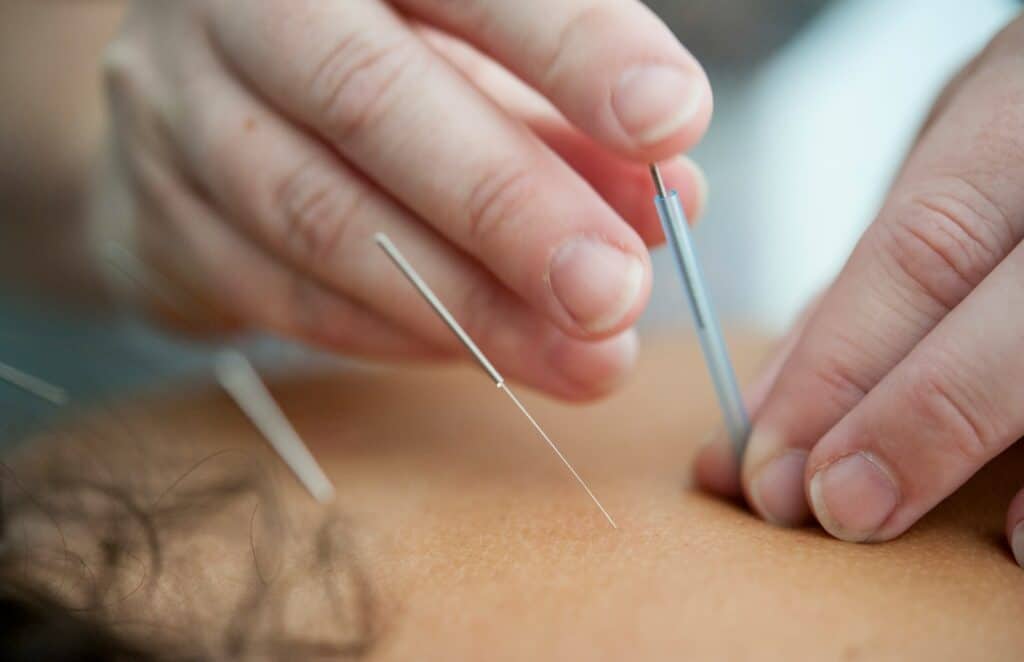
Dry needling involves inserting a thin, solid needle into a myofascial trigger point within a muscle. Unlike acupuncture, which is based on traditional Chinese medicine, dry needling is rooted in Western anatomical and neurophysiological principles. It focuses on releasing muscle knots and modulating pain neurologically.
What Are Myofascial Trigger Points?
Myofascial trigger points are hyperirritable spots in taut muscle bands. They are characterized by: – A nodule of contracted fibers palpable upon examination. – Pain patterns, both local and referred, when compressed. – A unique “jump sign” when stimulated. – High levels of inflammatory and pain-related chemicals. Trigger points can be either active, causing spontaneous pain, or latent, painful only when pressed. Studies reveal a higher number of active trigger points in chronic headache and migraine sufferers.
The Local Twitch Response: Releasing Muscle Tension
Needling a trigger point often triggers a local twitch response (LTR), a brief involuntary muscle contraction. This reflex has both diagnostic and therapeutic benefits. Therapeutic effects include: – Mechanical Reset: The twitch helps release muscle contraction, reducing tension on nearby structures. – Biochemical Changes: Needling can lower chemical concentrations in trigger points, enhancing local blood flow. – Neurological Downregulation: Resolving neck muscle pain signals may decrease TCC input, reducing migraine triggers. – Pain Inhibition: Needling may activate brainstem pathways that suppress spinal cord pain transmission.
Targeting “Migraine Muscles”
Migraine pain patterns are predictable. Research has identified specific muscles that refer pain to particular head areas. During sessions at Thrive Health Acupuncture, pain mapping helps identify probable sources. – **Upper Trapezius**: Known for a “question mark” pain pattern from neck to temple. – **Sternocleidomastoid (SCM)**: Refers pain to the eye, forehead, and cheek, potentially causing dizziness and nausea. – **Suboccipital Muscles**: Create widespread pain resembling a tight band around the head. – **Temporalis**: Associated with temple, forehead, and jaw pain, often linked to jaw tension. – **Levator Scapulae**: Refers pain from the shoulder blade to the head’s side, linked to chronic tension headaches.
The Research Behind Dry Needling
At Thrive Health Acupuncture, our approach is evidence-based. Current studies on dry needling for headaches demonstrate: – Systematic reviews indicate significant improvements in headache frequency, quality of life, and cervical range of motion. – Dry needling can reduce headache disability, especially in tension-type headaches. – Ongoing research is establishing guidelines for dry needling in headache management. – A 2024 trial showed reduced trigger points and pain intensity in headache sufferers.
Dry Needling vs. Medication
Dry needling and medications tackle migraines differently. While medications focus on chemical and vascular aspects, dry needling addresses mechanical and neuromuscular triggers, often allowing patients to reduce medication reliance.
What to Expect During a Session
For those new to dry needling, here’s what happens at our clinics in East Setauket, Sayville, Smithtown, and Westhampton: – **Assessment and Palpation**: Mapping trigger points to identify treatment targets. – **Needle Insertion**: A gentle process with a thin needle. – **Release Phase**: Targeting the trigger point to evoke the local twitch response. – **Post-Treatment Care**: May include massage or heat to ease soreness.
Safety and Side Effects
Dry needling is generally safe with a qualified practitioner. In New York, Licensed Acupuncturists undergo extensive training. Common side effects include post-needling soreness, minor bruising, and temporary fatigue.
Who Benefits from Dry Needling?
Ideal candidates include those with: – Cervicogenic headaches originating in the neck. – Tension-type migraines linked to stress or posture. – Chronic migraine sufferers with frequent headaches. – Palpable trigger points that reproduce headache patterns.
Common Questions
– **Will dry needling trigger a migraine?** Rarely, it might trigger a brief headache, but relief usually follows. – **How many sessions are needed?** Most see changes after one session, with 4 to 6 sessions recommended for lasting results. – **Can it be combined with Botox?** Yes, they work through different mechanisms and can complement each other. – **Is dry needling the same as acupuncture?** No, they have different foundations—acupuncture is based on energy meridians, while dry needling targets anatomical trigger points.
Thrive Health Acupuncture: Your Choice for Migraine Relief
Thrive Health Acupuncture offers a holistic yet precise approach to migraine treatment. We combine dry needling with acupuncture to address posture, stress, and mechanics, striving for a pain-free life. Thrive Health Acupuncture 100 N Country Road, Setauket, NY 11733 Serving East Setauket, Sayville, Smithtown, and Westhampton (631) 403-0504
