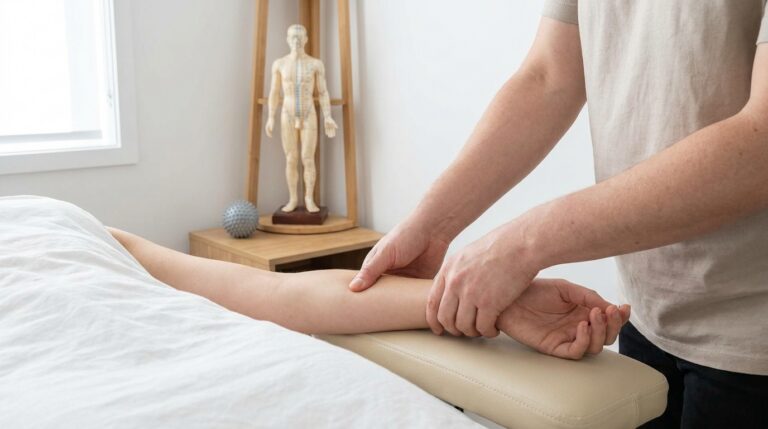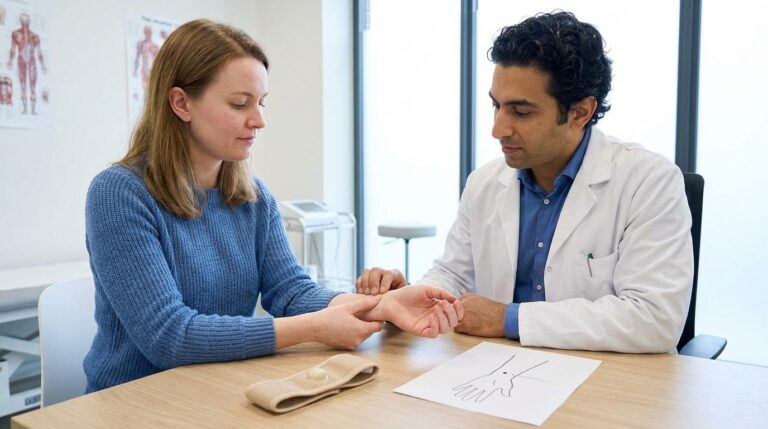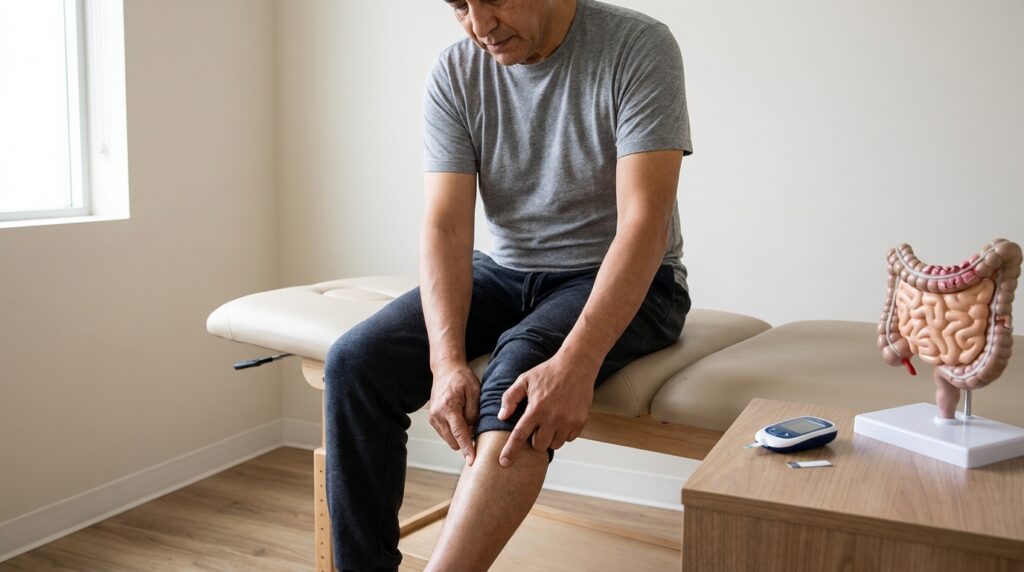
Insulin resistance is a gradual metabolic change that often shows up as fatigue, midsection weight gain, stubborn blood sugar numbers, and even disrupted sleep. In clinics like Thrive Health Acupuncture serving East Setauket, Sayville, Smithtown, and Westhampton, these patterns are common. Researchers have been exploring a practical question: can consistent at-home acupressure support people dealing with insulin resistance? Current evidence suggests it may be helpful as a supportive tool, but it is not a replacement for medical diagnosis or treatment.
Main Points at a Glance
- Insulin resistance occurs when cells respond poorly to insulin, prompting the pancreas to produce more insulin and often causing fasting glucose to rise over time.
- Small randomized trials have found that self-acupressure may lower fasting blood glucose and may affect insulin-related markers compared with control groups.
- A recent meta-analysis suggests auricular (ear) acupressure may improve glycemic measures in type 2 diabetes, though study quality and protocols vary.
- Supportive, not a substitute: acupressure is not a stand-in for medications, glucose monitoring, or clinical care.
- Frequently studied points include ST36, SP6, LV3, and KD3, commonly pressed for about 5 minutes each using an on/off pressure rhythm.
Understanding What Insulin Resistance Means
Insulin resistance describes a state where muscle, fat, and liver cells don’t respond effectively to insulin, making it harder for glucose to move from the bloodstream into cells. To compensate, the pancreas produces more insulin. This compensation can keep blood sugar in range for a time, but as the process continues, the body may struggle to maintain normal glucose levels.
A simple way to picture it: insulin acts like a key, and your cells have “locks.” With insulin resistance, the locks become harder to open. Your body responds by making more keys (more insulin). Persistently raised insulin levels are one reason insulin resistance is closely associated with prediabetes, type 2 diabetes, fatty liver disease, and metabolic syndrome.
Why It’s Important Even Before Diabetes Is Diagnosed
Insulin resistance often develops years before type 2 diabetes is formally diagnosed. That lead time matters because it’s an opportunity for lifestyle changes, and potentially supportive approaches such as acupressure, to influence the direction things go. Many clinical guidelines emphasize early intervention to reduce the likelihood of progression.
This is frequently when people start looking for additional support: they may see “prediabetes” on lab work, notice changes they can’t quite explain, or want options that complement the plan they already have with their primary care provider.
What Research Suggests About Acupressure and Blood Sugar
Interest in non-drug strategies for improving metabolic markers has increased, including research on acupressure. The findings are promising in places, but the strength of evidence varies, so it helps to understand what studies do, and do not, show.
2018 Randomized Trial Using Self-Acupressure
A well-known randomized controlled trial in 2018 studied people with type 2 diabetes who performed self-acupressure at home. The protocol used points ST36, SP6, LV3, and KD3 for about 5 minutes per point, applying pressure for roughly 10 seconds followed by a brief release. Compared with controls, the acupressure group showed a statistically significant improvement in fasting blood glucose and changes in insulin-related measures over the study period.
A key benefit of this trial is that it tested a routine people could realistically repeat at home, rather than relying entirely on in-clinic procedures.
2021 Trial Looking at Fasting Glucose and HbA1c
Another randomized study published in 2021 evaluated acupressure effects on fasting blood glucose and HbA1c in people with type 2 diabetes. Results suggested improvements in fasting glucose, while changes in HbA1c were more modest. The authors noted that larger studies and longer follow-up would help clarify long-term impact.
2024 Review of Auricular (Ear) Acupressure Studies
A 2024 meta-analysis pooling randomized trials of auricular acupressure in type 2 diabetes reported that ear-based acupressure, used alongside standard care, was associated with improved glycemic outcomes in several studies. The review also highlighted variability in methods and overall study quality, which limits how definitive the conclusions can be.
Where the Evidence Is Still Limited
It’s important to keep expectations realistic. Many studies are relatively small, run for a short period (often weeks rather than months or years), and use different protocols. Whether acupressure meaningfully improves long-term HbA1c, the common marker reflecting roughly three months of average blood sugar, remains uncertain. High-quality evidence does not support acupressure as a stand-alone method to reverse type 2 diabetes or replace medication-based care.
See a Thrive clinician
Acupuncture, dry needling and physical therapy across four Long Island offices. Same-week appointments are usually available, and you do not need a referral to start.
Most-Studied Acupressure Points for Metabolic Support
In Traditional Chinese Medicine (TCM), certain points are commonly selected for metabolic and systemic regulation. If you’re exploring self-acupressure for insulin resistance, these are among the most frequently studied points in published protocols.
ST36 (Zusanli), “Leg Three Miles”
ST36 is typically located several finger-widths below the kneecap and slightly to the outside of the shin bone, over the tibialis anterior muscle. It is one of the most researched points in acupuncture literature and is often discussed in relation to digestion, immune activity, and overall regulation.
SP6 (Sanyinjiao), “Three Yin Intersection”
SP6 is generally found a few finger-widths above the inner ankle bone, just behind the shin bone. In TCM, it is associated with the spleen, liver, and kidney channel systems, often discussed in relation to fluid balance and metabolic patterns. SP6 is not used during pregnancy.
LV3 (Taichong), “Great Rushing”
LV3 is located on the top of the foot between the first and second toes, a short distance back from the webbing. It is frequently used in TCM strategies aimed at stress-related tension patterns, and some studies link it to changes in metabolic markers when used in combination with other points.
KD3 (Taixi), “Great Ravine”
KD3 is found in the depression between the inner ankle bone and the Achilles tendon. In TCM theory, the kidney system is connected with long-term constitutional strength and endocrine/metabolic balance, which is why KD3 often appears in protocols.
How to Perform Self-Acupressure
A commonly referenced approach based on clinical trial protocols includes:
- Time per point: about 5 minutes
- Pressure pattern: roughly 10 seconds of steady pressure, then a brief release, repeated
- Intensity: firm enough for a dull, spreading sensation. Avoid sharp pain
- How often: daily practice, most days of the week
- Consistency: research effects are typically reported after several weeks of regular use
Use your thumb or fingertip pad, keep breathing slow, and adjust if you feel sharpness, tingling that shoots, or pressure directly on bone. Those sensations often mean you should reposition or reduce intensity.
Lifestyle Changes Matter Most for Insulin Resistance
Any honest discussion of insulin resistance has to put lifestyle first. The biggest drivers of improved insulin sensitivity usually include:
- Nutrition: reduce refined carbs, emphasize protein and fiber, and keep meals within a consistent daily pattern
- Activity: strength training and post-meal walking are high-impact options
- Sleep: consistent, restorative sleep supports glucose regulation; short sleep can worsen insulin sensitivity
- Stress regulation: chronic stress hormones can worsen insulin resistance; calming practices (including acupressure and acupuncture) may indirectly help by supporting nervous system balance
In Thrive Health settings across East Setauket, Sayville, Smithtown, and Westhampton, acupressure and acupuncture are best viewed as additions that can reinforce a solid lifestyle foundation, not replace it.
Safety Note: Acupressure Is Not a Replacement for Medical Treatment
For safety, continue any prescribed treatment exactly as directed, including:
- Insulin
- Metformin or other glucose-lowering medications
- GLP-1 medications (including commonly prescribed options)
- Continuous glucose monitoring (CGM) or other monitoring plans
Do not stop or adjust medication based on self-acupressure. Changes to medication should be made with your prescribing clinician. The most appropriate way to use acupressure is as one tool among many, alongside nutrition, movement, sleep, and stress management, while your healthcare team tracks labs and adjusts treatment when needed.
How In-Clinic Acupuncture Can Complement Acupressure
Self-acupressure can be useful between visits. In a clinic setting, a licensed acupuncturist may add elements such as:
- Electroacupuncture when appropriate for the individual
- Customized point combinations based on a person’s presentation rather than a single standardized routine
- Auricular techniques (including ear-based approaches that provide gentle ongoing stimulation)
- A more thorough assessment considering digestion, sleep, stress load, and hormonal patterns together
Thrive Health Acupuncture integrates TCM-style pattern assessment with modern musculoskeletal and metabolic considerations to build a plan that complements ongoing medical care.
When Working with a Licensed Acupuncturist May Be Helpful
If you’ve been told you have prediabetes, metabolic syndrome, or type 2 diabetes, adding a licensed acupuncturist to your broader care team may be beneficial, particularly when:
- Fasting glucose trends upward despite consistent lifestyle efforts
- Stress, poor sleep, or cravings seem to influence your readings
- You want an individualized acupressure routine matched to your TCM pattern
- You’re already under the care of an endocrinologist and want integrative support
This type of care is best used in coordination with, not in place of, your medical team.
Frequently Asked Questions
Can acupressure reduce blood sugar after one session?
Some people notice short-term changes, but research more consistently shows measurable effects after weeks of regular practice. It should not be used as an emergency method for a high reading.
Is acupressure safe if I use insulin?
It is generally considered safe as a supportive practice. Because it may modestly influence glucose for some individuals, continue monitoring as usual and let your prescriber know if you see consistent changes.
How long does it take to notice results?
In published trials, shifts in fasting glucose are often reported around 4 to 8 weeks with near-daily practice. Lifestyle improvements made at the same time can strengthen results.
Which is better for insulin resistance: acupressure or acupuncture?
They often work well together. Acupressure supports daily self-care, while acupuncture sessions allow more individualized point selection and in-clinic techniques such as electroacupuncture when appropriate.
Can acupressure reverse type 2 diabetes?
There is no strong evidence that acupressure alone reverses type 2 diabetes. Remission is typically associated with significant nutrition and weight-related changes under medical supervision. Acupressure may serve as a supportive tool within a broader plan.