Long Island summers are made for 5Ks, tennis leagues, cycling routes, beach runs, and weekend tournaments. They are also a prime time for overuse injuries and sudden strains, especially when training volume increases, heat and dehydration affect muscle endurance, and “desk all week, go hard on weekends” becomes the routine.
This guide explains how acupuncture for sports injuries fits into modern sports medicine, what an athlete can realistically expect during care, and how to combine acupuncture therapy with physical rehab for faster, safer acupuncture sports injury recovery. You will also find a practical comparison of dry needling and other acupuncture styles for athletes, plus an expanded injury reference that covers common summer issues like acupuncture for runner’s knee, acupuncture for plantar fasciitis, and acupuncture for IT band syndrome.
What Is Acupuncture for Sports Injuries?
Acupuncture is a form of Chinese medicine in which very thin, sterile needles are placed at specific points on the body. In sports medicine settings, acupuncture is commonly used as a supportive therapy to help athletes manage pain, reduce muscle guarding, and improve mobility while injured tissues heal.
At Thrive Health Acupuncture, sports-injury acupuncture is typically integrated with a physical plan, not used as a standalone fix. For many patients, the goal is to help you keep moving safely, tolerate rehab exercises more comfortably, and return to sport with fewer flare-ups.
Key points athletes should know
- Acupuncture can be used in acute and chronic injuries, from fresh strains to long-standing tendon pain.
- It is often paired with rehab (strength, mobility, load management) rather than replacing it.
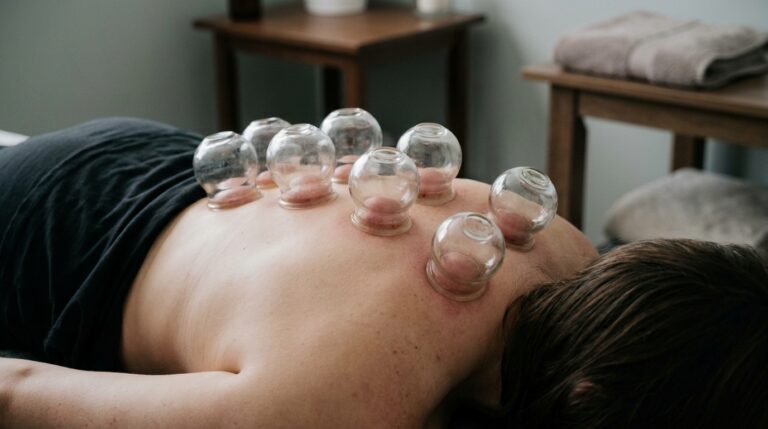
- Different techniques exist, including traditional acupuncture, dry needling, and electroacupuncture for sports injuries.
- Timing matters, treatment plans often look different in the first 72 hours than they do in a chronic tendonitis case.
How Acupuncture Supports Recovery (Pain, Mobility, Muscle Tone)
Sports injuries are rarely “just” a tissue problem. Pain can change how you move, movement changes how you load tissue, and that cycle can keep an injury stuck. Acupuncture is often used to support recovery in a few practical, non-overstated ways:
- Pain modulation: Needling can influence the nervous system and local chemical signaling involved in pain, helping many patients feel less “wired” and more comfortable moving.
- Muscle tone and guarding: After an injury, nearby muscles often tighten to protect the area. Targeted needling may help downshift overactive muscles and reduce trigger point sensitivity, which can restore cleaner movement patterns.
- Mobility support: When pain and muscle guarding decrease, joint motion and soft-tissue extensibility often improve. That can make stretching, strength work, and gait retraining easier to tolerate.
- Circulation and tissue environment: Local needling can increase microcirculation and support the tissue environment around tendons and muscles. This is often discussed in the context of acupuncture for tendonitis and strains, where recovery can be slow.
In short, acupuncture is typically used to help you move better and hurt less so you can do the right rehab consistently.
Dry Needling vs Traditional Acupuncture vs Electroacupuncture
Athletes often ask whether they need dry needling or acupuncture. The best choice depends on the injury type (muscle vs tendon vs joint irritation), your sensitivity, and whether the goal is pain relief, muscle tone change, or deeper tissue stimulation.
| Approach | Who performs it | Main goal | Typical targets | What it feels like | Best-fit sports injuries |
|---|---|---|---|---|---|
| Traditional acupuncture | Licensed acupuncturist | Reduce pain, improve mobility, regulate nervous system stress response | Local points near the injury plus distal points based on assessment | Often minimal sensation, sometimes a dull ache, heaviness, warmth, or tingling | Overuse pain, recovery support, joint irritation, headaches and neck tension from training, general soreness | Specific trigger points in muscles (for example calf, glute, TFL, forearm extensors) | May create a brief crampy or twitch response, then soreness similar to a hard workout | Muscle-driven pain, tightness contributing to mechanics issues, spasm after strain |
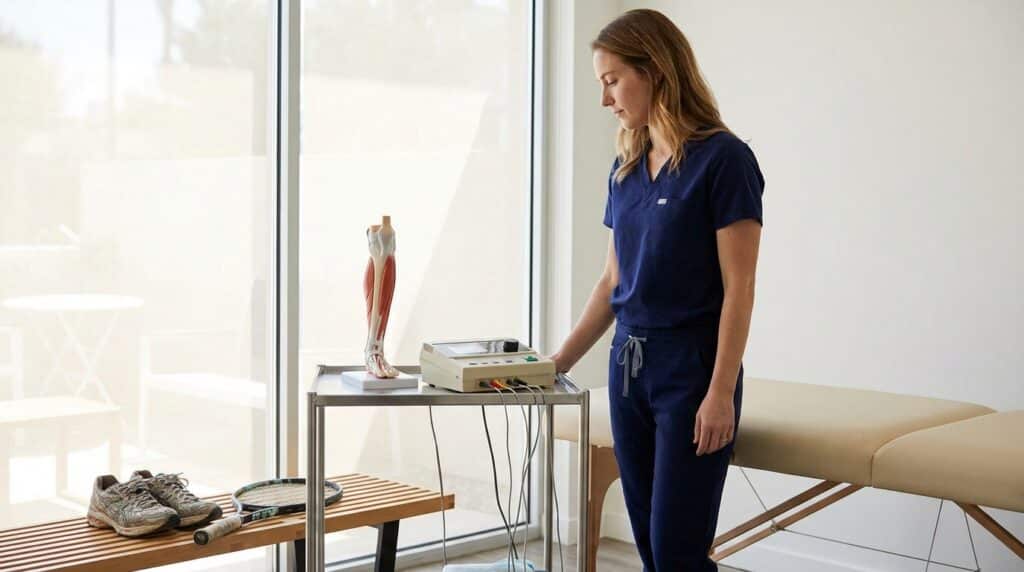
| Electroacupuncture | Licensed acupuncturist (with appropriate training) | Stronger, sustained stimulation for pain control and tissue support | Needles placed around a painful tendon, joint line, or muscle region, then connected to a gentle current | A light tapping or buzzing sensation, should not be painful | Electroacupuncture for sports injuries is commonly considered for tendon pain (Achilles, patellar, elbow), persistent knee pain, plantar heel pain, or chronic strains |
Common Summer Sports Injuries and How Acupuncture May Help
Below is a competitor-style overview of common injuries seen in active adults and athletes in East Setauket, Sayville, Smithtown, and Westhampton. Each condition includes typical symptoms, common aggravators, when to escalate to orthopedic evaluation, and how acupuncture, dry needling, or electroacupuncture may be used.
| Injury | Typical symptoms | Common aggravators | When to seek orthopedic evaluation | How acupuncture may be used |
|---|---|---|---|---|
| Runner’s knee (patellofemoral pain) | Ache around or under kneecap, stiffness after sitting, pain on stairs or downhill | Stairs, squats, running hills, sudden mileage increases | Large swelling, locking, giving way, pain after a fall, inability to bear weight | Acupuncture for runner’s knee may help reduce quad and hip flexor overactivity, improve knee tolerance to loading, and support rehab for hip and glute strength |
| IT band syndrome | Sharp or burning pain on outside of knee, often at a predictable distance into a run | Downhill running, high-volume cycling, repetitive runs on the same camber | Rapid swelling, true joint-line locking, trauma, pain that becomes constant at rest | Acupuncture for IT band syndrome often focuses on TFL, glute med, lateral quad, and hip mechanics. Dry needling may be used for trigger points, combined with load management and hip stability work |
| Plantar fasciitis (plantar heel pain) | Heel pain with first steps in the morning, tenderness near inner heel, stiffness after rest | Sudden increase in walking or running, barefoot time, unsupportive sandals | Numbness, significant bruising, pain after a “pop,” inability to walk, suspected stress fracture | Acupuncture for plantar fasciitis may help calm pain, reduce calf and intrinsic foot muscle tension, and support tolerance to strengthening and progressive loading. Electroacupuncture is sometimes used for persistent heel pain |
| Achilles tendonitis (tendinopathy) | Morning stiffness, tendon soreness during warm-up that worsens after activity, thickened tendon | Speed work, hills, sudden jump in training, tight calves | Sudden snap or pop, immediate weakness, inability to push off (possible rupture) | Acupuncture for tendonitis and strains may include local needling around the tendon, calf muscle work, and electroacupuncture for pain modulation while you follow a calf strengthening and return-to-run plan |
| Hamstring strain | Sudden sharp pain, tenderness, pain with sprinting or hinging, possible bruising | Sprinting, aggressive stretching early, returning too soon | Severe bruising, significant weakness, deformity, pain at sitting bone suggesting proximal tendon injury | Acupuncture may be used to reduce protective spasm and pain, then support mobility and strengthening progressions. Treatment differs by tissue depth and stage of healing |
| Calf strain | Tightness or tearing sensation, pain on push-off, soreness with stairs | Speed sessions, hills, dehydration and heat fatigue | Major swelling, redness, warmth, calf pain with shortness of breath (urgent rule-out), inability to walk normally | Acupuncture and dry needling may help reduce tone and restore ankle motion, often paired with graded calf loading and running reintroduction |
| Tennis elbow or golfer’s elbow | Pain at outer (tennis) or inner (golfer’s) elbow, grip weakness, pain with lifting | Racquet sports, repetitive gripping, pulling exercises | Sudden loss of strength after a pop, numbness into hand, trauma with significant swelling | Acupuncture may target forearm flexors and extensors, plus shoulder and neck contributors. Electroacupuncture is sometimes used for persistent tendon pain alongside eccentric loading |
| Shoulder overuse (swimmer’s shoulder) | Front or lateral shoulder ache, pain overhead, fatigue with strokes | High-volume swimming, paddles, poor scapular control | Night pain that is escalating, significant weakness, inability to raise arm, traumatic injury | Acupuncture can help reduce neck and rotator cuff guarding and support mobility, often combined with scapular control and rotator cuff strengthening |
| Low back pain in athletes | Ache or spasm, stiffness, pain with bending or rotation, limited hip motion | Heavy lifting, golf or tennis rotation, long car rides to events | Numbness, weakness, bowel or bladder changes, saddle numbness, fever | Acupuncture may help calm spasm and improve hip and trunk mobility so you can resume strength work safely |
| Neck pain and headaches from training | Tight neck, reduced rotation, headaches, shoulder blade tension | Cycling posture, swimming breathing patterns, stress and poor sleep | Severe sudden headache, neurological symptoms, fever, recent trauma | Acupuncture often targets upper traps, levator scap, suboccipitals, and stress-related tension patterns to improve movement and comfort |
| General soreness (DOMS) and recovery support | Muscle tenderness, heaviness, temporary performance drop after hard sessions | Unaccustomed intensity, strength training blocks, heat stress | Dark urine, severe swelling, extreme weakness, systemic symptoms | Some athletes use acupuncture as a natural recovery therapy to reduce soreness perception, improve relaxation, and support consistent training |
See a Thrive clinician
Acupuncture, dry needling and physical therapy across four Long Island offices. Same-week appointments are usually available, and you do not need a referral to start.
When to Start Treatment and How Many Sessions to Expect
Sports-injury plans should match the healing phase. Acupuncture may be helpful at each stage, but the goals and techniques often change.
Acute phase (first 24 to 72 hours)
- Goals: calm pain, reduce protective muscle spasm, support gentle range of motion
- Common plan: 1 to 2 visits in the first week for many patients, depending on severity and sport demands
- What to monitor: pain with stairs (runner’s knee), ability to walk without limping (strains), morning heel pain intensity (plantar fasciitis)
Subacute phase (about 4 days to 6 weeks)
- Goals: improve movement quality, increase tolerance to progressive loading, reduce flare-ups during rehab
- Common plan: weekly sessions are common, sometimes tapering as strength and capacity improve
- What to monitor: “distance threshold” until pain begins (IT band), ability to do calf raises without symptoms (Achilles), pain during squat and step-down patterns (knee pain)
Chronic phase (6+ weeks)
- Goals: help persistent pain settle, support tendon loading programs, address contributing areas (hip, ankle, spine)
- Common plan: weekly to biweekly sessions initially, then less frequent maintenance depending on training load
- What to monitor: next-day soreness vs flare-ups, morning stiffness, return-to-sport progression markers (pace, mileage, volume, jumping tolerance)
Session length varies by clinic and complexity, but many sports-injury acupuncture visits run 45 to 60 minutes including assessment and treatment. A typical starting plan for a straightforward issue is 4 to 8 visits, adjusted based on response and whether the injury is acute, subacute, or chronic.
What to expect during a sports-injury acupuncture visit
- Assessment: health history, mechanism of injury, training schedule, sleep and stress, plus physical exam elements such as range of motion, palpation, and functional tests (for example step-downs or single-leg balance) as appropriate.
- Needling sensation: most people feel little to mild sensation. With trigger point work, you may feel a brief crampy response. With electroacupuncture, you may feel a light rhythmic tapping.
- Aftercare: hydration, light movement, and avoiding a sudden jump back to full intensity. Mild soreness or bruising can happen and usually resolves quickly.
Safety, Side Effects, and Who Should Avoid Treatment
Acupuncture is generally considered safe when performed by a properly trained, licensed provider using sterile single-use needles. That said, any medical therapy should be individualized.
Common side effects
- Mild soreness at needle sites
- Small bruises
- Temporary fatigue or lightheadedness
- Short-term symptom flare, especially in sensitive chronic pain cases
When treatment may need modification or a medical check first
- Bleeding risk: if you take anticoagulants or have a bleeding disorder, needling depth and technique should be modified. Do not stop medications without prescribing guidance.
- Infection or fever: postpone treatment if you have an active systemic infection or fever.
- Pregnancy: acupuncture can be used with appropriate precautions, but point selection and positioning should be adapted. Tell your provider if you are pregnant or trying to conceive.
- Implanted electrical devices: electroacupuncture for sports injuries may be avoided or modified if you have a pacemaker or other implanted electrical device.
- Skin issues: open wounds or skin infections near the treatment area may require avoiding local needling.
Acupuncture + Rehab: How to Combine With PT, Strength Work, and Rest
The most competitive sports medicine approach is rarely either-or. Acupuncture often works best when it supports a structured physical plan. Many athletes combine acupuncture therapy with:
- Physical therapy: movement assessment, gait or running mechanics, manual therapy, and progressive exercise. Many patients use acupuncture to reduce pain enough to do PT more effectively.
- Strength and capacity building: tendon and joint problems often improve when the tissue is loaded appropriately. Acupuncture may help you tolerate exercises like calf raises (Achilles), step-downs (knee), or hip strengthening (IT band related pain).
- Mobility work: targeted mobility and technique changes, not endless stretching. For example, plantar heel pain may respond better to calf and foot strength than aggressive plantar fascia stretching alone.
- Load management and return-to-sport progression: adjusting weekly volume and intensity, then gradually rebuilding. This is often the difference between short-term relief and long-term recovery.
- Recovery basics: sleep, hydration, nutrition, and heat management. In summer, dehydration and electrolyte imbalance can increase cramping and fatigue.
If you are working with Thrive Health for rehabilitation, acupuncture can be coordinated around training days. Many athletes schedule sessions after harder workouts to support recovery, or before key rehab sessions to reduce pain and improve movement quality.
Red Flags: When to See an Orthopedist First
Acupuncture can be a helpful part of care, but certain symptoms should be evaluated urgently by orthopedic or medical providers before continuing training:
- Suspected fracture, dislocation, or significant trauma
- Inability to bear weight or severe limp that is not improving
- Sudden pop with immediate weakness (possible tendon rupture)
- Rapid swelling, redness, warmth, or fever
- Numbness, progressive weakness, foot drop, or other neurological symptoms
- Locking, true giving way, or severe instability in a joint
If you are unsure whether your symptoms are “normal” training soreness or something more serious, it is safer to get evaluated first, then build an integrated plan that may include acupuncture, physical rehab, and medical imaging when appropriate.
If you are unsure whether your symptoms are “normal” training soreness or something more serious, it is safer to get evaluated first, then build an integrated plan that may include acupuncture, physical rehab, and medical imaging when appropriate.
FAQ: Acupuncture for Runner’s Knee, IT Band Syndrome, and Plantar Fasciitis
Can acupuncture help runner’s knee?
Acupuncture for runner’s knee is commonly used to reduce pain and muscle guarding around the knee and hip so you can tolerate strengthening and movement retraining. Most athletes still need a plan for hip strength, quad capacity, and training load adjustments.
Is acupuncture good for IT band syndrome?
Acupuncture for IT band syndrome may help by decreasing excessive tension in muscles that influence lateral knee load (often the TFL, lateral quad, and glutes). It is usually paired with hip stability work, running or cycling form adjustments, and a gradual return-to-run plan.
How does acupuncture help plantar fasciitis?
Acupuncture for plantar fasciitis is often used to reduce heel pain and address contributing calf and foot muscle tightness. Many patients do best when acupuncture is combined with progressive strengthening, supportive footwear choices, and smart walking or running volume management.
What is better for athletes, dry needling or acupuncture?
It depends on the main driver of symptoms. Choosing between acupuncture styles often comes down to whether your pain is primarily myofascial trigger points (dry needling may be a strong fit) or whether you also need broader pain modulation, stress regulation, and multi-area support (traditional acupuncture and electroacupuncture may fit better). Some plans include both approaches.
Does electroacupuncture hurt?
Electroacupuncture for sports injuries should feel like a mild pulsing or tapping sensation. It should not be painful. Intensity is adjusted based on comfort and the treatment goal.
How many sessions do I need for a sports injury?
Many athletes start with a short plan of 4 to 8 sessions, then adjust based on how quickly pain and function change. Acute strains may improve faster, while chronic tendon pain often needs a longer runway along with consistent rehab.
Can I work out after acupuncture for a sports injury?
Often yes, but it depends on the injury and how irritable the tissue is. Some patients feel looser immediately, while others feel temporarily sore. A common approach is light training or rehab-focused exercise the same day, then returning to higher intensity once you see how your body responds.