Many patients in Setauket first become curious about cupping therapy after seeing athletes with neat, round purple circles across their backs. The next question is usually simple: does it hurt?
For most people, the answer is no. Those circles are not bruises in the typical blunt-trauma sense. Cupping has been used in health traditions across China, Egypt, Greece, and the Middle East for thousands of years. In more recent years, cupping therapy has increasingly been discussed alongside acupuncture in evidence-informed care for chronic musculoskeletal pain.
This overview is designed for Long Island patients, including those in East Setauket, Sayville, Smithtown, and Westhampton, who want clear, practical information about cupping therapy, including common styles of cupping, what current 2024 to 2025 research suggests, what the marks mean, who should avoid it, and how a typical in-office session is structured.
Main Points to Know
- Cupping uses negative pressure (suction) rather than compression to gently lift tissue, encourage local circulation, and reduce fascial restriction.
- Common approaches include dry (stationary) cupping, fire cupping, silicone sliding cupping, and wet cupping, with different uses and safety considerations.
- A 2024 systematic review and 2025 meta-analyses report that cupping may reduce short-term pain in chronic musculoskeletal conditions, with a generally favorable safety profile compared with many pain medications.
- The circular discoloration is typically a temporary capillary response that often resolves within 3 to 10 days and may reflect local tissue congestion.
- Cupping is not a fit for everyone, particularly people on blood thinners, those with bleeding disorders, active skin issues, or certain pregnancy-related considerations, so appropriate screening matters.
How Cupping Therapy Works, Fascia Decompression and Tissue Effects
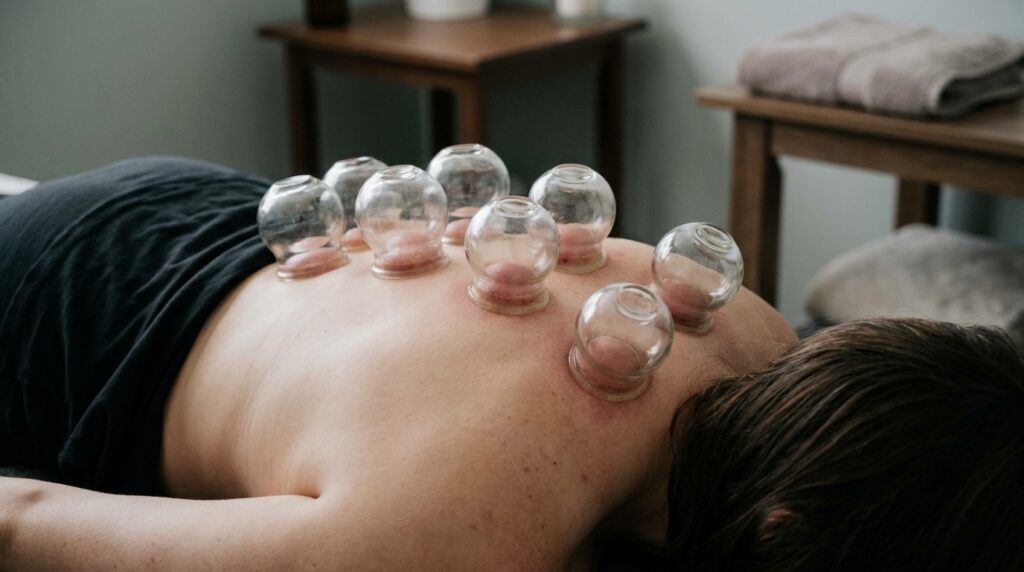
In many ways, cupping is the inverse of standard massage techniques. Massage generally presses down into tissue, while cupping therapy creates suction that lifts the skin and superficial layers. A cup (often glass, plastic, or silicone) is placed on the body, and a vacuum is created using a pump or heat. The gentle pull draws the skin, superficial fascia, and some underlying tissue upward into the cup.
This localized suction is commonly described as supporting circulation to the area and encouraging fluid movement through superficial tissues. Cupping is most often studied in relation to pain concerns, with research suggesting potential short-term benefits, while also noting the need for more consistent, high-quality trials.
In Traditional Chinese Medicine (TCM), cupping is often discussed in terms of moving Qi and Blood and reducing stagnation. In modern clinical language, the focus is frequently on the skin-fascia-muscle interface, the same general tissue layers addressed by many manual therapy and movement-based approaches.
Common Cupping Methods, Four Types You May Encounter
Dry Cupping (Stationary)
This is one of the most widely used styles in U.S. clinics. The cups are set on the skin and suction is created with a hand pump. They typically remain in place for about 5 to 15 minutes. It is commonly used for areas like the upper back, low back, shoulders, and hips where muscle tightness and fascial restriction are common.
Fire Cupping
With fire cupping, a brief flame warms the inside of a glass cup, the flame is removed, and the cup is placed on the skin. As the air cools, it creates suction. Although it looks intense, the flame does not touch the skin. This method can produce stronger suction and is sometimes chosen for more persistent, long-standing tightness patterns.
Silicone Sliding (Massage) Cupping
Silicone cups are squeezed by hand to create suction and then moved across the skin, usually with oil to reduce friction. Because the cup is continuously gliding, it tends to leave fewer distinct circular marks. Many people describe this as closer to deep-tissue massage in feel, and it can be a good option for those who are unsure about stationary cups.
Wet Cupping (Hijama)
Wet cupping involves lightly scratching the skin before applying suction, which draws a small amount of blood. It is less commonly offered in many U.S. settings because it carries additional regulatory and infection-control requirements. Thrive Health Acupuncture does not provide wet cupping, but it is included here because patients frequently ask about it.
Understanding Cupping Marks, What Discoloration Typically Means
A frequent misconception is that the circles left by cupping therapy are the same as bruises caused by impact. A typical bruise results from blunt force injury to blood vessels. Cupping discoloration comes from suction, which draws blood into superficial capillaries and can create a temporary visible change that TCM may refer to as “sha.”
Common practical questions include:
- Shade is not a direct measure of harm. Darker marks are often interpreted as showing more local congestion or restriction, while lighter marks can suggest less stagnation in that area.
- Most marks fade within 3 to 10 days. Many resolve in under a week, although darker areas can last a bit longer.
- They are usually not tender. The area often feels normal or mildly warm, and repeated sessions in the same region frequently produce lighter marks over time.
If you have an upcoming event where visible circles would be inconvenient, it helps to plan cupping at least 10 days beforehand. The issue is usually cosmetic visibility rather than safety.
See a Thrive clinician
Acupuncture, dry needling and physical therapy across four Long Island offices. Same-week appointments are usually available, and you do not need a referral to start.
Research Update (2024 to 2025), What Evidence Says About Cupping Therapy
In the past couple of years, the research conversation around cupping has expanded. Recent systematic reviews and meta-analyses examining cupping for chronic musculoskeletal pain generally report meaningful short-term reductions in pain intensity. Findings related to function, disability measures, and mental health outcomes are more mixed and less consistent from study to study.
Across 2024 to 2025 reviews, three themes appear repeatedly: cupping may be useful for short-term pain relief, adverse events are typically mild when performed appropriately, and the overall certainty remains moderate due to differences in study design, variable protocols, and the challenge of blinding in cupping trials.
In practice, cupping is often most helpful as part of a broader plan. It may be paired with acupuncture, hands-on therapy, and targeted movement work rather than used as the only tool.
When Cupping Therapy Is Often Most Helpful
Based on current research and clinical use patterns in Setauket and nearby communities, cupping is most commonly used as a supportive therapy in situations such as:
- Chronic non-specific low back pain, one of the most researched uses
- Neck and upper back tension linked to desk work or long drives
- Shoulder discomfort and limited range of motion, frequently combined with acupuncture
- Plantar fascia tightness using appropriately sized cups
- Post-exercise muscle soreness in active individuals
- Iliotibial band tightness in runners
- Chest and upper back tightness in carefully selected cases
As an example, someone dealing with persistent neck and back tension may use acupuncture for nervous system regulation, cupping for fascial decompression, and a home mobility routine to reinforce better movement patterns.
Safety Screening, Who Should Not Receive Cupping Therapy
When performed by trained clinicians, cupping is generally well tolerated, but it is not appropriate in every situation. Screening commonly includes:
- Use of prescription anticoagulants or a known bleeding disorder
- Active skin infections, open wounds, significant rashes, sunburn, or inflamed skin in the target area
- Pregnancy, with avoidance of cupping over the lower back and abdomen
- Severe varicose veins in the treatment area
- Recent surgery in the area (often within the previous 4 to 6 weeks)
- Significant anemia, platelet disorders, hemophilia, or other clotting concerns
- Implanted medical devices when cupping would be placed directly near the device
- Very young children, with extra caution and modified technique for older children when appropriate
It is important to share a complete medical history and medication list before treatment, including supplements or over-the-counter products that may affect clotting, such as daily aspirin or high-dose fish oil.
What a Cupping Therapy Appointment Typically Looks Like in Setauket
Cupping therapy is often included within a broader appointment that may also involve acupuncture, though it can also be provided as its own focused session depending on the care plan.
- Health history and skin check. The clinician reviews goals, checks the skin, and confirms that cupping is appropriate.
- Comfortable positioning. Common positions include face-down for back work, side-lying for hips, or seated for the neck and shoulders.
- Applying the cups. Often 4 to 10 cups are used, beginning with lighter suction and increasing only as tolerated.
- Time under suction. Stationary cups generally stay in place for 5 to 15 minutes, while sliding cupping uses continuous movement.
- Removal and guidance. The cups are removed, the skin is cleaned, and post-session expectations are reviewed.
After a cupping therapy session, many clinicians recommend staying well hydrated, avoiding extreme heat or cold exposure for about 24 hours (such as hot tubs, saunas, or strong direct wind), and keeping workouts light for the remainder of the day.
When It Makes Sense to See a Licensed Acupuncturist
If you have ongoing muscle or joint tension that has not improved with stretching, massage, or basic exercise changes, cupping may be a reasonable option to discuss. As with any new or changing symptom, it is also important to consult your primary care provider to rule out medical causes, especially if pain occurs alongside fever, unexplained weight loss, numbness, weakness, or bowel or bladder changes.
When choosing a provider, look for a New York licensed acupuncturist (L.Ac.) with appropriate national certification. It is reasonable to ask about cleaning and sterilization practices, contraindication screening, and coordination with other members of your healthcare team. Massage therapists in New York may also offer cupping within certain training and scope guidelines, but patients with complex medical histories often benefit from the additional clinical screening that comes with licensed acupuncture care.
Frequently Asked Questions
Does cupping therapy hurt?
Most people report a strong pulling or stretching sensation rather than pain. The first minute can feel the most intense, then it typically settles. Suction can be adjusted to stay within a comfortable range.
Do the circles mean my body is “detoxing”?
The detox explanation is common online, but it is not well supported by evidence. The marks are better understood as a localized capillary response to suction, often reflecting congestion in superficial tissues rather than the release of toxins.
How long do cupping marks last?
Usually about 3 to 10 days. Lighter discoloration often clears sooner, while darker areas can take a week or slightly longer.
How often can someone do cupping?
Many people start with weekly sessions during more active symptoms, then space out to every 2 to 4 weeks. It is common to allow marks to fade before treating the exact same spot again.
Can I exercise after cupping therapy?
It is often best to avoid intense training for the rest of the day. Easy walking is typically fine, and many people resume normal workouts the next day.
Is cupping therapy covered by health insurance in New York?
In New York, cupping therapy is commonly not reimbursed as a separate line item by many commercial insurance plans, even when acupuncture benefits are available. Coverage and patient responsibility vary by plan.
Cupping Therapy at Thrive Health Acupuncture
Cupping can be a valuable add-on for people dealing with persistent back, neck, or shoulder tightness, especially when paired with acupuncture and an appropriate movement program. Thrive Health Acupuncture serves patients across Setauket and nearby areas, including East Setauket, Sayville, Smithtown, and Westhampton, with individualized care plans that prioritize comfort and appropriate clinical screening.