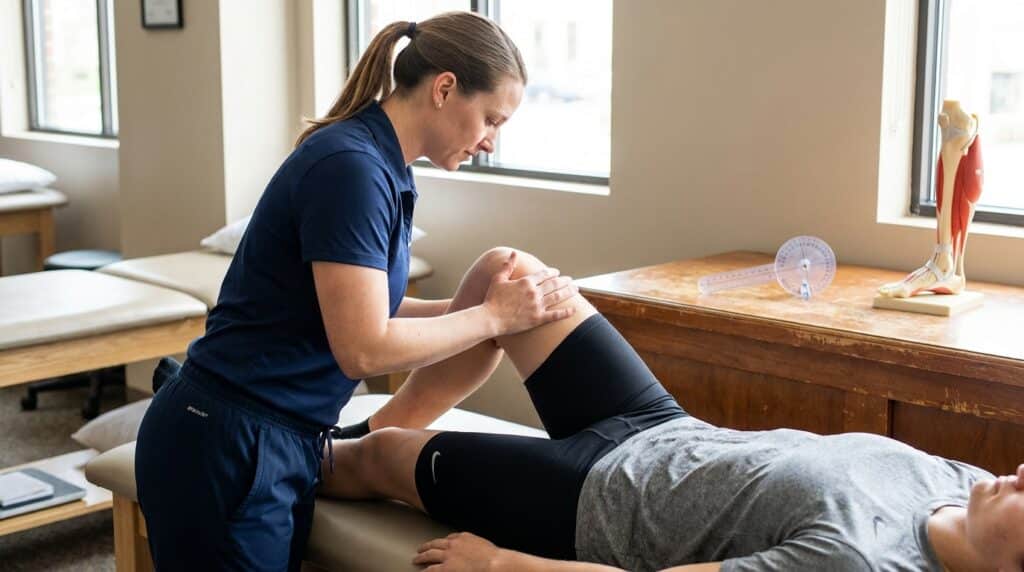
Whether you’re a weekend runner, a high school athlete, or someone who simply loves staying active, a sports injury can quickly derail your routine. Many people try to “push through” pain, rest a few days, or search for the perfect stretch, only to find the problem keeps coming back. If you’re wondering about Sports Injury Recovery: When to See a Physical Therapist, you’re not alone. The right timing can make a major difference in how well you heal, how quickly you return to sport, and how confidently you move afterward.
This guide explains what physical therapy can do for sports injuries, the most common signs you should book an evaluation, and how sports injury physical therapy supports a safer return to training. You’ll also learn practical steps for deciding when to see PT for sports injury concerns, without guessing or waiting until a minor issue becomes a long-term setback.
Why Sports Injuries Don’t Always “Just Heal” With Rest
Rest is important, but rest alone doesn’t always address the underlying cause of a sports injury. Many injuries are influenced by factors like:
- Movement mechanics (how you run, jump, cut, lift, or land)
- Strength imbalances (one side compensating for the other)
- Mobility restrictions (limited joint range of motion changing how you load tissues)
- Training errors (rapid spikes in volume or intensity)
- Previous injuries that never fully regained strength or control
When pain decreases after a few days off, it can feel like you’re “better.” But if the contributing factors remain, symptoms often return as soon as you resume activity. Sports injury physical therapy focuses not only on symptom relief, but also on restoring capacity, strength, control, mobility, and endurance, so your body can tolerate sport demands again.
What a Physical Therapist Does for Sports Injury Recovery
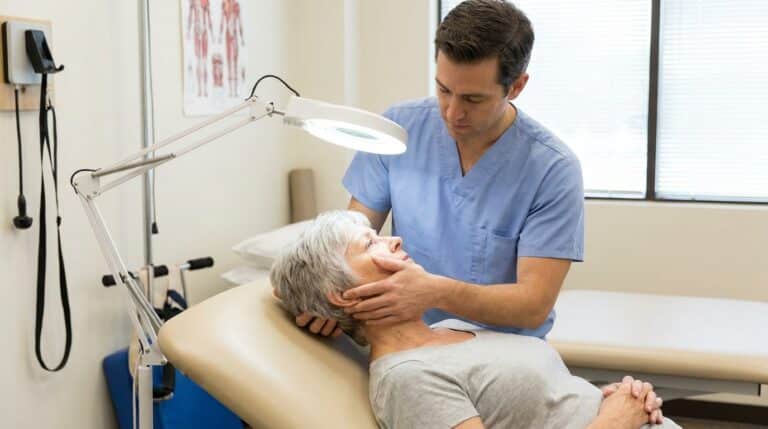
A physical therapist (PT) evaluates how your injury happened, what structures may be involved, and what’s limiting your performance now. In sports-focused rehab, the goal is typically to help you return to your activity with less pain and lower reinjury risk, while rebuilding confidence in the injured area.
Key Components of Sports Injury Physical Therapy
- Assessment and diagnosis support: Identifying likely pain generators and contributing movement patterns.
- Pain and symptom management: Using evidence-informed strategies to calm irritation and improve tolerance to movement.
- Mobility and flexibility work: Restoring joint motion and tissue extensibility where needed.
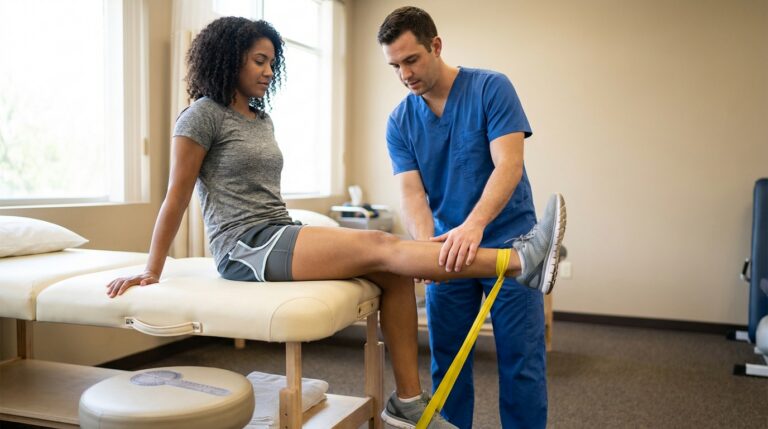
- Progressive strengthening: Building capacity in the injured region and the full kinetic chain (hips, core, shoulders, etc.).
- Neuromuscular control and balance: Improving coordination, stability, and reactive control.
- Sport-specific reconditioning: Gradually reintroducing sprinting, jumping, cutting, throwing, lifting, or endurance work.
- Return-to-sport planning: Creating criteria-based progressions rather than relying on “time only.”
In other words, PT isn’t just exercises. It’s a structured recovery plan that matches your injury, your sport, and your timeline.
Sports Injury Recovery: When to See a Physical Therapist
If you’re debating whether you need PT, these guidelines can help. Some situations call for immediate evaluation, while others suggest you should schedule if symptoms aren’t improving quickly.
See a Physical Therapist Soon (Within a Few Days) If You Notice:
- Pain that changes your mechanics (limping, altered running stride, avoiding certain movements)
- Swelling that persists or returns with activity
- Loss of range of motion (can’t fully bend/straighten a joint, can’t lift arm overhead normally)
- Weakness or “giving way” sensations
- Pain that doesn’t improve after 7–10 days of reduced activity
- Recurring pain that flares every time you train
- Night pain or pain that steadily worsens
These are common signs that the issue may not resolve with rest alone, or that you may be unintentionally reinforcing compensation patterns.
See a Physical Therapist Immediately If You Have Red Flags
Some symptoms warrant urgent medical evaluation. A PT can help guide you, but if you have any of the following, consider prompt medical care:
- Severe swelling immediately after injury
- Inability to bear weight or walk normally after an acute injury
- Visible deformity, suspected fracture, or dislocation
- Significant instability (knee buckling with normal walking, shoulder repeatedly slipping)
- Numbness, tingling, or progressive weakness
- Head injury symptoms such as confusion, worsening headache, or dizziness after impact
When in doubt, it’s appropriate to seek medical assessment to rule out serious injury.
Common Sports Injuries That Often Benefit From Physical Therapy
Many athletic injuries respond well to a structured rehab plan. Below are common examples where sports injury physical therapy is frequently useful, especially when symptoms linger or performance is limited.
Sprains and Strains (Ankle, Knee, Hamstring, Groin)
Even “mild” sprains and strains can lead to lingering deficits in balance, strength, and coordination. For example, an ankle sprain may feel better in two weeks but still have delayed reaction time and poor stability. PT can help restore full function and reduce recurrence.
Tendinopathy (Achilles, Patellar, Rotator Cuff, Tennis Elbow)
Tendon pain often develops gradually and can persist if loading isn’t managed well. PT typically focuses on progressive strengthening, improving movement strategies, and adjusting training loads so the tendon can adapt.
Runner’s Knee, IT Band-Related Pain, and Hip Pain
These issues are often influenced by hip strength, trunk control, cadence, and training progression. A PT can assess your mechanics, identify contributing factors, and build a plan that supports a comfortable return to running.
Shoulder Pain in Overhead Sports (Throwing, Swimming, Volleyball)
Shoulder symptoms may be related to mobility restrictions, rotator cuff capacity, scapular control, or workload management. PT can help you rebuild strength and control while protecting the shoulder during return-to-throw or return-to-swim progressions.
Low Back Pain in Athletes
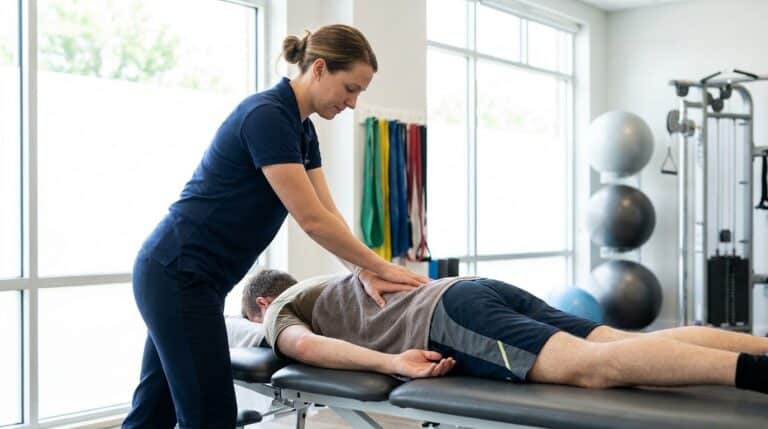
Back pain can be complex and may involve stiffness, sensitivity, or movement coordination issues. PT often emphasizes graded exposure to movement, hip and trunk strength, and technique modifications for lifting and sport-specific tasks.
Post-Surgical Sports Rehab
After procedures such as ACL reconstruction, meniscus surgery, rotator cuff repair, or labral repair, physical therapy is typically a core part of recovery. A criteria-based approach helps guide safe progressions from early motion and strength to running, jumping, cutting, and sport-specific demands.
See a Thrive clinician
Acupuncture, dry needling and physical therapy across four Long Island offices. Same-week appointments are usually available, and you do not need a referral to start.
How to Decide When to See PT for Sports Injury vs. “Wait It Out”
If you’re trying to make a practical decision, consider these questions. They can clarify when to see PT for sports injury issues that aren’t clearly urgent but still interfere with your goals.
1) Is the Pain Affecting How You Move?
If you’re compensating, limping, rotating differently, shortening your stride, avoiding certain ranges, PT can help address the issue before compensation creates secondary pain elsewhere.
2) Are You Stuck in a Cycle of Flare-Ups?
If symptoms improve with rest but return as soon as you train, you likely need a better loading plan and targeted strengthening. This is a classic scenario for sports injury physical therapy.
3) Are You Losing Fitness Because You Can’t Train?
A PT can often help you stay active with safe modifications (cross-training, alternative drills, partial ranges, or adjusted intensity) while you rehab the injured area.
4) Do You Have a Deadline (Season, Tryouts, Event)?
If you have a timeline, early guidance can help you avoid setbacks. PT can also help you plan a return that matches the demands of your sport rather than guessing based on pain alone.
5) Does It Feel Unstable, Weak, or Unreliable?
“It doesn’t hurt much, but it feels off” is a common reason athletes benefit from PT. Strength, balance, and neuromuscular control deficits can linger after the pain fades.
What to Expect at Your First Physical Therapy Visit
Knowing what happens in an evaluation can reduce uncertainty and help you prepare. While each clinic differs, a sports-focused PT visit often includes:
- History and goals: What happened, what makes it worse/better, what sport you play, and what you need to return to.
- Movement assessment: Walking/running mechanics, squats, lunges, jumps, or sport-relevant patterns.
- Range of motion and strength testing: Comparing sides and identifying limitations.
- Special tests: When appropriate, to help clarify likely tissue involvement.
- Initial treatment: Often includes targeted exercises, mobility work, and a plan to manage symptoms.
- Home program: Clear next steps you can do between sessions.
A good plan should feel specific: what you should do, what you should avoid for now, and what progress should look like over the next 1–4 weeks.
How Physical Therapy Supports a Safe Return to Sport
One of the biggest benefits of PT is turning “I feel okay” into “I’m ready.” Pain is only one piece of the return-to-sport puzzle. Many athletes need to rebuild:
- Load tolerance (the ability of tissues to handle training stress)
- Power and speed (especially after lower-body injuries)
- Deceleration and landing mechanics (critical for cutting/pivoting sports)
- Endurance (fatigue can increase compensations)
- Confidence in the injured area
Criteria-Based Progression (Instead of Time-Based Guessing)
Many recoveries go smoother when progression is based on function: how you move, how you respond to training, and whether you can meet specific strength and control benchmarks. PT helps structure these steps so you’re not returning too early, or holding back longer than necessary.
Self-Care While You Wait for PT (and What Not to Do)
If you’re between sessions or deciding whether to schedule, a few general principles can help.
Helpful Strategies
- Relative rest: Reduce or modify the aggravating activity rather than stopping all movement.
- Keep moving within tolerable limits: Gentle range-of-motion work is often helpful if it doesn’t spike symptoms.
- Manage training load: Decrease intensity, volume, hills, speed work, or impact temporarily.
- Cross-train: Choose options that don’t reproduce symptoms (for example, cycling, swimming, or strength training modifications).
Common Mistakes to Avoid
- Ignoring pain that changes your form: Compensation can create secondary problems.
- Random exercise selection: Not all strengthening is the right strengthening for your specific injury.
- Overstretching irritated tissues: Some conditions feel “tight” but are actually sensitive or overloaded.
- Returning at full intensity too soon: A short pain-free window doesn’t always mean full readiness.
Choosing the Right Clinic for Sports Injury Physical Therapy
Look for a provider who can connect rehab to your sport’s real demands. Consider asking:
- Do you treat athletes and active adults regularly?
- Will my plan include progressive strengthening and sport-specific work?
- How will you decide when I’m ready to run, jump, cut, throw, or lift again?
- Will I get a clear home program and progression plan?
If you’re seeking care in East Setauket, Sayville, Smithtown, and Westhampton, Thrive Health can help guide your recovery with a structured plan matched to your sport and goals. If your care plan also includes complementary services, Thrive Health Acupuncture may be considered as part of a broader approach to symptom management and recovery support when appropriate.
FAQ: Sports Injury Recovery and Physical Therapy
1) Sports Injury Recovery: When to See a Physical Therapist if the pain is mild?
Even mild pain can be worth evaluating if it changes how you move, keeps returning when you train, or has persisted beyond 7–10 days. Early sports injury physical therapy can address contributing factors before the issue becomes chronic.
2) When to see PT for sports injury if I can still play?
If you can play but you’re compensating, your performance is limited, or symptoms worsen during/after activity, it’s a good time to schedule. PT can help you modify training safely while you rebuild strength and control.
3) Do I need imaging before starting physical therapy?
Not always. Many sports injuries can be evaluated clinically, and PT can begin with a safe plan based on your symptoms and functional testing. If your presentation suggests a more serious issue, your provider may recommend medical evaluation or imaging.
4) How many PT sessions will I need for a sports injury?
It depends on the injury type, severity, your training demands, and how consistently you can follow the plan. Some issues improve in a few visits with a strong home program, while others (especially post-surgical rehab) require a longer course with progressive milestones.
5) Is it normal for exercises to cause some discomfort during sports injury physical therapy?
Mild, temporary discomfort can be normal with rehabilitation loading, but severe pain or lingering flare-ups are not the goal. A PT should help you find the right intensity and progression so symptoms remain manageable and function improves over time.
6) When to see PT for sports injury if it keeps coming back every season?
Recurring seasonal injuries often point to unresolved strength, mobility, workload, or technique issues. PT can identify patterns contributing to recurrence and build a prevention-focused program alongside return-to-sport training.
7) Can physical therapy help prevent future sports injuries?
Physical therapy can support injury prevention by improving strength, mobility, control, and conditioning, and by helping you plan training progressions more strategically. While no plan can remove risk entirely, better capacity and mechanics generally support more resilient performance.