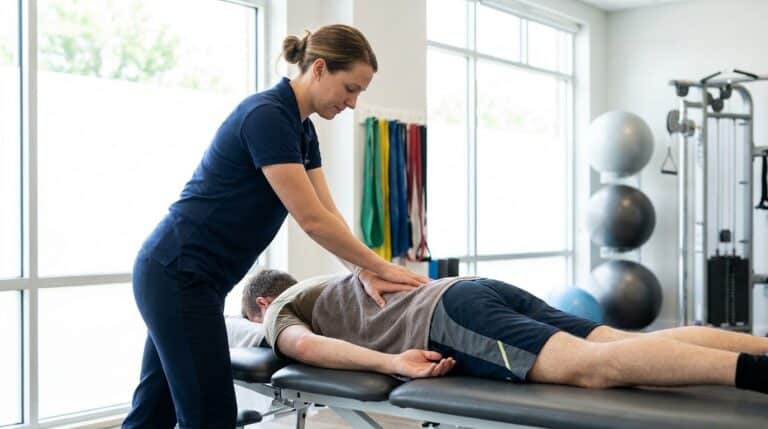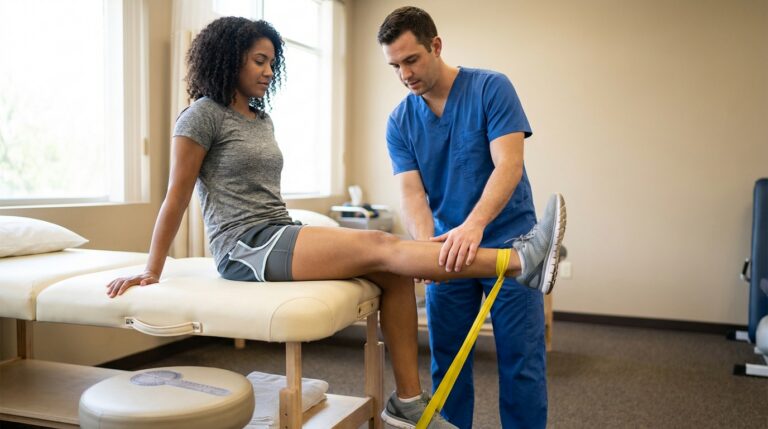
Worrying about falling can change the way you move. You may walk more cautiously, avoid stairs, stop going out as often, or hold onto furniture at home. Dizziness or spinning sensations can make that fear even stronger, especially when symptoms come on suddenly when you roll in bed, look up, or bend down. The good news is that many common balance and walking problems respond well to targeted care.
This guide explains what Balance, Gait, and Fall Prevention Therapy for Older Adults (Including BPPV/Vertigo) involves, how clinicians identify the true causes of unsteadiness, and what you can expect from a plan that combines balance therapy, fall prevention physical therapy, and when appropriate, vertigo physical therapy epley maneuvers for BPPV. If you’re seeking practical answers and a clear path forward, you’re in the right place.
Why Balance and Gait Change With Age
Balance is not a single “skill.” It’s the result of multiple systems working together:
- Vision (seeing obstacles, depth, and movement)
- Inner ear/vestibular system (sensing head movement and position)
- Somatosensory input (feedback from feet, joints, and muscles)
- Strength and mobility (hips, ankles, core, and posture)
- Reaction time and coordination (stepping quickly to “catch” yourself)
- Cognition (attention, dual-tasking, and planning movement)
As we get older, it’s common for one or more of these systems to become less efficient. That doesn’t mean falls are inevitable. It means the plan should be specific: identify what’s driving the instability, then train the exact skills needed for safer walking, turning, and daily activities.
What Is Balance, Gait, and Fall Prevention Therapy for Older Adults (Including BPPV/Vertigo)?
Balance, Gait, and Fall Prevention Therapy for Older Adults (Including BPPV/Vertigo) is a specialized form of physical therapy focused on improving steadiness and confidence while reducing fall risk. It typically includes:
- Balance training (static and dynamic tasks, eyes open/closed, different surfaces)
- Gait training (stride length, foot clearance, turning, speed changes, and obstacle negotiation)
- Strength and power training (especially hips, legs, and ankles)
- Vestibular rehabilitation for dizziness and motion sensitivity
- BPPV assessment and treatment, including canalith repositioning maneuvers such as the vertigo physical therapy epley maneuver when indicated
- Education on home safety, footwear, assistive devices, and strategies to prevent falls
At Thrive Health, the goal is not only to help you “do exercises,” but to improve real-life function: getting up from a chair, walking outdoors, carrying groceries, using stairs, and moving confidently in busy environments.
Common Signs You May Benefit From Balance Therapy
Many people assume they must have a dramatic fall to “qualify” for therapy. In reality, earlier support can prevent bigger setbacks. Consider seeking balance therapy if you notice:
- Feeling unsteady when walking, especially on uneven ground
- Drifting to one side or needing to touch walls/furniture
- Fear of falling that limits activity
- Difficulty with stairs, curbs, or getting in/out of a car
- Shuffling, reduced foot clearance, or “catching” toes
- Needing several steps to turn or feeling off-balance when turning
- Dizziness with head movements, rolling in bed, or looking up
- Recent fall or near-fall (even if you weren’t injured)
Understanding Falls: Why They Happen
Falls are usually multi-factorial. A thorough fall prevention physical therapy approach looks beyond a single cause and considers the full picture.
Physical Factors
- Lower-body weakness (hips and thighs are especially important for stability)
- Limited ankle mobility (affects balance reactions and stepping)
- Poor postural control (difficulty keeping the center of mass over the feet)
- Reduced endurance (fatigue can increase stumbling and slow reactions)
Neurologic and Sensory Factors
- Peripheral neuropathy (reduced sensation in the feet)
- Vestibular issues (inner ear problems causing dizziness or imbalance)
- Vision changes (especially in low light or with glare)
Environmental and Lifestyle Factors
- Cluttered walkways, throw rugs, poor lighting
- Inappropriate footwear
- Rushing to the bathroom at night
- Carrying objects that block vision or occupy both hands
Because falls are rarely caused by just one thing, the most effective plans combine strength, balance, gait mechanics, vestibular care when needed, and practical home strategies.
How Physical Therapy Evaluates Balance, Gait, and Fall Risk
A high-quality evaluation should feel like detective work: identifying which systems are limiting your steadiness and which situations trigger symptoms. Your therapist may assess:
- Gait quality (step length, cadence, foot clearance, arm swing, turning)
- Functional strength (sit-to-stand ability, stair control)
- Balance strategies (ankle, hip, and stepping reactions)
- Single-leg stability and tandem stance/walking tolerance
- Vestibular function (eye tracking, head movement tolerance, positional testing)
- Orthostatic symptoms (lightheadedness with position changes)
- Assistive device needs (cane, walker, or no device with training)
- Home and activity demands (stairs, hobbies, caregiving, community walking)
If dizziness is part of the picture, your therapist will determine whether symptoms suggest BPPV, vestibular hypofunction, cervicogenic dizziness, motion sensitivity, or another cause that may require medical coordination.
BPPV and Vertigo: A Common, Treatable Cause of Dizziness
Benign Paroxysmal Positional Vertigo (BPPV) is one of the most common causes of brief spinning sensations. It often feels like the room spins when you:
- Roll over in bed
- Lie back or sit up
- Look up (e.g., into a cabinet)
- Bend forward (e.g., tying shoes)
BPPV is typically related to tiny calcium carbonate crystals in the inner ear moving into a canal where they don’t belong. The result is a mismatch of signals that triggers vertigo and sometimes nausea.
How Vertigo Physical Therapy and the Epley Maneuver Fit In
Vertigo physical therapy epley care refers to a specific repositioning technique (the Epley maneuver) used when BPPV involves the posterior semicircular canal. One of the most common forms. The therapist first performs positional testing to confirm that BPPV is likely and to identify which ear and canal are involved. If appropriate, the therapist guides you through a sequence of positions designed to move the displaced crystals back to a location where they are less likely to cause symptoms.
Important notes:
- The Epley maneuver is not appropriate for every type of dizziness.
- Some people have BPPV in a different canal and need a different maneuver.
- Neck, back, or vascular considerations may require modifications or medical clearance.
- Even after successful treatment, some people need follow-up balance therapy to rebuild confidence and steadiness.
See a Thrive clinician
Acupuncture, dry needling and physical therapy across four Long Island offices. Same-week appointments are usually available, and you do not need a referral to start.
What to Expect From Fall Prevention Physical Therapy
Fall prevention physical therapy is most effective when it is progressive, individualized, and tied to everyday goals. Your program may include:
1) Strength Training That Transfers to Real Life
Therapy often focuses on the muscle groups that matter most for balance recovery:
- Hip abductors and extensors (side-stepping stability, stair control)
- Quadriceps (standing up, controlled lowering)
- Calves and anterior tibialis (push-off and toe clearance)
- Core and trunk control (upright posture and turning)
2) Balance Training: Static to Dynamic
Balance therapy typically progresses from simple to complex tasks, such as:
- Feet together, semi-tandem, tandem stance
- Weight shifts and reaching
- Stepping strategies (forward, backward, lateral)
- Surface changes (firm ground to compliant surfaces)
- Eyes-open to eyes-closed balance (as appropriate)
3) Gait Training and Walking Skill
Walking is a skill that can be coached and improved. Therapy may address:
- Increasing stride length safely
- Improving foot clearance to reduce tripping
- Turning mechanics and pivot control
- Speed changes (start/stop, faster pace, crossing streets)
- Obstacle negotiation and community mobility
4) Dual-Task and Real-World Practice
Many falls happen when attention is divided, talking while walking, carrying items, or navigating crowds. A plan may include safe dual-task drills to improve automaticity and confidence.
5) Education and Home Safety Planning
Practical strategies can reduce risk immediately. Your therapist may recommend:
- Improving lighting (especially night routes to the bathroom)
- Removing tripping hazards (cords, clutter, unstable rugs)
- Using grab bars and railings where needed
- Choosing supportive footwear
- Learning how to rise safely after a fall (as appropriate)
When Dizziness and Imbalance Occur Together
It’s common for older adults to experience both unsteadiness and dizziness. Sometimes BPPV is the main driver; other times, dizziness triggers cautious movement patterns that worsen gait. A combined approach may include:
- Vestibular rehabilitation (gaze stabilization, habituation exercises)
- Positional maneuvers when BPPV is confirmed (including vertigo physical therapy epley when indicated)
- Progressive walking and balance practice to rebuild confidence
- Breathing and pacing strategies for symptom management during activity
The goal is steady function, not just reducing dizziness in a quiet room, but improving how you move in daily life.
Assistive Devices: Cane or Walker? Getting the Right Fit
Using an assistive device is not a failure. It’s a tool. The right device can reduce fall risk and conserve energy while you build strength and balance. In therapy, your clinician can help determine:
- Whether a cane, trekking poles, or a walker is most appropriate
- Proper height and hand placement
- Safe sequencing on stairs and curbs
- How to progress away from a device if it becomes unnecessary
Incorrect device height or technique can actually increase strain and instability, so it’s worth getting professional guidance.
How Long Does Balance and Fall Prevention Therapy Take?
There’s no one-size-fits-all timeline. Duration depends on your current strength, medical history, fall history, and goals. Some people with BPPV improve quickly after the correct maneuver and need only a short course of follow-up. Others benefit from several weeks of progressive fall prevention physical therapy to build strength, improve gait mechanics, and reduce fear of falling.
In general, you should expect:
- Early sessions to focus on assessment, safety, and symptom control
- Middle phase to emphasize progressive strength, balance challenges, and walking practice
- Later phase to focus on real-world tasks, independence, and a long-term home plan
What You Can Do at Home (Safely) Between Visits
Your therapist will adjust a home program to your needs. In the meantime, these general strategies are commonly helpful:
- Stand up and sit down with control from a stable chair (as tolerated)
- Practice short, frequent walks in a safe environment
- Use a night light and keep pathways clear
- Pause after standing before walking if you get lightheaded
- Avoid rushing, especially on stairs or when turning quickly
Safety note: If you experience new or severe dizziness, fainting, chest pain, sudden weakness, or changes in speech/vision, seek urgent medical evaluation. Not all dizziness is BPPV, and some symptoms require immediate attention.
Safety note: If you experience new or severe dizziness, fainting, chest pain, sudden weakness, or changes in speech/vision, seek urgent medical evaluation. Not all dizziness is BPPV, and some symptoms require immediate attention.
Choosing the Right Clinic for Balance and Vertigo Care
For best results, look for a clinic that can address both fall risk and dizziness in an integrated way. Thrive Health provides care across East Setauket, Sayville, Smithtown, and Westhampton, with clinicians who can evaluate gait and balance limitations, create a progressive strengthening and walking plan, and deliver vestibular interventions when appropriate, including BPPV assessment and vertigo physical therapy epley treatment when indicated.
When you’re evaluating options, consider asking:
- Will my plan include gait training, not just balance exercises?
- Do you assess for vestibular causes of dizziness, including BPPV?
- How will you measure progress over time?
- Will I receive a clear home program and safety guidance?
FAQ: Balance, Gait, and Fall Prevention Therapy for Older Adults (Including BPPV/Vertigo)
1) What’s the difference between balance therapy and fall prevention physical therapy?
Balance therapy focuses on improving steadiness and postural control through targeted balance tasks. Fall prevention physical therapy is broader: it typically includes balance training plus strength work, gait training, home safety strategies, and (when needed) vestibular rehabilitation to reduce overall fall risk.
2) How do I know if my dizziness is BPPV?
BPPV often causes brief spinning episodes triggered by changes in head position, like rolling in bed, looking up, or bending forward. A physical therapist can perform specific positional tests to determine whether BPPV is likely and which ear/canal is involved. Because other conditions can mimic BPPV, a proper assessment matters.
3) Is the Epley maneuver safe for older adults?
For many people, yes, when performed by a trained clinician after appropriate screening. Therapists can modify positioning based on neck or back limitations. However, not all vertigo is BPPV, and not all BPPV is treated with the same maneuver, which is why an individualized vertigo physical therapy epley approach is important.
4) Can physical therapy help even if I haven’t fallen yet?
Yes. Early intervention is often ideal. If you’ve had near-falls, feel unsteady, or avoid activities due to fear of falling, therapy can improve strength, gait mechanics, and balance strategies before a fall occurs.
5) Will I need a cane or walker forever?
Not necessarily. Some people use an assistive device temporarily while building strength and balance. Others benefit from ongoing use for safety in the community. A therapist can help determine the best option and train you to use it correctly.
6) What if I feel worse after starting vestibular exercises?
Mild, temporary symptom increase can occur with vestibular rehab because the exercises are designed to retrain the system. Your therapist should dose and progress exercises carefully to keep symptoms manageable and ensure you’re improving function over time. If symptoms are intense or unusual, tell your therapist promptly.
7) How do I maintain improvements after therapy ends?
A strong discharge plan usually includes a home program for strength and balance, a walking routine, and clear guidance on how to progress safely. Many people do best with consistent, moderate practice rather than occasional intense effort.