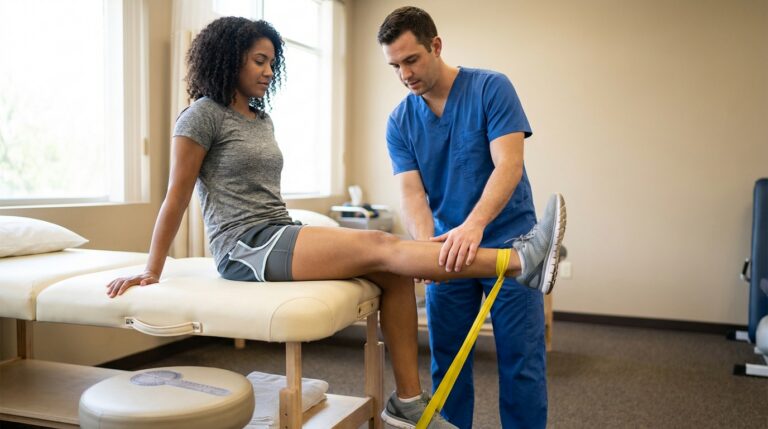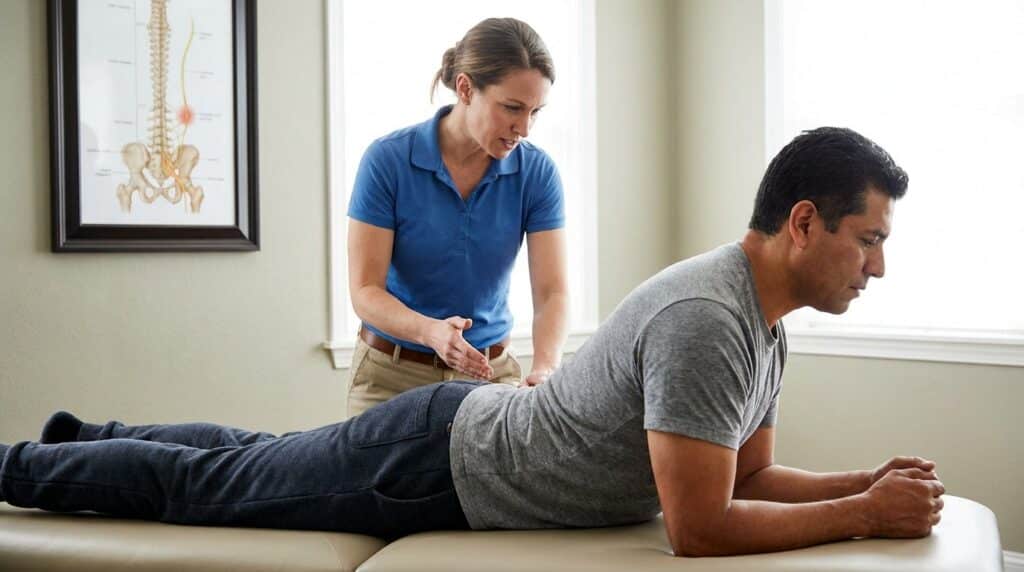
Sciatica pain can feel alarming: sharp, burning, or electric symptoms that travel from the low back into the buttock, thigh, and sometimes the calf or foot. When a herniated disc is involved, it’s common to worry that movement will make things worse, or that rest is the only safe option. In many cases, the opposite is true: the right kind of movement, guided by a clinician, can help calm symptoms, restore function, and reduce the chance of recurring flare-ups.
This guide explains physical therapy for sciatica related to a herniated disc, what typically helps (and what often doesn’t), how a plan is matched to your specific presentation, and which herniated disc exercises are commonly used. You’ll also learn when to seek medical evaluation promptly and how to set realistic expectations for recovery.
Understanding Sciatica and Herniated Discs
What “sciatica” actually means
Sciatica is a symptom pattern, not a diagnosis by itself. It refers to pain and/or nerve-related symptoms along the sciatic nerve distribution, often including:
- Pain radiating from the low back or buttock down the leg
- Tingling, numbness, or “pins and needles”
- Weakness in certain leg or foot muscles
- Symptoms that worsen with certain positions (often sitting, bending, or twisting)
How a herniated disc can trigger sciatica
Between the vertebrae are discs that act like cushions. A herniated disc occurs when disc material shifts outward and can irritate or compress a nearby nerve root. This irritation may create sciatica-like symptoms, especially when the lower lumbar segments are involved.
Important nuance: imaging findings and symptoms don’t always match perfectly. Some people have disc bulges or herniations on imaging without pain, while others have significant symptoms with minimal imaging changes. That’s one reason a thorough physical therapy evaluation is valuable. It focuses on your function and symptom behavior, not just a scan.
Why Physical Therapy for Sciatica Often Helps
When sciatica is driven by a herniated disc, the goal of physical therapy for sciatica is typically to:
- Reduce nerve irritation by finding positions and movements that decrease symptoms
- Restore mobility in the spine, hips, and surrounding tissues without provoking the nerve
- Improve trunk and hip strength so the spine is supported during daily activities
- Build tolerance to sitting, walking, bending, and lifting through graded exposure
- Teach self-management strategies to handle flare-ups and prevent recurrence
Many people feel better with a structured plan that blends symptom-relieving techniques, progressive exercise, and education on posture and movement mechanics. Physical therapy is also useful because it adapts as you improve: what helps in week one may not be the same as what helps in week six.
What Helps Most: Key Components of an Effective PT Plan
1) A detailed assessment to “classify” your symptoms
Effective care starts with identifying patterns, what makes symptoms better or worse, whether pain “travels” down the leg or retreats toward the back, and whether there are strength or reflex changes. Your physical therapist may assess:
- Symptom location and intensity (back vs leg dominance)
- Movements that aggravate or relieve (bending, extension, side-bending)
- Neurological signs (sensation, strength, reflexes)
- Hip mobility, core control, and gait
- Work, sport, and daily activity demands
This helps determine which approaches are most likely to help and which to avoid initially.
2) Directional preference and symptom centralization
Many people with disc-related sciatica respond to a specific movement direction (often, but not always, spinal extension). A common goal early on is centralization: symptoms retreat from the leg toward the back. Centralization is often a helpful sign that the nerve irritation is calming.
If extension increases leg symptoms, your plan may emphasize a different direction (or a more gentle progression). The key is individualized dosing and careful monitoring.
3) Activity modification (without “total rest”)
Prolonged bed rest is rarely a winning strategy. Instead, PT often focuses on relative rest, temporarily reducing provocative activities while maintaining safe movement. Common early adjustments include:
- Limiting long sitting bouts; using frequent standing/walking breaks
- Avoiding repeated deep bending and twisting under load
- Using a hip-hinge strategy for daily tasks
- Choosing walking or short bouts of gentle movement if tolerated
4) Targeted herniated disc exercises (progressed in phases)
The best herniated disc exercises are the ones matched to your irritability level and symptom behavior. Early exercises often prioritize pain relief and nerve calm. Later exercises build strength and resilience for real-life tasks.
5) Manual therapy and symptom-relief techniques (as appropriate)
Hands-on techniques can be used to reduce pain and improve mobility in some individuals, especially when muscle guarding or joint stiffness is contributing. Manual therapy is typically most effective when paired with active exercise and education.
6) Education you can actually use
Knowing what’s normal, and what’s not, can reduce fear and improve decision-making. A good plan clarifies:
- Which symptoms are acceptable during exercise (mild, temporary) vs. warning signs
- How to pace activity and progress safely
- How to handle flare-ups without panicking
- How to lift, sit, and move with less strain
See a Thrive clinician
Acupuncture, dry needling and physical therapy across four Long Island offices. Same-week appointments are usually available, and you do not need a referral to start.
Herniated Disc Exercises Commonly Used in Physical Therapy
The exercises below are commonly used in physical therapy for sciatica and disc-related symptoms. They are examples, not a substitute for an individualized evaluation. Stop and seek professional guidance if symptoms significantly worsen, especially if pain intensifies down the leg or numbness/weakness increases.
Phase 1: Calm the nerve and reduce leg symptoms
Prone lying (gentle extension bias)
Lie on your stomach with your head turned to one side. Breathe slowly for 1–3 minutes. If this reduces leg symptoms or “pulls” pain upward toward the back, it may be a good starting position.
Prone on elbows
From prone lying, prop up on your elbows. Hold 10–30 seconds, repeat several times as tolerated. The goal is symptom reduction or centralization, not forcing range.
Press-ups (if tolerated)
From prone, place hands under shoulders and gently press your upper body up while keeping hips down. Move within a comfortable range. Perform a small set, then reassess symptoms. This is often used when extension is clearly helpful.
Walking (graded)
Short, frequent walks can be a powerful tool. Start with a duration that doesn’t worsen symptoms and build gradually. Many people tolerate walking better than sitting early on.
Phase 2: Restore mobility and control
Hip hinge practice
Learn to bend at the hips while keeping the spine more neutral. This can reduce repeated lumbar flexion stress during daily tasks like picking items up or loading a dishwasher.
Core bracing (gentle)
In a comfortable position (often on your back with knees bent), gently tighten your abdominal wall as if preparing for a cough, without holding your breath. Use short holds and keep effort moderate.
Glute bridge (if symptoms allow)
On your back with knees bent, squeeze glutes and lift hips slightly. Keep the movement smooth and avoid pushing into pain. This builds posterior chain support, which can help with standing and walking tolerance.
Side-lying clamshells
With knees bent and feet together, lift the top knee slightly while keeping hips stacked. This targets hip stabilizers that can reduce compensations through the low back.
Phase 3: Build strength and return to bending/lifting
Squat-to-box or sit-to-stand
Practice controlled sit-to-stand from a chair, then progress to a box squat. Focus on hip hinge, steady breathing, and even weight through the feet.
Loaded carries (light at first)
Carrying light weights with good posture can build trunk endurance. Progress gradually and stop short of symptom flare-ups.
Deadlift pattern (coached and scaled)
Eventually, many people benefit from learning a safe hinge-and-lift pattern for real-world demands. This must be individualized, range, load, and frequency depend on irritability and technique.
Practical rule: Exercises that make symptoms move farther down the leg or linger significantly afterward often need to be modified. Exercises that reduce leg symptoms, centralize pain, or feel “loosening” without a lasting flare are more likely to be helpful.
Practical rule: Exercises that make symptoms move farther down the leg or linger significantly afterward often need to be modified. Exercises that reduce leg symptoms, centralize pain, or feel “loosening” without a lasting flare are more likely to be helpful.
What to Avoid (Especially Early On)
Not everyone needs the same restrictions, but these are common early irritants for disc-related sciatica:
- Prolonged sitting, especially slouched or with deep hip flexion
- Repeated end-range bending (toe-touches, aggressive hamstring stretching) if it worsens leg symptoms
- Twisting under load (lifting and rotating at the same time)
- “Pushing through” nerve pain that travels further down the leg
Also, be cautious with generic online routines. Some herniated disc exercises are helpful for one person and aggravating for another depending on directional preference and nerve sensitivity.
How Long Does Physical Therapy Take for Sciatica from a Herniated Disc?
Recovery timelines vary. Many people notice meaningful improvement over weeks, especially when they can identify symptom-relieving positions and gradually rebuild activity. Others may need a longer progression if symptoms are highly irritable, if there are strength deficits, or if work demands are physically intense.
Progress is often measured by function, not just pain:
- Walking farther with less leg pain
- Sitting longer without flare-ups
- Less frequent or less intense symptoms
- Improved strength and confidence with bending/lifting
When to Seek Medical Evaluation Urgently
Physical therapy is appropriate for many cases, but certain symptoms require prompt medical assessment. Seek urgent care if you experience:
- New or worsening bowel or bladder control issues
- Numbness in the saddle region (groin/perineum)
- Rapidly progressing weakness in the leg or foot
- Severe, unrelenting pain with systemic symptoms (fever, unexplained illness)
Also consider medical evaluation if symptoms are not improving over time, if pain is severe and limiting basic function, or if you’re unsure whether your presentation is disc-related.
What a Typical PT Visit May Include
At a clinic such as Thrive Health, a sciatica and herniated disc plan commonly includes:
- Movement testing to identify directional preference and aggravating positions
- Neurological screening (strength, sensation, reflexes)
- Individualized exercise selection with clear dosage and progression rules
- Manual therapy when appropriate to improve comfort and mobility
- Home program designed to be simple and repeatable
- Coaching on daily mechanics (sitting, sleeping positions, lifting strategies)
If you’re looking for in-person care, Thrive Health serves East Setauket, Sayville, Smithtown, and Westhampton, with treatment plans matched to your symptoms and goals.
Common Questions: Sciatica, Discs, and Exercise
Is it safe to exercise with sciatica?
Often, yes, with the right type and dose. The goal is to choose movements that reduce symptoms or at least do not worsen them in a lasting way. A physical therapist can help you find the safest starting point and progress appropriately.
Should I stretch my hamstrings or piriformis?
Sometimes gentle stretching helps, but aggressive stretching can irritate sensitive nerve tissue, especially if it reproduces tingling, numbness, or sharp leg pain. If stretching makes symptoms travel farther down the leg, it may not be the right tool at that stage.
Do I need an MRI before starting physical therapy?
Not always. Many people begin physical therapy for sciatica based on clinical findings and symptom behavior. Imaging may be considered if there are red flags, severe or progressive neurological deficits, or if symptoms fail to improve as expected.
What if extension exercises make me worse?
Then extension may not be your directional preference, or it may be too much too soon. PT can modify the movement, change the starting position, or use a different strategy (including lateral movements, gentle stabilization, or graded activity) based on your response.
Tips for Getting Better Results from Physical Therapy
- Track patterns: note what positions relieve symptoms and what reliably aggravates them.
- Prioritize consistency: a few minutes of the right exercises daily often beats sporadic long sessions.
- Use a flare-up plan: have 1–2 “go-to” symptom-relief positions and a walking dose you tolerate.
- Progress gradually: increase duration, load, or range one variable at a time.
- Ask for clear rules: you should know what to do if pain increases and how to adjust.
FAQ: Physical Therapy for Sciatica and a Herniated Disc
1) What is the best physical therapy for sciatica caused by a herniated disc?
The best approach is individualized and often includes directional-preference movements (when appropriate), graded walking or activity, trunk and hip strengthening, and education on posture and lifting mechanics. The most helpful plan is one that reduces leg symptoms and steadily restores function.
2) Which herniated disc exercises help sciatica the most?
Commonly helpful herniated disc exercises include prone lying, prone on elbows, and press-ups when extension reduces symptoms, along with progressive core and hip strengthening (bridges, clamshells, controlled sit-to-stand). The “best” exercises depend on how your symptoms respond.
3) How do I know if an exercise is helping or hurting?
Signs an exercise may be helping include centralization (symptoms move out of the leg), reduced intensity, improved walking or sitting tolerance, and no lasting flare afterward. Signs it may be too aggressive include pain traveling farther down the leg, increasing numbness/tingling, or symptoms that remain worse for many hours after.
4) Can physical therapy fix a herniated disc without surgery?
Physical therapy cannot promise structural changes, but it can often reduce pain and improve function by calming nerve irritation, improving movement strategies, and building strength and tolerance. Many people manage disc-related sciatica successfully with conservative care.5) How many PT sessions do I need for sciatica?
It varies based on severity, irritability, neurological findings, and your daily demands. Some people improve with a short course focused on self-management, while others benefit from a longer progression to rebuild strength and safely return to work or sport.
6) What sleeping position is best for sciatica from a herniated disc?
Comfort and symptom reduction are the priorities. Many people prefer side-lying with a pillow between the knees or on the back with a pillow under the knees. If a position increases leg symptoms, adjust and choose the option that calms them.
7) When should I consider seeing a specialist?
Consider medical evaluation if you have progressive weakness, significant numbness, symptoms that aren’t improving over time, or red-flag signs such as bowel/bladder changes or saddle numbness. A physical therapist can also help guide when referral is appropriate.