Scheduling physical therapy can bring up a lot of questions, especially if you’ve never been before. You might be wondering what will happen, what you should wear, whether it will hurt, how long it will take, and what you’ll be asked to do. This guide answers those questions in a clear, practical way so you feel prepared and confident walking into your first appointment.
Below, you’ll learn what to expect at your first physical therapy visit, including paperwork, the evaluation, common tests, treatment options, and what you’ll likely do at home between sessions. Whether you’re coming in for pain, a sports injury, post-surgical rehab, balance issues, or a nagging problem that won’t go away, the overall process is designed to be thorough, individualized, and focused on helping you move better.
Why Your First Visit Matters
Your first physical therapy visit is more than a quick check-in. It sets the foundation for your plan of care. It’s typically the longest appointment because your therapist needs time to understand your history, assess how you move, identify contributing factors, and create a strategy that fits your goals and lifestyle.
Many people search for what to expect first physical therapy appointment because they want reassurance: “Will I be judged for being out of shape?” “Will I be forced into painful movements?” “Will I be told I need months of therapy?” A good first visit should feel collaborative, respectful, and matched to you.
Before You Arrive: How to Prepare
What to Bring
Having a few items ready can make check-in smoother and help your therapist build the clearest picture of what’s going on:
- Photo ID and insurance card (if applicable)
- Referral or prescription (if your plan or state requires it)
- Relevant medical information (imaging reports, surgical notes, discharge summaries, medication list)
- A list of questions you want answered
- Any braces, orthotics, or assistive devices you use (boot, cane, walker, splint)
What to Wear
Choose clothing that allows your therapist to observe the involved area and your movement. Comfort and access matter more than looking “gym-ready.”
- Back/hip/knee/ankle: shorts or loose athletic pants
- Shoulder/elbow/wrist: tank top or short-sleeve shirt
- Foot/ankle: supportive sneakers (unless instructed otherwise)
If you’re coming straight from work, do your best. Clinics are used to adapting. You may also be offered a gown or draping options if needed for assessment.
Arrive a Little Early
For a first-time visit, arriving 10–20 minutes early is often helpful for forms and insurance verification. If forms are provided ahead of time, completing them before your appointment can reduce stress and maximize treatment time.
Check-In and Paperwork: What You’ll Be Asked
At check-in, you’ll typically complete forms that cover:
- Medical history (past injuries, surgeries, conditions)
- Current symptoms (location, intensity, what makes it better/worse)
- Functional limits (walking, sleeping, stairs, lifting, sports)
- Goals (return to running, reduce pain, improve balance, get back to work)
- Consent and privacy forms
This information helps the therapist adjust the evaluation and avoid a one-size-fits-all approach. If you’re unsure how to describe your pain, it’s okay. Your therapist will ask follow-up questions to clarify.
The Initial Evaluation: The Heart of Your First PT Session
The most important part of your first PT session is the evaluation. Think of it as a movement-focused investigation: your therapist gathers clues from your history, posture, strength, mobility, and movement patterns to identify what’s driving your symptoms.
1) Your Story and Symptom Review
Your therapist will start by talking with you. Common questions include:
- When did this start, and what were you doing at the time?
- Where do you feel symptoms, and do they travel?
- What activities are limited right now?
- What have you tried so far (rest, medication, injections, other care)?
- What does a “good outcome” look like for you?
Be honest about your daily routine, work demands, caregiving responsibilities, sleep, stress, and exercise habits. These factors can influence both symptoms and recovery planning.
2) Screening for Safety
Physical therapists are trained to screen for signs that may require medical follow-up. You may be asked about:
- Unexplained numbness/tingling, weakness, or changes in coordination
- Unusual swelling, redness, or heat
- Symptoms that worsen at night or don’t change with movement
- Recent falls or balance concerns
This is not meant to alarm you. It’s part of providing safe, appropriate care and making sure therapy is the right next step.
3) Movement and Posture Observation
Your therapist may watch how you stand, sit, walk, squat, reach, or move through specific tasks. This helps identify compensations (like favoring one side) and movement habits that can contribute to pain or recurring injuries.
4) Range of Motion, Strength, and Flexibility Testing
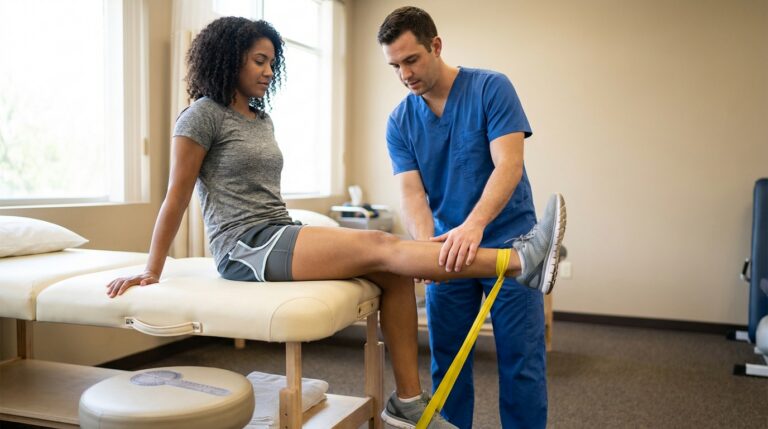
Expect a combination of active movements (you move) and passive movements (your therapist assists) to assess joint motion and tissue flexibility. Strength testing may involve pushing against the therapist’s hand or using specific positions to isolate muscle groups.
If you’re worried about pain during testing, say so. Your therapist can modify the exam to stay within tolerable limits while still gathering useful information.
5) Special Tests and Functional Measures
Depending on your condition, your therapist may use orthopedic or neurological tests to better understand what structures may be involved. You may also do functional measures such as:
- Timed sit-to-stand
- Single-leg balance
- Stair assessment
- Grip strength
- Work- or sport-specific movement screens
These tests help track progress over time, not “grade” you. They provide a baseline so you and your therapist can see meaningful change.
See a Thrive clinician
Acupuncture, dry needling and physical therapy across four Long Island offices. Same-week appointments are usually available, and you do not need a referral to start.
What Treatment Might Happen on the First Visit?
Many people ask what to expect first physical therapy appointment because they want to know if they’ll receive treatment right away. In many cases, yes, after the evaluation, your therapist may begin treatment if appropriate. The exact approach depends on your diagnosis, irritability of symptoms, and goals.
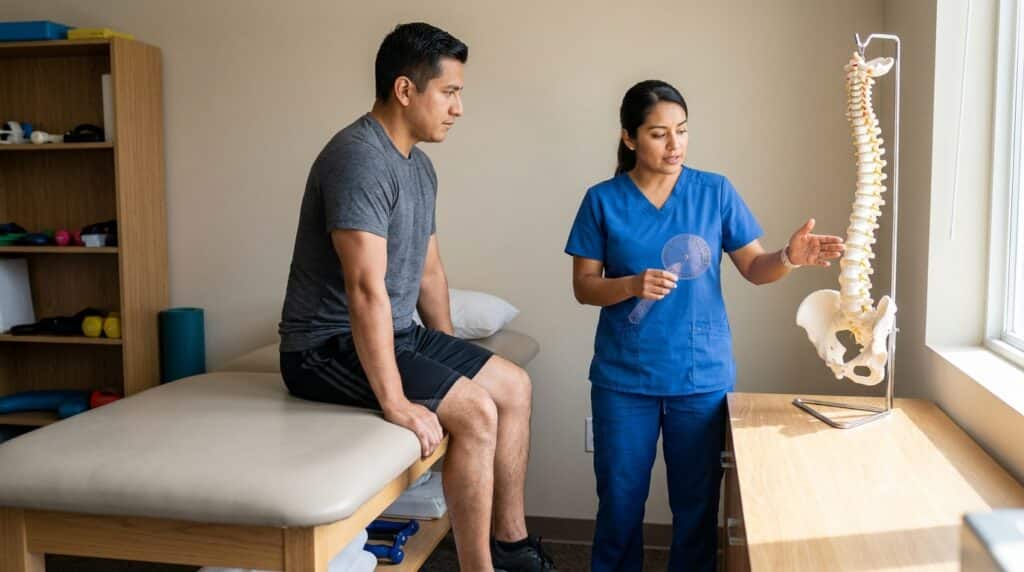
Patient Education: The Most Underrated Part of PT
Education often starts on day one. You may discuss:
- What’s likely contributing to your symptoms
- Which movements are safe, which to modify, and which to avoid temporarily
- How to pace activity to reduce flare-ups
- What “good soreness” versus “warning pain” can feel like
Clear education helps reduce fear, build confidence, and improve follow-through.
Therapeutic Exercise (Usually Starts Early)
Exercise is a core part of physical therapy. On your first PT session, you might learn a few foundational movements designed to:
- Improve mobility or joint range
- Activate underused muscles
- Build stability and control
- Reduce sensitivity by gradually reintroducing movement
Early exercises are often simple and targeted. The goal is not to exhaust you. It’s to find the right starting point.
Hands-On Therapy (When Appropriate)
Depending on your needs and the therapist’s clinical judgment, hands-on techniques may be used to reduce pain, improve mobility, or help you move more comfortably. This can include soft tissue work or joint mobilization. Hands-on care is typically paired with active exercise so improvements carry over into daily life.
Modalities (Sometimes, Not Always)
Some sessions may include modalities such as heat, ice, or electrical stimulation. These can be used to help manage symptoms in certain situations, but they’re usually considered supportive tools rather than the main driver of long-term improvement.
How Long Is the First Appointment?
The initial visit is commonly longer than follow-up sessions because it includes evaluation and plan development. Many clinics schedule the first appointment for roughly 45–75 minutes, though this varies.
If you’re concerned about time (or fatigue, transportation, or childcare), let the clinic know. Therapists can often prioritize the most important components and build from there.
Will Physical Therapy Hurt?
Some discomfort can occur, especially if you’re stiff, inflamed, or returning to movement after a period of rest. However, therapy should not feel like you’re being “pushed through” sharp or escalating pain.
A helpful expectation is that PT may involve:
- Mild to moderate challenge during exercise
- Temporary soreness similar to starting a new workout
- Symptom changes as your body adapts to new movement patterns
Your therapist should regularly check in about your symptoms, adjust intensity, and teach you how to interpret your body’s response. If something feels wrong, speak up. Good PT is a two-way conversation.
Your Plan of Care: What Happens After the Evaluation
Before you leave, you should have a clearer sense of what’s going on and what the next steps are. Your therapist will typically outline:
- Working diagnosis or clinical impression (in plain language)
- Short-term and long-term goals
- Frequency and duration recommendations (for example, 1–2x/week initially)
- Milestones to look for (improved walking tolerance, better sleep, increased strength)
- Home exercise plan and how often to do it
Keep in mind that timelines can vary widely. Some issues improve quickly; others require a longer progression. Your therapist should re-assess and adjust the plan as you respond.
Your Home Exercise Program (HEP): What to Expect
Most people will receive a home program during or shortly after the first visit. This is a key part of progress because what you do between sessions matters.
A good home program is:
- Specific (clear sets, reps, and cues)
- Realistic (fits your schedule and energy)
- Progressive (updated as you improve)
- Purposeful (each exercise has a reason)
If you’re worried you won’t remember everything, ask for written instructions and clarification on what you should feel during each exercise.
Common Conditions Treated in Physical Therapy
Physical therapy can help with a wide range of issues. Your first visit will be matched to your situation, but common reasons people start PT include:
- Neck and back pain
- Shoulder pain, rotator cuff issues, or postural strain
- Knee pain, ligament injuries, or post-surgical rehab
- Ankle sprains, Achilles pain, plantar heel pain
- Hip pain and mobility limitations
- Balance problems and fall prevention
- Sports injuries and return-to-activity planning
- Overuse injuries related to work or repetitive activity
Questions to Ask During Your First Physical Therapy Visit
If you’re not sure what to say, these questions can help you get the most from your first PT session:
- What do you think is contributing to my symptoms?
- Which activities are safe for me right now?
- What should I avoid temporarily?
- How often should I do my home exercises?
- How will we measure progress?
- What should I do if my symptoms flare up?
- What is a reasonable timeline for improvement in my case?
What If You’re Nervous or Embarrassed?
It’s normal to feel nervous, especially if you’re in pain, unsure how your body will respond, or worried about being judged. Physical therapists work with people of all ages, activity levels, and backgrounds. Your job is not to “perform” well; your job is to show up as you are.
If you have concerns about modesty, past experiences with pain, or anxiety about movement, tell your therapist early. Small adjustments, like explaining each step before it happens, offering alternatives, or using a slower pace, can make the visit much more comfortable.
Red Flags and When to Contact Your Provider
While it’s common to feel mild soreness after new activity, contact your therapist or medical provider if you experience symptoms that feel severe, unusual, or rapidly worsening. Examples can include significant swelling, sudden loss of function, new or progressive numbness/weakness, or pain that feels dramatically different than your typical pattern.
Your care team can help determine whether you should modify exercises, adjust your plan, or seek additional evaluation.
How Thrive Health Approaches the First Visit
At Thrive Health, the first appointment is designed to be clear, individualized, and goal-focused. You can expect a detailed evaluation, time for questions, and a plan that matches your needs, whether you’re aiming to get back to sport, return to work comfortably, recover after surgery, or simply move with less pain.
If your broader plan includes complementary services, some patients also explore Thrive Health Acupuncture as part of an overall approach to symptom management. Your physical therapist can help coordinate care based on your goals and preferences.
FAQ: What to Expect at Your First Physical Therapy Visit
1) What happens during the first physical therapy appointment?
In most cases, your therapist will review your history, assess your movement (range of motion, strength, balance, and function), discuss goals, and begin a plan. Often, you’ll also learn a few starter exercises and receive guidance on activity modifications.
2) How should I prepare for my first PT session?
Wear comfortable clothing that allows movement, bring relevant medical documents (if you have them), arrive early for paperwork, and write down your main symptoms and goals so you don’t forget anything important.
3) What should I wear to physical therapy?
Athletic or loose-fitting clothes are usually best. Shorts are helpful for hip, knee, or ankle issues; a tank top or short-sleeve shirt works well for shoulder and neck concerns. Supportive sneakers are typically recommended unless you’re told otherwise.
4) Will I get exercises at the first visit?
Many patients do. Your therapist may prescribe a small set of targeted movements to start improving mobility, reducing pain, or activating key muscles. The program should be manageable and matched to your current tolerance.
5) Is it normal to be sore after the first PT appointment?
Yes, mild soreness or fatigue can be normal, similar to how you might feel after trying new exercises. Your therapist should explain what level of soreness is expected and what signs might indicate you should scale back.
6) How many physical therapy visits will I need?
It depends on your condition, goals, overall health, and how consistently you can follow your home plan. Your therapist should give an initial recommendation and then adjust based on how you progress over time.
7) What if I’m not sure my therapist understood my pain?
Speak up and be specific about what you feel and when it happens. You can ask your therapist to summarize their findings and plan. Physical therapy works best when it’s collaborative and your concerns are addressed directly.