One of the most puzzling situations for many people is developing upper-tooth or jaw pain that doesn’t seem to come from a dental issue. A dental exam may show healthy teeth, yet the discomfort continues. In a large number of cases, the true culprit is sinus pressure, which can closely imitate tooth pain and create a deep, dull ache across the upper teeth and jaw.
This type of sinus pressure often intensifies when you bend forward, fly, or wake up after a cold. Because the sinuses sit directly above the upper teeth, inflammation and swelling can irritate shared nerve pathways, sending pain signals into the teeth, gums, and jaw. Below is a clinician-style guide to why sinus pressure can feel like a toothache, how to use targeted pressure points for relief, and when it’s time to seek professional evaluation.
Key Takeaways
- The maxillary sinuses sit above the upper back teeth, and sinus pressure can be mistaken for tooth pain because they share nerve pathways.
- Typical sinus pressure-related dental pain often affects multiple upper molars, worsens when bending forward, and commonly follows a cold or allergy flare.
- Acupressure points such as LI20 (Yingxiang), Bitong, GB20, ST3, and ST7 may help reduce sinus pressure and ease referred tooth and jaw discomfort.
- Supportive measures like warm compresses, steam, hydration, and better sleep positioning can further reduce sinus pressure.
- Ongoing or one-sided tooth pain, fever, swelling, or pus may signal something other than sinus pressure and should be assessed by a dental or ENT clinician.
How Sinus Pressure Triggers Tooth and Jaw Discomfort
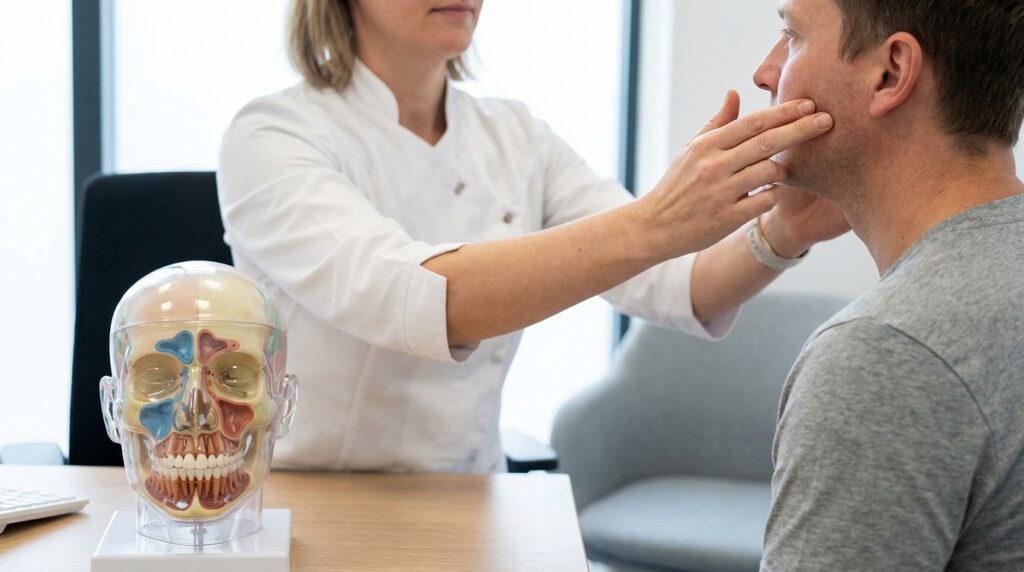
The maxillary sinuses are air-filled spaces located within the cheekbones. The roots of the upper molars sit immediately below them, sometimes separated by only a very thin layer of bone. When the sinuses become irritated (from infection, allergies, or inflammation), the lining swells, mucus thickens, and pressure builds inside the cavity. That increased pressure can transmit downward toward the tooth roots.
Because branches of the trigeminal nerve supply sensation to both the sinuses and the upper teeth, the nervous system may misinterpret where the pain is coming from. This is a classic example of referred pain: your brain “labels” the signal as tooth pain even though the source is higher up in the sinus cavity.
How to Tell Sinus-Related Pain From a Dental Issue
There are several practical clues that help separate sinus-driven tooth pain from a true dental problem. Pain linked to sinus congestion often feels broader, commonly involving multiple upper back teeth at the same time. It may worsen when bending forward, lying flat, or during pressure changes. It’s also more likely to occur alongside facial fullness, nasal congestion, post-nasal drip, or after a recent cold.
Dental pain, on the other hand, is more often isolated to one tooth and may feel sharper or more “electric.” It can be provoked by chewing, biting, hot or cold foods, or tapping on a specific tooth. When the pattern isn’t clear, a dental evaluation is typically the simplest first step to rule out tooth and gum causes, followed by a medical evaluation for sinus involvement when appropriate.
How the TMJ Can Add to Facial and Tooth Pain
Facial pain frequently overlaps across regions. When sinus congestion drags on, many people start clenching their jaw, sleeping less soundly, or breathing through their mouth. Each of which can strain the temporomandibular joint (TMJ) and surrounding muscles. Once the TMJ becomes irritated, it can refer pain into the cheek, ear, and upper teeth, making the overall picture feel more intense and harder to pinpoint.
In Thrive Health’s work with patients across East Setauket, Sayville, Smithtown, and Westhampton, it’s common to see sinus symptoms and jaw tension occurring together. Addressing both the congestion component and the muscular/joint component can be important for meaningful relief.
See a Thrive clinician
Acupuncture, dry needling and physical therapy across four Long Island offices. Same-week appointments are usually available, and you do not need a referral to start.
Key Acupressure Points for Sinus-Related Tooth and Jaw Pain
Acupressure for sinus-related tooth and jaw discomfort aims to reduce facial congestion, relax overactive facial and jaw muscles, and support drainage. Some research on acupuncture-based approaches for chronic rhinosinusitis suggests potential symptom improvement, and nasal massage techniques around LI20 have been associated with better airflow and reduced congestion symptoms in small studies.
Below are commonly used points that may be helpful when sinus pressure is referring pain into the upper teeth or jaw.
LI20 (Yingxiang), “Welcome Fragrance”
LI20 is located in the groove where the outer edge of each nostril meets the cheek. It’s widely used for nasal congestion and sinus pressure, especially when pressure is centered in the cheeks and upper jaw. To apply, place your index fingers on both sides and use firm, controlled circular pressure for about 60 seconds. Many people notice improved nasal “openness” within the first minute.
Bitong. Extra Point Near the Nasal Bridge
Bitong is an extra point found just above LI20, near the upper portion of the smile line where the nasal bone transitions to cartilage. Gentle, steady pressure on both sides can support drainage and reduce sinus pressure that may be radiating into the upper molars. Hold for 30–60 seconds, keeping the pressure comfortable and even.
GB20 (Fengchi). Base of the Skull
GB20 sits in the hollows at the base of the skull, just outside the large neck muscles. It’s often used for head and upper-face tension that can accompany sinus pressure. Place your thumbs into the hollows, let the head tip slightly back, and press upward (not straight inward) for 90–120 seconds while breathing slowly. This can help reduce the “pressure loaded” feeling that often builds during sinus flare-ups.
ST3. Along the Cheekbone
ST3 is located directly below the pupil, in a small depression at the lower border of the cheekbone. Because it lies close to the maxillary sinus region, gentle pressure here may help with referred discomfort from sinus pressure into the upper teeth. Press lightly for 30–60 seconds; if you can breathe through your nose, pairing this with slow nasal breathing may enhance the calming effect.
ST7. Near the TMJ
ST7 is found just in front of the ear in a depression that becomes more noticeable when you open and close your mouth. It can be useful when sinus pressure is accompanied by jaw clenching or TMJ-area tightness. Use light, sustained pressure for about 60 seconds. Avoid deep or forceful pressing in this area.
A Simple 5-Minute Sequence
- LI20 for 60 seconds
- Bitong for 30–60 seconds
- ST3 for 60 seconds
- GB20 for 90–120 seconds
- ST7 for 60 seconds
Supportive Steps That Enhance Relief
Acupressure tends to work best when paired with basic supportive habits that reduce congestion and improve drainage. Common options include:
- Warm compress: Apply a warm, damp cloth over the cheekbones for 5–10 minutes to help loosen mucus and relax facial tissues.
- Steam inhalation: Use steam from hot (not scalding) water for about 5 minutes once or twice daily to support clearance.
- Hydration: Drinking enough fluids helps keep mucus thinner and easier to move. Sleep positioning: Raising the head slightly (extra pillow or raised head of bed) can encourage overnight sinus drainage.
- Saline rinses: When used correctly with distilled or previously boiled water, saline irrigation can reduce congestion and daytime pressure.
Choosing Between a Dentist, ENT, or Acupuncturist
The best first step depends on how the symptoms present. If pain is focused on one tooth, worsens with biting, or is triggered by hot/cold foods, a dentist is usually the right starting point. If multiple upper teeth ache at once, symptoms worsen when bending forward, and the discomfort followed a cold or allergy flare, primary care or an ENT evaluation is often more appropriate.
If acute infection has been ruled out and the issue is recurring congestion, facial pressure, or jaw tension that keeps cycling back, acupuncture care can be a useful complementary approach. Thrive Health Acupuncture commonly coordinates care with dental and ENT providers across East Setauket, Sayville, Smithtown, and Westhampton when symptoms overlap across specialties.
When Acupuncture May Be Appropriate
If your dental evaluation is normal, an ENT or medical clinician has ruled out an acute infection, and you still have facial pressure that radiates into the teeth or jaw, acupuncture may be a reasonable next consideration. A licensed acupuncturist can evaluate contributing factors such as muscle tension, breathing patterns, posture, and recurring congestion, then build a focused plan to address them.
Frequently Asked Questions
Can a sinus infection really feel like a toothache?
Yes. Because the upper back teeth and the maxillary sinuses share nerve pathways, inflammation in the sinus can create pain that feels identical to a tooth problem. A dental exam and imaging can often rule out tooth-related causes.
How long should I try acupressure before getting evaluated?
If symptoms are mild and clearly tied to a cold or allergies, trying acupressure and supportive care for a few days is reasonable. If pain is severe, one-sided, associated with fever, or lasts beyond about 10 days, clinical evaluation is recommended.
Is acupressure okay if I have a fever?
Brief, gentle acupressure is generally tolerated, but fever with facial pain, worsening symptoms, or thick/discolored nasal discharge should be assessed medically. Acupressure is not a substitute for antibiotics when they’re medically indicated.
Can these points help TMJ pain too?
Often they can. Sinus discomfort and jaw tension frequently occur together, and points like GB20 and ST7 may help calm both. If jaw pain persists after sinus symptoms resolve, a TMJ-specific evaluation and plan may be helpful.
Is acupuncture more effective than acupressure?
For many ongoing or recurrent cases, in-office acupuncture can provide a more precise and longer-lasting effect. Acupressure is a valuable daily tool and can help between visits, but it isn’t identical to needle-based treatment.