Few things drain you like night after night of poor sleep, the 3 a.m. ceiling stare, followed by the coffee-then-crash routine. At Thrive Health Acupuncture in East Setauket, Sayville, Smithtown, and Westhampton, sleep concerns are among the most common issues we hear about, and many people arrive after searching for acupuncture for insomnia when other approaches haven’t worked. Below is a clear look at what current research says about acupuncture for insomnia, how Traditional Chinese Medicine (TCM) views sleep problems, and what a practical treatment plan often includes.
Main Highlights
- Insomnia impacts an estimated 10–30% of adults in the U.S., and acupuncture for insomnia is increasingly used as a non-medication option.
- A 2025 systematic review and meta-analysis in Frontiers reported significant improvements in PSQI (Pittsburgh Sleep Quality Index) scores with acupuncture for insomnia across 10 trials totaling 757 participants.
- Other 2025 meta-analyses suggest acupuncture for insomnia protocols may perform as well as or better than some Western sleep medications on sleep-quality scoring, and may be a helpful add-on for menopausal insomnia.
- Clinical findings also indicate acupuncture for insomnia can compare favorably to certain medications with fewer side effects. From a TCM perspective, insomnia often reflects imbalance among the Heart, Spleen, Liver, and Kidney systems, and treatment is guided by the pattern identified.
- A common plan is two visits weekly for 4–6 weeks, then gradually spacing visits out, alongside sleep-habit adjustments. Some conditions (sleep apnea, narcolepsy, severe depression) should be evaluated by a specialist first.
How Widespread Is Insomnia?
The National Heart, Lung, and Blood Institute (NHLBI) estimates that about 10% of U.S. adults live with chronic insomnia disorder, while roughly another 20% experience short-term insomnia in a given year. If you include people who struggle with poor sleep but don’t meet strict diagnostic criteria, the total becomes even higher. The impact is significant: reduced focus, mood disruption, effects on blood pressure, and increased accident risk.
Many people seek care after trying “Z-drugs” (such as zolpidem, eszopiclone, or zaleplon) or over-the-counter antihistamine-based sleep aids, and they’re often concerned about tolerance, dependence, next-day grogginess, cognitive fog, and fall risk, issues commonly raised in FDA guidance and by sleep clinicians. Acupuncture is one non-pharmacologic route patients may explore, often alongside cognitive behavioral therapy for insomnia (CBT-I), which remains a widely recommended first-line approach.
TCM’s View of Insomnia and Sleep Imbalance
In TCM, restorative sleep is understood as the natural result of Yin settling and anchoring Yang. When that balance is disrupted, acupuncture for insomnia is used to help regulate the Heart, Spleen, Liver, and Kidney systems. For example, one person may have trouble falling asleep due to a “Heart Blood Deficiency” pattern, while another may wake consistently around 3 a.m. in a presentation commonly associated with “Liver Qi Stagnation.” Treatment is chosen based on the individual pattern rather than a one-size-fits-all formula.
Heart Blood Deficiency
This pattern often includes difficulty falling asleep, vivid dreams, palpitations, a pale complexion, and forgetfulness. It’s frequently seen after illness, childbirth, or long stretches of overwork.
Liver Qi Stagnation (often with Heat)
Common signs include waking between 1–3 a.m., irritability, jaw or neck tension, headaches, and a feeling of stress building like pressure in a closed container. This is a frequent theme among people carrying heavy responsibility and ongoing stress.
Kidney Yin Deficiency
This presentation may involve restless sleep, night sweats, hot flashes, low-back soreness, and nighttime dry mouth. It is often discussed in the context of perimenopause/menopause and in individuals who have been running on “overdrive” for years.
Digestive (Stomach) Disharmony
TCM includes the idea that when digestion is unsettled, sleep can be disturbed. Late, heavy dinners, reflux, or digestive discomfort may directly interfere with sleep quality. Adjusting meal timing and food choices is often part of a well-rounded plan.
Heart–Spleen Deficiency
When worry and rumination are persistent, they can be associated (in TCM terms) with depletion that affects both mental rest and digestion. People may report light sleep, fatigue, and waking up tired regardless of time spent in bed.
These patterns can overlap, and many people show a mixed picture. That’s why an in-person assessment, history, pulse, tongue, and symptom details, matters more than following a generic sleep protocol.
What Research Indicates About Acupuncture for Insomnia
Research on sleep and acupuncture has expanded notably in recent years. Several 2025 publications are frequently referenced in discussions about evidence quality and outcomes.
2025 Systematic Review & Meta-Analysis (Frontiers)
A 2025 systematic review and meta-analysis (PMC12074954) combined results from 10 randomized controlled trials with a total of 757 participants. The analysis found statistically significant improvements in PSQI scores, one of the most commonly used tools for measuring sleep quality, in groups receiving acupuncture compared with control groups. While effect size differed by study and population, the overall trend was consistently positive.
2025 Frontiers Meta-Analysis Comparing Acupuncture to Medication
Another 2025 meta-analysis in Frontiers (fneur 1589535) compared acupuncture for insomnia approaches with Western sleep medications. In the included trials, acupuncture groups showed better PSQI outcomes and reported fewer adverse events. As with many meta-analyses, the authors noted variability across studies and emphasized the need for larger, more pragmatic trials.
2025 Cochrane Review Protocol
A 2025 Cochrane protocol (CD015974) has been registered to evaluate acupuncture for insomnia using Cochrane’s structured methodology. This signals growing momentum toward higher-quality synthesis and clearer guidance as the research base develops.
2025 PLOS One on Menopausal Insomnia
A 2025 PLOS One publication (pone.0318562) focused on menopausal insomnia and found that an acupuncture for insomnia regimen provided meaningful benefit as an adjunct to standard care, relevant for individuals hoping to avoid or limit hormone-based interventions.
Overall, a balanced interpretation is that acupuncture for insomnia may improve sleep quality for many people, with a favorable risk-to-benefit profile. Results can vary depending on the person’s underlying pattern, the clinician’s skill and approach, and whether the full course of care is followed.
See a Thrive clinician
Acupuncture, dry needling and physical therapy across four Long Island offices. Same-week appointments are usually available, and you do not need a referral to start.
Frequently Used Acupuncture Points to Support Sleep
Acupoint selection is matched to the person, but several points appear often in acupuncture for insomnia treatment plans:
- HT7 (Shenmen, “Spirit Gate”) at the wrist crease; commonly used to calm the mind and support sleep.
- SP6 (Sanyinjiao) on the inner lower leg; often used to nourish Blood and Yin in deficiency patterns.
- KD3 (Taixi) near the inner ankle; used to support Kidney function in TCM terms and nighttime Yin.
- GV20 (Baihui) at the crown of the head; used to regulate and settle the Shen.
- Yintang between the eyebrows; a gentle point many people find deeply relaxing.
- Anmian (“Peaceful Sleep”) behind the ear; frequently added when falling asleep is the primary issue.
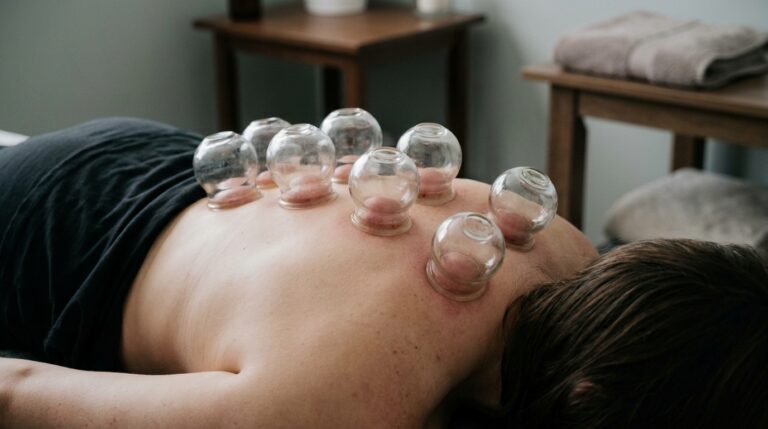
Depending on the presentation, a plan may also include scalp acupuncture, auricular (ear) approaches, or supportive techniques such as cupping or gua sha. Some people are also taught simple self-acupressure routines to use before bed, often focusing on points like HT7, Yintang, and Anmian.
What a Treatment Plan Often Looks Like
For moderate, ongoing insomnia, a typical acupuncture for insomnia plan in East Setauket, Sayville, Smithtown, and Westhampton often follows a staged approach:
- First visit (about 60–75 minutes): thorough history, TCM pattern identification, review of relevant sleep studies/medications, and an initial treatment.
- Initial phase: two sessions per week for 4–6 weeks: many people notice early changes in sleep onset, depth, or nighttime waking within 2–4 weeks.
- Step-down phase: weekly visits, then every other week as sleep steadies.
- Maintenance: some people choose occasional visits during high-stress seasons or major schedule changes.
What the Session Usually Feels Like
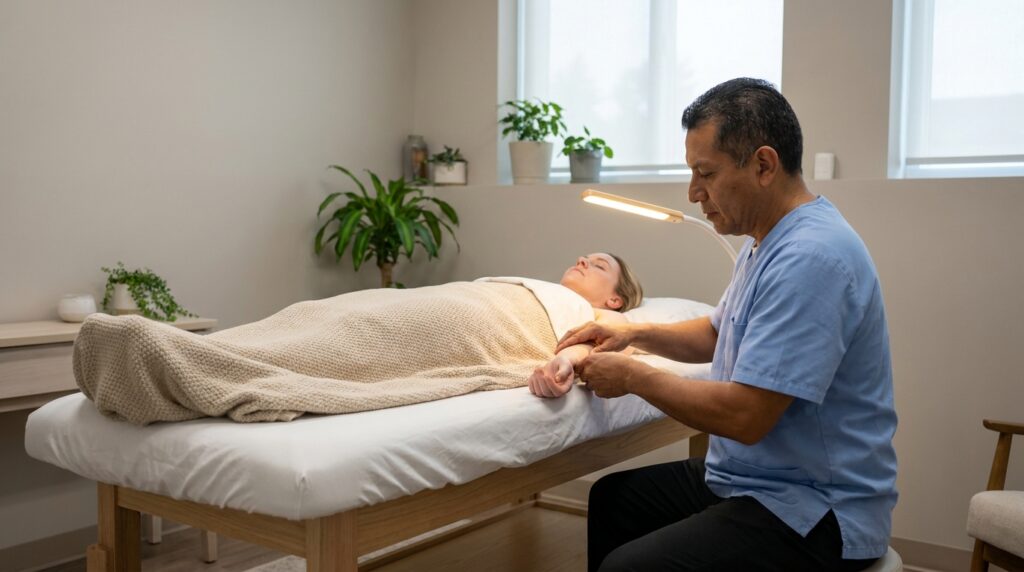
Sleep-focused acupuncture sessions are commonly described as deeply restful. You’ll typically lie comfortably in a quiet room while very thin needles are placed; most people find insertion minimally uncomfortable or not painful. Needles are usually retained for about 20–30 minutes. It’s not unusual for someone to drift off during the treatment.
Pairing Acupuncture with Better Sleep Habits
Acupuncture for insomnia tends to work best when combined with consistent sleep-supportive routines. Common recommendations include:
- Keeping the same wake time most days, including weekends, to stabilize circadian rhythm.
- Using light strategically: morning daylight soon after waking; softer, dimmer lighting closer to bedtime.
- Setting a caffeine cutoff by early afternoon; limiting alcohol since it can fragment sleep even if it feels sedating.
- Building a wind-down routine (30–60 minutes) with reduced screen exposure.
- Finishing dinner earlier (often 2–3 hours before bed), especially when reflux or digestive discomfort is part of the picture.
- Optimizing the bedroom: cool, dark, and quiet.
If someone has been consistent with strong sleep habits for a long time and still isn’t sleeping well, that can be an important clue that a deeper underlying issue may need targeted care.
Safety Considerations and How Long Results May Take
When performed by a licensed practitioner, acupuncture for insomnia is generally considered very safe. The most common side effects are mild and short-lived, such as temporary soreness, small bruises, or feeling unusually tired for a day as the nervous system settles. Many people do best by eating a light meal beforehand and avoiding heavy alcohol on treatment days.
In terms of timing, it’s reasonable to give the first 3–4 visits time to build momentum. Sleep can be slower to shift for some people and quicker for others. If there is no noticeable change after about six visits, it’s often appropriate to reassess the working pattern and consider whether another sleep disorder is contributing.
When a Sleep Specialist Evaluation Is the Better First Step
Acupuncture for insomnia can be a strong fit for many cases, but it may not be the right starting point when symptoms suggest conditions that require medical testing or urgent specialty care, including:
- Possible sleep apnea: loud snoring, witnessed breathing pauses, morning headaches, or marked daytime sleepiness, often warrants a sleep study.
- Narcolepsy or other primary hypersomnias.
- Severe depression or bipolar disorder when sleep disruption is part of an active mood episode; specialty mental health care takes priority, with acupuncture potentially serving as supportive care once stable.
- Restless legs syndrome when an iron deficiency or other medical cause needs evaluation.
In these situations, appropriate medical assessment is important to ensure the right diagnosis and safest treatment path.
Frequently Asked Questions
Can acupuncture help with insomnia?
Current evidence suggests acupuncture for insomnia may improve sleep quality for many people, with multiple 2025 reviews reporting PSQI improvements. Response varies, and outcomes are usually better with a structured course of care rather than a single visit.
How soon might sleep improve?
Many people notice early changes, like falling asleep faster or waking less overnight, within about 2–4 weeks of acupuncture for insomnia. Some feel a shift sooner, while others need the full initial treatment phase.
Is it okay to continue sleep medication while getting acupuncture?
In many cases, yes. Prescription sleep medications should not be stopped abruptly. Acupuncture can often be used alongside medications, and any tapering decisions should be made with the prescribing clinician.
Is acupuncture the same as acupressure or dry needling for sleep?
Acupressure uses finger pressure rather than needles and can be a helpful self-care tool. Dry needling focuses on muscular trigger points and is not typically aimed at insomnia. The research on sleep most often evaluates classical acupuncture approaches.
Does insurance cover acupuncture for insomnia?
Coverage varies widely by plan and employer. Benefits depend on the specific policy and whether acupuncture is included for the diagnosis being treated.