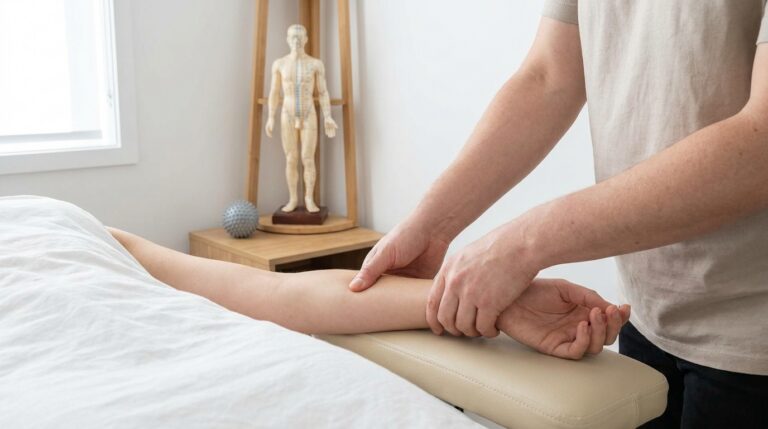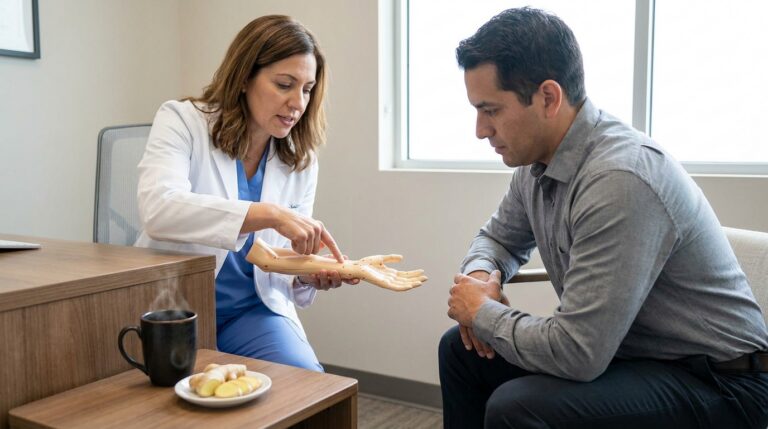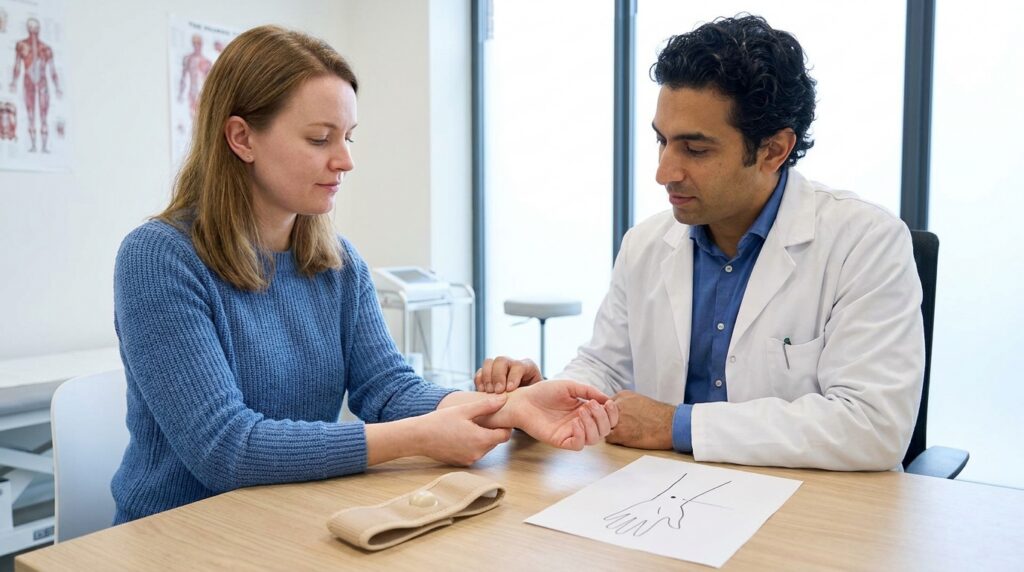
If you’ve ever instinctively pressed the inside of your wrist while riding on choppy water or during a bout of morning sickness, you’ve likely found one of the most researched points in Traditional Chinese Medicine. The P6 pressure point, called Neiguan, or “Inner Gate”, is located just above the wrist crease and has a long history of use for easing nausea, settling the nervous system, and calming a pounding or fluttery feeling in the chest. Today, modern studies support many of these traditional uses, and it’s a common at-home technique taught in Thrive Health Acupuncture clinics serving East Setauket, Sayville, Smithtown, and Westhampton.
Main Highlights
- P6 (Neiguan / PC6) is located about three finger widths above the wrist crease, between two noticeable tendons on the inner forearm.
- It is the best-studied acupressure point for nausea, including motion sickness, post-surgical nausea, chemotherapy-related nausea, and pregnancy nausea.
- Many people also use P6 for anxiety, mild palpitations, and difficulty falling asleep, although research is strongest for nausea relief.
- Self-acupressure and wristbands (such as Sea-Bands) are generally low-cost, low-risk options for adults and many pregnant individuals.
- Acupressure can support care but does not replace medical evaluation, ongoing vomiting, chest pain, dehydration, or new neurological symptoms should be assessed by a clinician.
Understanding the P6 (Neiguan) Pressure Point
In Traditional Chinese Medicine (TCM), P6 is the sixth point on the Pericardium meridian, which travels from the chest down the inner arm toward the middle finger. The Pericardium is often described as the “protector” of the Heart in TCM theory, and points on this channel are commonly used to ease agitation, regulate emotional stress, and harmonize digestion. The name Neiguan translates to “Inner Gate,” reflecting the idea that stimulating this point can “open” a pathway for tension in the chest and upper abdomen to settle.
From a Western anatomy perspective, P6 lies in an area associated with the median nerve, positioned between the tendons of the flexor carpi radialis and palmaris longus. That proximity to nerve pathways may help explain why stimulation here can influence nausea signaling and the autonomic nervous system (the part involved in stress response, heart rate, and digestion). You don’t need to know the anatomy to use P6 effectively, but it’s helpful to understand that this is more than a simple wrist rub. It’s targeted stimulation of a well-mapped region.
How to Locate the P6 Pressure Point on Your Wrist
Finding P6 becomes easy with a little practice. Turn one forearm so your palm faces upward. Using the opposite hand, place your index, middle, and ring fingers across the inner wrist so that the edge of your ring finger rests right at the wrist crease. P6 is located just below the edge of your index finger, in the soft groove between two rope-like tendons.
If the tendons aren’t obvious, gently make a fist and slightly bend your wrist toward you. The two central tendons typically stand out more. The P6 point sits between them, roughly two inches above the wrist crease (or about three of your own finger widths). Many people notice mild tenderness, heaviness, or a subtle “tingly/buzzy” feeling when pressing the correct spot.
Quick Location Notes
- Distance: about three of your finger widths above the wrist crease
- Pressure: light to moderate is usually sufficient
- Side: inner wrist (palm side), not the back of the wrist
- Both wrists: stimulate left and right for a balanced approach
See a Thrive clinician
Acupuncture, dry needling and physical therapy across four Long Island offices. Same-week appointments are usually available, and you do not need a referral to start.
Why People Use P6: Common Uses and What Research Suggests
P6 has been studied more extensively than most other acupressure points. The largest body of evidence focuses on nausea and vomiting, with additional (but smaller) research interest in stress-related symptoms, sleep issues, and palpitations.
Motion Sickness and Nausea After Surgery
Acupressure wristbands (including Sea-Bands) are designed to apply steady pressure over Neiguan. In clinical research involving surgical patients, P6 stimulation has been associated with reduced post-operative nausea compared with sham interventions, offering a non-drug option for some people. For motion sickness, many individuals find it most useful to apply pressure or put on wristbands before symptoms escalate.
Pregnancy Nausea and Hyperemesis Gravidarum
Nausea during pregnancy is a frequent reason people explore acupressure. Studies on P6 stimulation for more severe pregnancy nausea (including hyperemesis gravidarum) have reported improvements in nausea intensity and vomiting frequency in some participants. Reviews of early-pregnancy nausea have also suggested potential benefit with a generally favorable safety profile when used appropriately.
Nausea Related to Chemotherapy
People receiving chemotherapy sometimes look for supportive, non-drug tools to use alongside prescribed antiemetics. Research evaluating P6 acupressure as an add-on approach has found reductions in nausea severity in certain groups. For anyone undergoing cancer treatment, complementary strategies should be coordinated with the oncology team to ensure they fit safely within the overall care plan.
Anxiety, Sleep Difficulty, and Mild Palpitations
Because of the Pericardium channel’s traditional association with calming the chest and mind, many people report that P6 self-massage helps them feel more settled, sometimes noticing easier breathing, a calmer heartbeat, or improved ability to fall asleep. While the research base for these concerns is smaller than for nausea, acupressure is generally considered low risk when used sensibly, and acupuncture-based approaches continue to be studied for stress-related symptoms.
How to Stimulate P6 at Home: Simple Step-by-Step Method
Most adults can perform P6 self-acupressure safely. The key is consistent, focused pressure rather than aggressive rubbing.
- Sit in a comfortable position and take a couple of slow breaths. Rest your forearm on your lap or a table with the palm facing up.
- Locate P6 using the three-finger method.
- Use the pad of your opposite thumb to apply firm but comfortable pressure. Aim for a deep, achy sensation, not sharp pain.
- Hold steady pressure or make small circles for 2–3 minutes.
- Repeat on the other wrist.
- Check in with your symptoms after about five minutes. If needed, repeat every 1–2 hours.
For longer periods, such as travel, infusion sessions, or persistent morning sickness, an acupressure wristband can provide continuous stimulation. The button or bead on the band should sit directly over P6 to work as intended.
Safety Tips, Precautions, and Common Mistakes
Acupressure is typically gentle, but a few precautions help keep it safe and comfortable.
- Skin considerations: Do not press over open cuts, irritated skin, fresh tattoos, significant bruises, or healing surgical areas.
- Blood thinners: If you take anticoagulants or bruise easily, use lighter pressure to reduce the risk of discoloration or soreness.
- Pregnancy: P6 is commonly used for pregnancy nausea. However, some other points (often cited include SP6 and LI4) are traditionally avoided during pregnancy due to historical concerns. If unsure, consult a licensed professional.
- Stop if it feels worse: If pressing the point significantly increases nausea, dizziness, or anxiety, stop and rest.
- Know when to seek medical care: Ongoing vomiting, dehydration, fainting, chest pain, or new neurological symptoms should be evaluated promptly. Acupressure is supportive, not diagnostic care.
When Working with a Licensed Acupuncturist Can Help
Home acupressure can be a strong starting point, but persistent or complex symptoms often benefit from individualized assessment. Chronic nausea, ongoing anxiety, sleep disruption, and pregnancy-related symptoms that interfere with daily life may respond better to a plan matched to the full pattern rather than one point alone. Thrive Health Acupuncture commonly combines in-office acupuncture, hands-on acupressure, and practical home guidance, supporting patients across East Setauket, Sayville, Smithtown, and Westhampton.
Frequently Asked Questions
How quickly can P6 help with nausea?
Some people notice relief within a few minutes of steady pressure or shortly after applying a wristband. Individual responses vary; allowing 5–10 minutes is a reasonable window to assess whether it’s helping.
Is it okay to wear Sea-Bands for many hours?
Many adults can wear them for extended periods. If you develop wrist soreness, numbness, or skin irritation, remove the band for a break or adjust the fit and placement.
Is P6 safe to use during pregnancy?
P6 is among the most researched points for pregnancy-related nausea and is widely considered appropriate when used gently. If you’re pregnant and new to acupressure, confirming technique with a licensed practitioner can be helpful.
Can kids use the P6 pressure point?
Yes, with adult supervision. Use lighter pressure and shorter sessions. Wristbands sized for children can also be helpful for motion sickness, though persistent vomiting or significant illness in a child should be assessed by a pediatric clinician.
Can P6 replace anti-nausea medication?
No. It’s best viewed as a complementary tool that may reduce symptom intensity or frequency. Any medication changes should be discussed with the prescribing clinician.