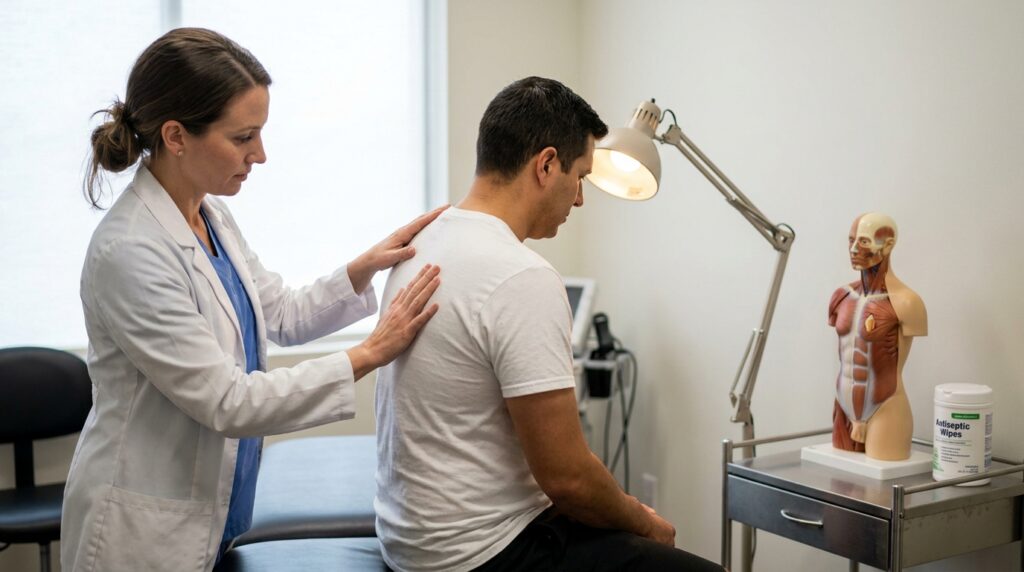
If you’re searching for trigger point injections in Smithtown, you’re likely dealing with stubborn muscle “knots,” tight bands, or pain that keeps coming back, sometimes radiating into the neck, shoulders, back, hips, or even causing headaches. Many people try rest, stretching, massage, and over-the-counter medication, only to find the discomfort returns as soon as daily stress, work posture, or activity ramps up again.
This guide explains what trigger points are, how trigger point injections work, what conditions they may help, what to expect during and after treatment, and how to decide whether they’re right for you. You’ll also learn how injections can fit into a broader plan that may include movement-based rehab and other conservative approaches offered at Thrive Health and Thrive Health Acupuncture serving East Setauket, Sayville, Smithtown, and Westhampton.
What Are Trigger Points (and Why Do They Hurt So Much)?
A trigger point is a hyperirritable spot within a tight band of skeletal muscle. People often describe it as a palpable “knot.” When pressed, it can be tender and may reproduce familiar pain locally or refer pain to another area (for example, a knot in the upper trapezius referring pain toward the head or behind the eye).
Common Signs You Might Have Trigger Points
- Tender knots in a muscle that feel ropy or tight
- Referred pain (pain felt away from the knot)
- Limited range of motion or stiffness
- Muscle fatigue and weakness that doesn’t match your activity level
- Pain that flares with stress, posture, or repetitive tasks
Why Trigger Points Develop
Trigger points can form for several reasons, often overlapping:
- Overuse or repetitive strain (desk work, lifting, sports)
- Acute strain (a sudden pull or awkward movement)
- Prolonged posture (forward head posture, rounded shoulders)
- Protective guarding after an injury
- Stress and poor sleep that increase muscle tension
What Are Trigger Point Injections?
Trigger point injections are a procedure where a clinician inserts a small needle into a painful trigger point to help relax the tight muscle band and reduce pain. The injection may include a small amount of local anesthetic (and in some cases other medications), or it may be performed as a “dry” needling-style injection depending on the provider’s approach and your needs.
The goal is not simply to numb pain. It’s to reduce the sensitivity and tightness of the trigger point so you can move more normally and participate in rehabilitation. Many people pursue trigger point injections in Smithtown when conservative care alone hasn’t provided lasting relief or when pain is preventing progress with exercise and daily activity.
Trigger Point Injections vs. Other Needle-Based Treatments
- Trigger point injections: A medical procedure targeting specific trigger points; may involve local anesthetic.
- Dry needling: Uses a thin needle to stimulate trigger points without injecting medication; often performed by trained rehab clinicians where permitted.
- Acupuncture: Based on traditional and modern frameworks; may address pain modulation, muscle tone, and overall function. Many patients combine approaches through Thrive Health Acupuncture.
Who Can Benefit from Trigger Point Injections in Smithtown?
Trigger point injections may be considered when a clinician identifies myofascial trigger points contributing to pain and movement restriction. They’re often used as part of a broader plan, not as a stand-alone fix, especially when muscle tension is perpetuating a cycle of pain and limited motion.
Common Conditions and Pain Patterns
- Neck and shoulder tension (upper trapezius, levator scapulae)
- Tension-type headaches linked to neck/shoulder trigger points
- Upper back pain around the shoulder blades
- Low back pain with tight paraspinals or quadratus lumborum
- Hip pain involving gluteal trigger points
- Jaw and facial muscle tension (when appropriate and evaluated)
- Myofascial pain syndrome
When Injections May Be Especially Helpful
- Pain is limiting rehab (you can’t tolerate stretching or strengthening yet)
- Persistent muscle guarding after an injury
- Plateau with conservative care such as manual therapy and home exercise
- Clear trigger point referral patterns that match your symptoms
What to Expect During a Trigger Point Injection Appointment
While protocols vary by clinician and setting, most trigger point injection visits follow a similar flow. If you’re considering trigger point injections in Smithtown, here’s a practical overview of what typically happens.
1) Evaluation and Trigger Point Mapping
Your clinician will review your symptoms, medical history, and prior treatments. They’ll palpate muscles to locate taut bands and identify trigger points that reproduce your pain pattern. This step matters: effective treatment depends on accurately identifying the muscle source and confirming it matches your symptoms.
2) The Procedure
The skin is cleaned, and a small needle is inserted into the trigger point. You may feel a brief sting and then pressure. Some people experience a quick “twitch response” in the muscle, which can be a sign the trigger point is being engaged. The injection itself is usually brief.
3) Immediate After-Effects
It’s common to feel:
- Temporary soreness at the injection site
- Looser movement or reduced tightness soon after
- Fatigue in the treated muscle for a day or two
Many clinicians recommend gentle movement afterward to help the muscle “reset” and to reduce post-treatment stiffness.
Do Trigger Point Injections Hurt?
Discomfort varies by person, muscle location, and sensitivity of the trigger point. Most patients describe it as tolerable and quick. The muscle may be sore afterward, similar to how you might feel after a deep tissue massage or an intense workout. Your provider can talk you through strategies to improve comfort, such as breathing techniques, positioning, and pacing.
How Many Sessions Are Needed?
There’s no one-size-fits-all answer. Some people feel meaningful relief after one session, while others need a short series, especially when trigger points are widespread or have been present for a long time. The best approach is to reassess after each visit and pair injections with a plan to address contributing factors like posture, strength deficits, mobility restrictions, and workload.
Why a Combined Plan Often Works Best
Trigger points rarely exist in isolation. If the underlying driver remains, like repetitive strain, poor ergonomics, or limited shoulder blade control, the trigger point may return. This is where a coordinated plan through Thrive Health can be valuable, combining symptom relief with progressive rehab.
See a Thrive clinician
Acupuncture, dry needling and physical therapy across four Long Island offices. Same-week appointments are usually available, and you do not need a referral to start.
Trigger Point Injections and Rehabilitation: A Practical “One-Two Punch”
Think of injections as a way to “turn down the volume” on a painful muscle so you can move better. Then, rehab helps “change the channel” by improving how you load, stabilize, and use the area, reducing the chance the same trigger point keeps reactivating.
Rehab Strategies Commonly Paired with Injections
- Mobility work to restore comfortable range of motion
- Strengthening to build tolerance in supporting muscles
- Motor control training (how you coordinate movement under load)
- Ergonomic coaching for desk setup, lifting mechanics, and work pacing
- Breathing and rib mobility work for neck/shoulder tension patterns
Where Acupuncture May Fit
Some patients also benefit from acupuncture for pain modulation, muscle relaxation, and stress-related tension patterns. Coordinating care with Thrive Health Acupuncture may be a helpful option for people who want a broader, whole-person approach alongside targeted trigger point care.
Safety, Side Effects, and Contraindications
Trigger point injections are generally considered a low-risk procedure when performed by a qualified clinician with appropriate screening and technique. Still, any procedure involving a needle has potential risks and side effects.
Common Side Effects
- Temporary soreness or bruising at the injection site
- Short-lived increase in pain before improvement
- Lightheadedness in people sensitive to needles
Less Common but Important Risks
- Bleeding (risk may be higher with certain medications)
- Infection (rare with proper sterile technique)
- Nerve irritation or unintended tissue irritation
When Trigger Point Injections May Not Be Appropriate
Your clinician may recommend alternatives or postpone treatment if you have certain medical conditions, active infection, specific bleeding risks, or other factors. Always disclose medications, supplements, allergies, and medical history during your evaluation.
Injections are not the only way to settle a stubborn trigger point, and the right choice depends on the muscle and your history. Our trigger point therapy page covers the hands on and needle based options and when each one makes sense.
How to Prepare for Your Appointment
- Wear comfortable clothing that allows access to the painful area.
- Bring a list of medications, including blood thinners and supplements.
- Know your pattern: where pain starts, where it travels, and what triggers it.
- Plan light activity afterward: gentle movement is often encouraged.
Aftercare: What to Do (and Avoid) After Trigger Point Injections
Helpful Aftercare
- Gentle movement (walking, easy range of motion)
- Hydration and regular meals
- Heat or ice as recommended by your clinician
- Follow your rehab plan once cleared: timing matters
What to Avoid for 24–48 Hours (Often)
- Heavy lifting or high-intensity workouts using the treated muscle
- Prolonged static posture that typically aggravates your symptoms
- Aggressive self-massage directly on the injection site if it’s tender
Your provider will adjust guidance to the muscles treated and your activity level.
Choosing the Right Provider for Trigger Point Injections in Smithtown
When looking for trigger point injections in Smithtown, focus on clinical reasoning and coordination of care, not just the procedure itself. Consider asking:
- How do you confirm the pain is myofascial? (vs. joint, nerve, or other causes)
- What is included in the evaluation?
- What is the plan after the injection? (mobility, strengthening, posture, activity modification)
- How will progress be measured? (range of motion, function, symptom triggers)
- Do you coordinate with rehab and acupuncture?
At Thrive Health, many patients value a coordinated approach that connects symptom relief with a functional plan, whether that includes rehab, education, and supportive services through Thrive Health Acupuncture across East Setauket, Sayville, Smithtown, and Westhampton.
Common Concerns: “Is This Just a Temporary Fix?”
It’s a fair question. Trigger point injections can provide meaningful relief, but lasting improvement usually depends on addressing why the trigger points formed in the first place. Injections can be an effective tool to break the pain-spasm cycle and restore motion, especially when pain has become a barrier to movement.
The most sustainable outcomes typically come from combining:
- Targeted symptom relief (injections and/or other pain-modulating treatments)
- Progressive loading (strength and endurance)
- Movement and posture strategies matched to your daily demands
- Recovery habits (sleep, stress management, pacing)
FAQ: Trigger Point Injections in Smithtown
1) What do trigger point injections treat?
They’re used to treat painful myofascial trigger points, tight, tender muscle bands that can cause local pain, referred pain, and restricted movement. They’re commonly considered for neck, shoulder, upper back, low back, and hip-related muscle pain patterns.
2) How quickly do trigger point injections work?
Some people notice looser movement or pain relief the same day, while others feel sore for a day or two before improvement. Response depends on the muscle treated, how long symptoms have been present, and whether contributing factors are addressed.
3) How long does relief last?
Duration varies. Relief may last from days to weeks or longer, particularly when paired with a plan that improves mobility, strength, and ergonomics. If the underlying drivers remain, symptoms may return over time.
4) Are trigger point injections safe?
They’re generally considered low risk when performed by a qualified clinician after appropriate screening. Possible side effects include temporary soreness, bruising, or short-term pain flare. Your provider should review your medical history and medications to reduce risk.
5) Can I exercise after a trigger point injection?
Often yes, but typically at a reduced intensity for 24–48 hours depending on the area treated and your symptoms. Gentle movement is commonly encouraged, while heavy lifting or high-intensity training may be postponed briefly. Follow your clinician’s specific guidance.
6) Do I need physical therapy or acupuncture if I get injections?
Not everyone needs both, but many people benefit from combining approaches. Rehab can help address strength, mobility, and movement habits that contribute to recurring trigger points, while acupuncture may support pain modulation and muscle relaxation. Coordinated care through Thrive Health and Thrive Health Acupuncture can help align these strategies.
7) How do I know if my pain is from a trigger point or something else?
A thorough evaluation is key. Trigger point pain often has a recognizable referral pattern and is reproduced with palpation of a taut muscle band. However, joint irritation, nerve involvement, or other conditions can mimic myofascial pain. A qualified clinician can differentiate causes and recommend the most appropriate next step.
Still fighting the same muscle knot?
A short exam can show which muscles are involved and which treatment suits your situation. We go over the options with you before anything gets scheduled.