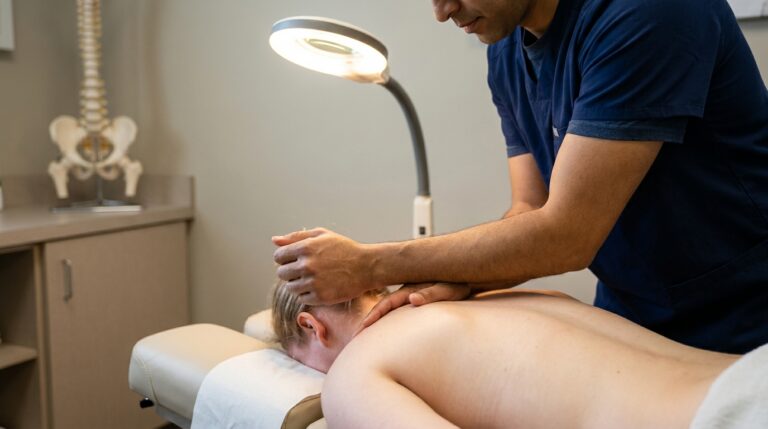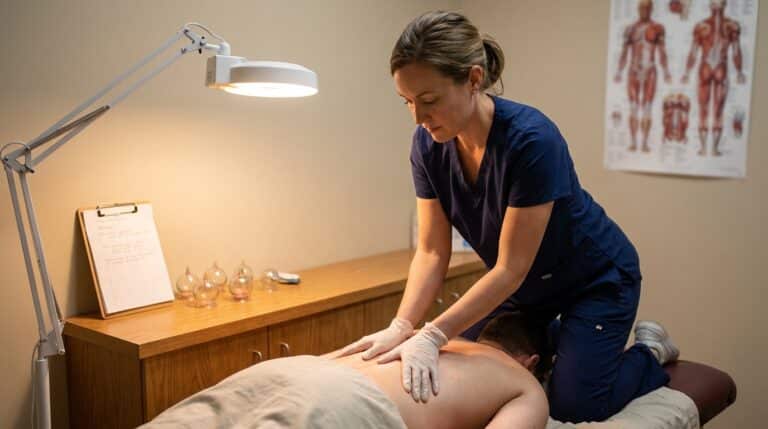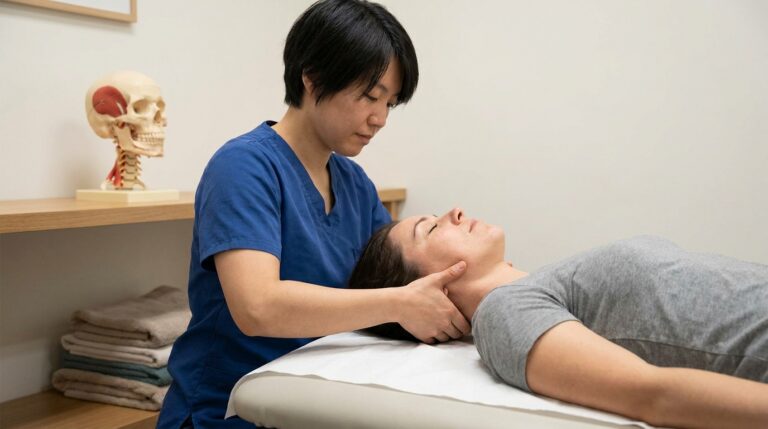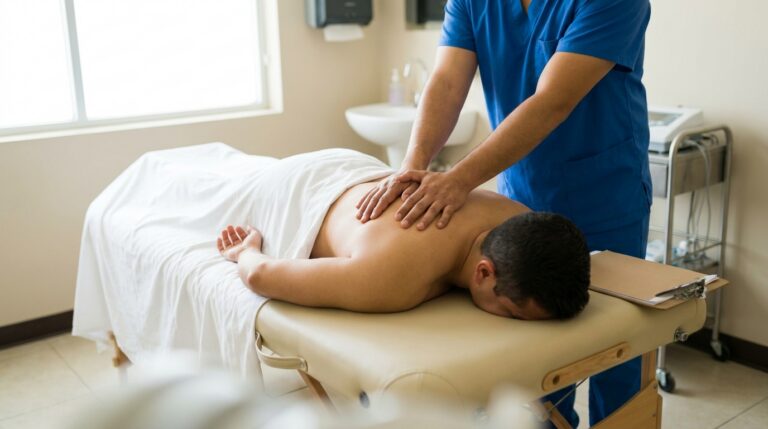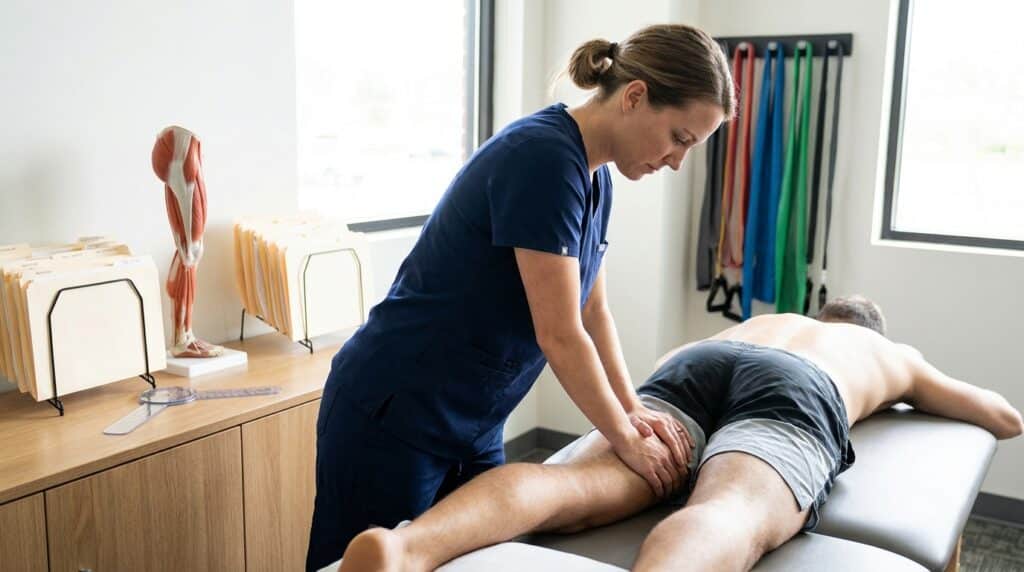
Medical massage offers numerous benefits through a clinician-guided, hands-on method that integrates orthopedic assessment with evidence-based soft-tissue techniques to address musculoskeletal issues, helping athletes return to their sports more quickly. Unlike standard relaxation massages, it targets the underlying causes of pain and dysfunction, such as trigger points, adhesions, and poor circulation. This approach minimizes downtime, facilitates smarter training progressions, and results in measurable performance improvements. Below, we explore the function of medical massage, how it differs from sports and deep-tissue massages, and its effectiveness in treating sports injuries and delayed-onset muscle soreness (DOMS). We also discuss its practical benefits for common injuries, support for flexibility and performance, recommended timing and frequency, and how an integrated clinical approach fits into a rehabilitation plan.
Understanding Medical Massage and Its Role in Athlete Recovery
Medical massage combines an orthopedic-style assessment with specific manual techniques to rectify movement issues and promote healing. Techniques such as myofascial release, trigger-point release, and neuromuscular re-education help restore range of motion, balance muscle tone, and alleviate pain. Improved circulation delivers oxygen and nutrients to injured tissues, while lymphatic techniques help manage swelling, facilitating repair. Treatments are informed by clinical findings and often coordinated with physicians and physical therapists to address specific sports injuries, leading to reduced downtime and more effective rehabilitation.
Differences Between Medical Massage, Sports Massage, and Deep Tissue Massage
Medical massage is a diagnosis-driven and rehabilitation-focused approach that targets specific pathologies and integrates into a structured rehabilitation plan. In contrast, sports massage typically focuses on preparing for events and recovery afterward, while deep-tissue massage addresses chronic tightness without necessarily including diagnostic testing or a progressive rehabilitation framework. Medical massage clinicians utilize orthopedic tests and evidence-informed methods, whereas sports massage practitioners emphasize pre- and post-event routines. In essence, medical massage is ideal for injury management and functional restoration, sports massage for event prep and recovery, and deep tissue for addressing chronic tightness.
Physiological Effects of Medical Massage on Athletes
Medical massage enhances blood flow, improves lymphatic drainage, and alters neuromuscular patterns. Increased blood flow removes metabolic waste and supplies nutrients necessary for repair. Lymphatic techniques help reduce inflammation after exertion. Trigger-point work and neuromuscular re-education correct improper muscle activation and restore coordinated movement, reducing the risk of secondary injuries. Scar mobilization and fascial techniques improve tissue flexibility and joint mechanics, enabling athletes to regain a functional range of motion. These combined effects reduce pain, expedite recovery, and improve movement efficiency.
Key Benefits of Medical Massage in Sports Injury Recovery
Medical massage accelerates rehabilitation and restores function by reducing pain through neuromodulation, expediting tissue repair via enhanced circulation, and increasing usable range of motion with fascial and scar-tissue work. These changes allow athletes to begin progressive loading sooner, train more consistently, and decrease the risk of compensatory injuries.
- Pain Reduction: Targeted manual techniques decrease nociceptive input, making rehabilitation exercises more manageable.
- Faster Tissue Repair: Enhanced circulation supplies nutrients and clears waste, promoting healing.
- Improved Functional Range of Motion: Scar and fascial work restore joint mechanics and movement quality.
These benefits enable athletes to progress through graded exercise programs earlier, with improved control and less downtime.
How Medical Massage Assists with Common Sports Injuries
Treatment begins with a clinical assessment, followed by specific manual techniques and a plan to reintegrate function. For hamstring strains, clinicians apply ischemic compression to trigger points, fascial release, and eccentric loading to restore length and strength. Patellar tendon issues respond to transverse friction and neuromuscular drills that enhance timing and reduce pain. Shin splints benefit from compartment-specific soft-tissue release and gradual impact conditioning. Medical massage shortens symptom phases and prepares tissue for sport-specific loading by restoring mechanics and neuromuscular control.
Preventing Re-Injury and Supporting Post-Surgical Rehab with Medical Massage
Medical massage addresses scar mobility, adhesions, and dysfunctional movement patterns. Early post-operative care emphasizes gentle lymphatic techniques and scar mobilization to prevent tethering. Later stages focus on neuromuscular re-education to rebuild coordinated recruitment. Periodic maintenance helps balance tissue length and tension, reducing the risk of overload and recurrence. Coordination with your physician and physical therapist ensures safe timing and integration into structured rehabilitation programs.
See a Thrive clinician
Acupuncture, dry needling and physical therapy across four Long Island offices. Same-week appointments are usually available, and you do not need a referral to start.
Enhancing Athletic Performance and Flexibility with Medical Massage
Medical massage improves tissue quality, reduces neuromuscular inhibition, and optimizes joint mechanics, supporting power, endurance, and coordination. Proper muscle and fascial layer movement enhances force transmission and decreases wasted motion. Reduced soreness and quicker recovery allow athletes to train more frequently. Fascial release and joint mobilization refine sport-specific mechanics, improving technique and reducing strain.
Improving Endurance, Power, and Coordination Through Medical Massage
For endurance, targeted recovery work reduces downtime, allowing sustained higher training volumes. Circulation-focused techniques and DOMS reduction speed recovery. For power, releasing fascial restrictions and normalizing trigger points decrease neuromuscular inhibition, allowing full strength expression. Coordination improves as asymmetries are corrected and proprioceptive feedback returns, enabling efficient, repeatable movement even under fatigue.
Benefits of Increased Flexibility and Range of Motion for Athletes
Increased range of motion and targeted flexibility reduce compensatory movement and lower injury risk while enhancing sport-specific mechanics. For instance, improved hip extension increases stride length and reduces lumbar compensation for runners, while better shoulder mobility enhances overhead mechanics for throwers and swimmers. Restoring range of motion reduces stress on neighboring joints and chronic stressors. When paired with neuromuscular control work, athletes regain stable, efficient movement that enhances technique and power transfer.
Optimal Timing for Athletes to Schedule Medical Massage
Key periods include pre-event sessions for mobility and neural readiness, immediate post-event care for lymphatic clearance and DOMS reduction, and regular maintenance during intense training to prevent dysfunction. Acute injuries often require multiple sessions per week initially, tapering to maintenance as function returns.
Indicators for Medical Massage
Consider medical massage when pain or dysfunction begins to impact training quality. Warning signs include prolonged soreness beyond expected DOMS, loss of joint range altering technique, recurring tight spots or trigger points, and unexplained decreases in speed, strength, or endurance. A quick side-to-side range check or noting pain with specific movements can help decide if a clinical assessment is needed. Early intervention typically shortens recovery and minimizes disruption.
Frequency of Medical Massage for Athletes
Frequency depends on injury phase and training load. Acute rehabilitation usually requires 1–3 sessions per week. Healthy athletes typically benefit from maintenance sessions every 2–4 weeks. During intense training or competition, weekly sessions preserve function and expedite recovery. As progress is made, combine hands-on care with strength and mobility work, gradually reducing session frequency while maintaining a solid self-care routine. Coordination with therapies like acupuncture or dry needling can also reduce the need for frequent hands-on visits.
Thrive Health Acupuncture’s Approach to Medical Massage
Thrive Health Acupuncture practices an integrated approach, blending medical massage with complementary therapies to expedite recovery and sustain performance. We utilize individualized assessments, evidence-informed manual techniques, and coordinated care to create targeted plans. Our family-owned clinic in East Setauket, Sayville, Smithtown, and Westhampton offers insurance assistance and flexible scheduling to fit training calendars.
Complementary Therapies at Thrive Health Acupuncture
Complementary services such as acupuncture help modulate pain and regulate the autonomic nervous system, reducing central sensitization and raising pain thresholds. Dry needling targets deep trigger points to expedite neuromuscular normalization alongside manual techniques. Acupressure and therapeutic exercise programs reinforce gains between visits. These therapies combined reduce pain, restore mechanics, and support progressive loading.
Frequently Asked Questions About Medical Massage
Medical massage benefits a wide range of athletes, from team-sport competitors to endurance athletes and weekend warriors. It aids in injury recovery, chronic pain management, and performance optimization. Recreational athletes also experience preventive benefits and improved muscle function.
Are there any risks associated with medical massage? Medical massage is generally safe but should be avoided if you have an acute fracture, uncontrolled osteoporosis, an active infection, or other medical conditions until cleared by your provider. Improper technique or excessive pressure can cause bruising or soreness. Clear communication with your clinician ensures a safe, effective session.
How can medical massage be integrated into an athlete’s training regimen? Sessions should be planned around training phases and competition. Pre-event visits tune mobility and neural readiness, while post-event sessions aid recovery. Increase session frequency during high-load training to manage tension and reduce injury risk. Off-season care supports recovery and prepares for the next cycle. Work with your therapist to align visits with goals and build an effective self-care routine.
What should athletes expect during a medical massage session? Expect a thorough intake covering pain, injury history, and performance goals. The therapist will use targeted methods like myofascial release, trigger-point work, and neuromuscular re-education matched to your needs. Sessions range from 30 to 90 minutes, and ongoing feedback is encouraged to ensure pressure and techniques align with your comfort and goals.
How does medical massage support mental well-being for athletes? Medical massage reduces stress and anxiety, improving relaxation and focus. Less pain and greater body awareness allow athletes to concentrate on technique and performance. Regular care often fosters a calmer, more resilient mindset that aids preparation and competition.
Can medical massage be used alongside other therapies? Absolutely. Medical massage complements physical therapy, acupuncture, chiropractic care, and other modalities. Coordinated care among providers maximizes recovery, share your full care plan so everyone works toward the same objectives.