If you’re experiencing persistent discomfort, muscle tension, stiffness, or fatigue in East Setauket, Sayville, Smithtown, and Westhampton or nearby Suffolk County areas, you’ve likely explored various treatment options. Two popular methods people often consider are chiropractic care and medical massage therapy. Both involve hands-on techniques that aim to improve well-being and are frequently recommended for similar issues. It’s common for patients to arrive at our clinic questioning, “Which one is suitable for me?” At Thrive Health Acupuncture, we encounter this scenario regularly. Some individuals face structural issues in their spine or joints, while others suffer from muscle-related pain that adjustments cannot resolve. Many also experience a mix of these problems, making it challenging to decide the best treatment path. This guide simplifies the decision-making process. No technical jargon or complicated explanations, just straightforward, helpful information to guide you in choosing the method that aligns with your health objectives right here on Long Island.

Understanding Medical Massage Therapy
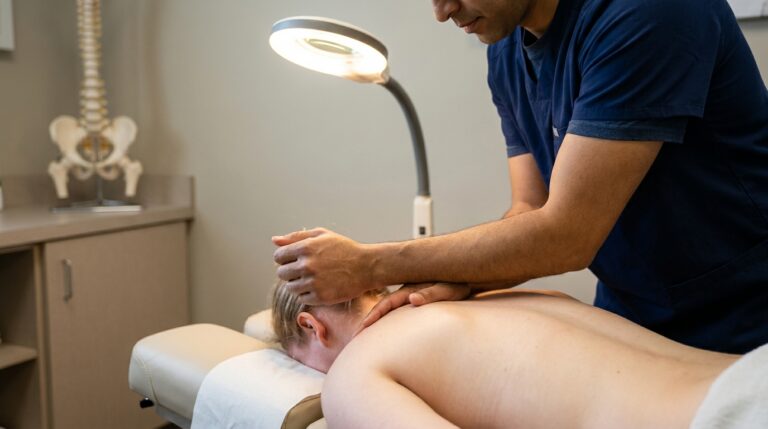
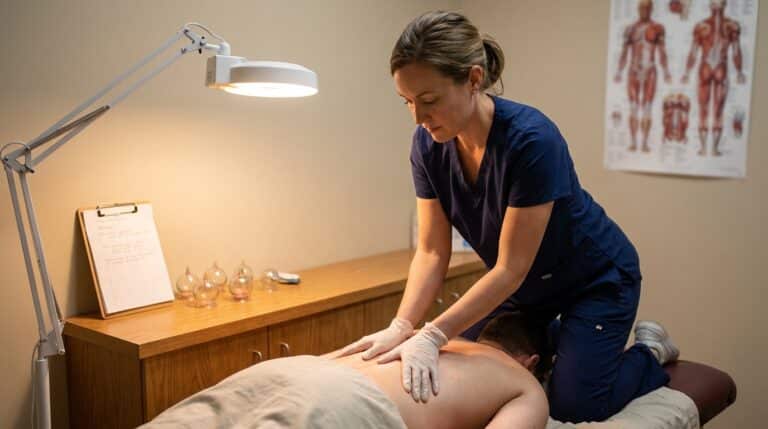
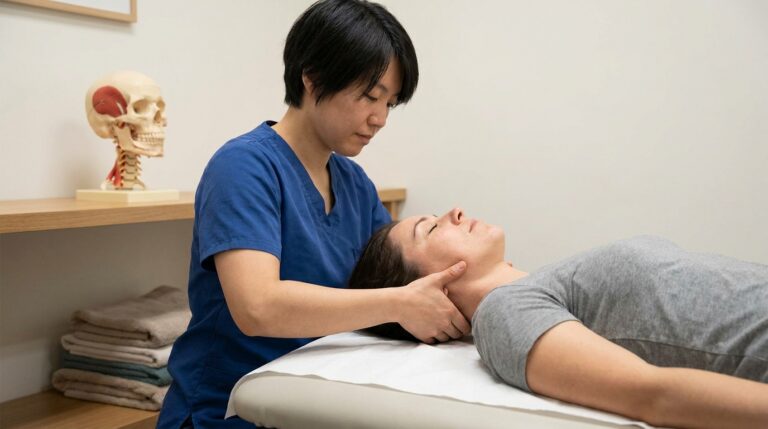
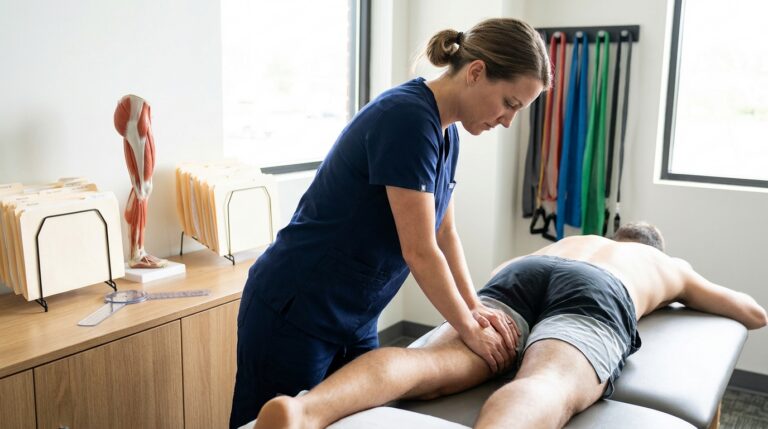
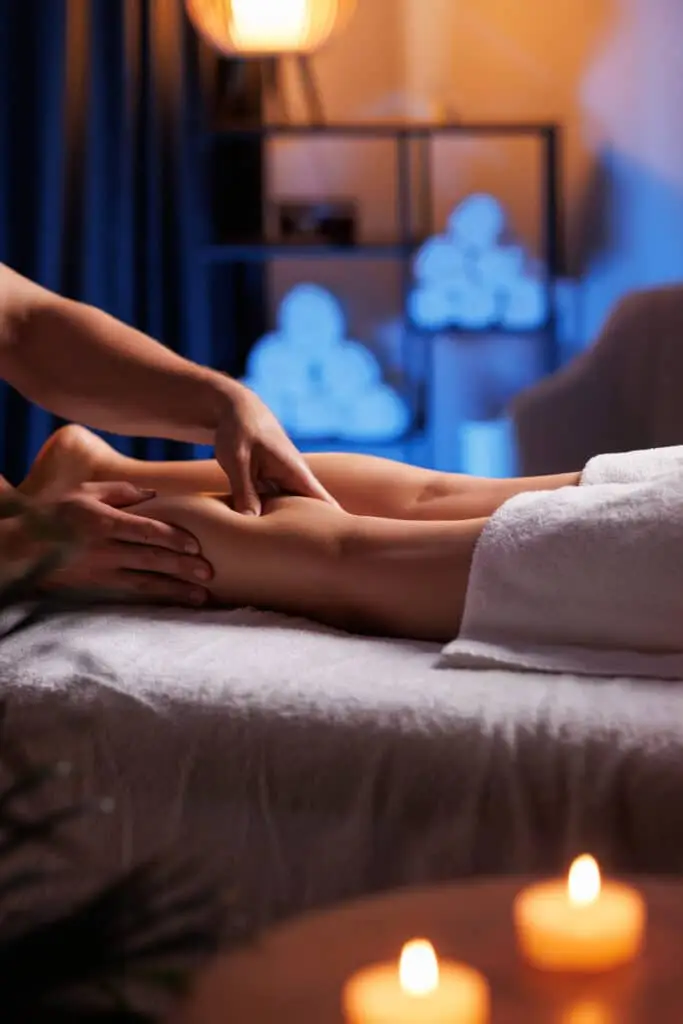
Medical massage therapy is distinct from a typical spa massage. While it feels great, its purpose extends beyond relaxation. It is a targeted, therapeutic approach aimed at alleviating specific areas of pain, tension, and dysfunction in muscles and fascia, the connective tissue enveloping your body. Unlike general massages, medical massage employs focused techniques like deep tissue work, trigger point therapy, myofascial release, stretching, and acupressure. These methods assist in: – Releasing tight, overused muscles – Breaking down adhesions and knots that restrict movement – Enhancing circulation to injured or stiff areas to expedite healing – Promoting better flexibility and range of motion – Naturally reducing inflammation and discomfort This therapy is particularly beneficial for those in our area who struggle with: – Chronic muscle tightness from daily stress – Postural strain from prolonged desk work (“Text Neck”) – Tension headaches originating in the shoulders – Neck and shoulder stiffness – Sports injuries from weekend activities – Pain and fatigue related to stress – Limited mobility or flexibility If your discomfort stems from tight muscles, restricted movement, or a persistent sense of tension, medical massage therapy is often the most effective initial step and a natural way to find relief.
What Role Does Chiropractic Care Play?
Chiropractic care emphasizes the body’s structural alignment, particularly the spine. Chiropractors aim to identify and correct spinal or joint restrictions, sometimes referred to as “misalignments” or subluxations, which can influence the nervous system, leading to pain, limited mobility, or stiffness. The primary technique utilized is spinal adjustment, a quick, controlled force applied to a specific joint to restore proper movement. Chiropractors may also employ stretching, joint mobilization, and soft tissue work, but their main focus is on the skeletal and nervous systems. Chiropractic care is particularly effective for individuals dealing with: – Sciatica or nerve-related pain radiating down the leg – Joint stiffness and reduced spinal mobility (feeling “locked up”) – Acute back or neck pain from lifting or twisting – Certain headaches originating from the neck – Structural or alignment issues following an accident When pain arises from a physically stuck joint rather than muscle tension, chiropractic care often provides rapid relief by restoring proper movement and reducing nerve irritation.
See a Thrive clinician
Acupuncture, dry needling and physical therapy across four Long Island offices. Same-week appointments are usually available, and you do not need a referral to start.
Comparing Massage Therapy and Chiropractic Care
Here’s a straightforward comparison: – **Massage therapy** targets muscles and soft tissues. – **Chiropractic care** focuses on joints and bones. If your discomfort stems from muscle tension, knots, stress, or overuse, massage therapy is typically the right choice. Conversely, if your pain is due to a stuck joint or nerve irritation, chiropractic adjustments may be more beneficial.
How to Determine the Appropriate Treatment
Here’s a guide to help decide based on your symptoms: – If your pain feels tight, stiff, achy, or like a dull throb, start with medical massage therapy. – If your pain is sharp, tingling, burning, or radiates down an arm or leg, a chiropractic or orthopedic evaluation might be needed to rule out nerve impingement. – If you feel physically “stuck” or have limited joint mobility, chiropractic care might restore that movement quickly. – If stress exacerbates your pain, massage is generally more effective at calming the nervous system. – If poor posture at work causes imbalance, massage offers the best remedy for overworked muscles. – If both muscles and joints feel off, a combination approach can be highly effective. Most people experience a combination of sore muscles from daily activities and occasional joint stiffness. However, as an initial step, medical massage therapy is gentler, more accessible, and carries fewer contraindications.
Why Start with Medical Massage Therapy?
At Thrive Health Acupuncture, we often see patients booking chiropractic appointments when the underlying issue is muscular rather than structural. When muscles are tight, overactive, or inflamed, adjustments may not “hold” because the soft tissue continues to pull things out of alignment. Think of your muscles as the rigging on a sailboat mast. If the ropes on one side are too tight, the mast will lean. You can try to push the mast straight, but until you loosen the ropes, it will just lean back over. This is why medical massage therapy is often the best foundation for lasting improvement. It helps calm the soft tissues, enabling the body to move better independently. – Soft tissues relax and lengthen – Circulation improves, flushing out inflammation – Trigger points release – Range of motion increases naturally – Pain decreases without force From there, if necessary, chiropractic adjustments tend to work more smoothly and maintain their benefits longer. But many patients achieve complete relief using soft-tissue therapy alone.
Common Questions About Massage and Chiropractic Care
– **Can massage therapy fix spinal alignment?** Massage does not adjust bones but can alleviate muscular tension that pulls the spine out of alignment. Many alignment issues improve naturally once tight muscles are released and balanced. – **Is chiropractic care painful?** Most adjustments are quick and generally painless, though some patients may feel mild soreness afterward. If the idea of “cracking” makes you uncomfortable, medical massage or acupuncture are excellent, gentler alternatives. – **Can I receive both massage and chiropractic care?** Yes, combining both therapies often yields excellent results. We frequently recommend getting a massage before a chiropractic adjustment to loosen the muscles, making the adjustment easier and more durable. – **Is massage therapy enough for chronic pain?** Often, yes. Many individuals experience significant improvements from regular medical massage alone, especially when pain is muscle-driven, stress-related, or tied to posture. – **How do I know if my pain is muscular or structural?** A general rule of thumb: If your pain changes when you press on a specific spot, it’s likely muscular and massage will help. If it changes based on body position or movement (like bending forward vs. backward), chiropractic may play a role. For most people, the first session makes this clear right away. – **Can massage help with headaches?** Absolutely. Tension headaches often stem from tight neck and shoulder muscles that refer pain to the head. Medical massage is one of the most effective natural treatments for breaking this cycle.
If You’re Unsure Where to Start, Massage Is Usually the Best Initial Step
If you feel tight, sore, or tense, massage will almost always help. If your pain feels sharp, shooting, or nerve-like, then a chiropractic evaluation may also be worth exploring. But for most people in East Setauket, Sayville, Smithtown, and Westhampton, as well as the surrounding Long Island communities, the safest, most comfortable, and most relaxing first treatment is medical massage therapy. It’s gentle, effective, deeply relaxing, and involves virtually no downtime. Unlike some other treatments, you often feel improvement immediately after getting off the table.